
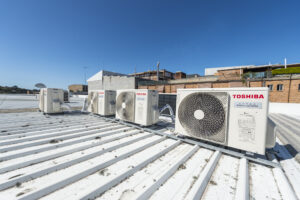
The best air conditioning Sydney homes need is not simply the biggest or most expensive system. It is one that is correctly sized for the property, suited to how the rooms are used, efficient in Sydney’s climate, and practical to install.
Before comparing brands, start with your property. A compact apartment in the Eastern Suburbs may need a very different solution from a double-storey house in Western Sydney or an office near the Sydney CBD. Roof space, insulation, windows, electrical capacity, drainage, outdoor-unit position and strata requirements can all change what will work.
Before requesting quotes for Air Conditioning Sydney installation, replacement or upgrading, there are several important checks worth making.
Quick Answer
For most Sydney properties, start by deciding whether you need one room, several rooms or the whole property conditioned.
Then compare split, multi-split and ducted systems based on:
- system capacity
- energy efficiency
- installation constraints
- electrical requirements
- drainage
- outdoor-unit location
- how often each area will actually be used
The right system should match the property rather than simply having the highest cooling capacity.
1. Which Type of Air Conditioning Is Best for a Sydney Property?
There is no single type of air conditioning that is best for every Sydney property.
The most suitable choice usually depends on how many rooms need heating and cooling and how much installation work the building allows.
Split System Air Conditioning
A split system generally suits:
- one bedroom
- a lounge room
- an open-plan living area
- a home office
- an apartment with limited installation space
A split system uses an indoor unit connected to an outdoor condenser.
Its main advantage is that you can condition one specific area without cooling or heating the entire property.
Multi-Split Air Conditioning
A multi-split system connects several indoor units to one outdoor unit.
It can suit homes or apartments where several rooms need air conditioning but installing multiple outdoor condensers would be difficult or undesirable.
Before choosing a multi-split system, the installer should consider:
- pipe runs
- available condenser space
- simultaneous heating or cooling demand
- access for installation and future servicing
Ducted Air Conditioning
Ducted air conditioning can be suitable for whole-home heating and cooling where there is enough ceiling or roof space for ductwork.
It can also provide zoning, allowing different areas of the house to be controlled separately.
Before deciding on ducted air conditioning, check:
- available roof space
- duct layout
- zoning requirements
- electrical capacity
- access for installation
- return-air location
For a more detailed comparison, read KYNEX Air Conditioning’s guide to choosing the right air conditioning system in Sydney.
2. Is the Air Conditioner Correctly Sized?
Correct sizing is one of the most important parts of choosing an air-conditioning system.
A bigger system is not automatically better.
Air-conditioner capacity should reflect the actual heating and cooling load of the room or property.
An installer may need to consider:
- room dimensions
- ceiling height
- window size
- window orientation
- insulation
- sun exposure
- number of occupants
- building materials
- connected rooms
- open-plan areas
- heat-producing appliances
- how the space is normally used
For example, a west-facing living room exposed to strong afternoon sun can require a different cooling capacity from a similarly sized room that remains shaded for much of the day.
Why Isn’t Bigger Always Better?
An oversized air conditioner may reach the thermostat setting quickly and cycle on and off more frequently than necessary.
An undersized system can have the opposite problem. It may run for long periods while struggling to reach the desired temperature during hot or cold conditions.
Instead of selecting a unit based only on room size, ask the installer how the recommended capacity was calculated.
3. How Energy Efficient Is the System in Sydney’s Climate?
Energy efficiency should be considered alongside the purchase and installation cost.
Australia’s Zoned Energy Rating Label helps consumers compare the seasonal performance of air conditioners in different climate zones.
Sydney falls within the average climate zone used by the Zoned Energy Rating Label.
When comparing systems, look at:
- cooling capacity
- heating capacity
- seasonal energy efficiency
- estimated annual energy consumption
- star ratings for the relevant climate zone
Do not compare systems using the star graphic alone.
Two air conditioners with similar purchase prices may have different running costs depending on how efficiently they operate.
Reverse-cycle air conditioning can provide both heating and cooling from the same system, making it a practical year-round option for many Sydney properties.
4. Should You Choose Split or Ducted Air Conditioning in Sydney?
The main question is how much of the property you actually need to heat or cool.
A Split System May Make More Sense When:
- you mainly use one or two rooms
- roof access is limited
- you live in an apartment
- you want independent room control
- installing ductwork would be difficult
- you want to add air conditioning gradually
Ducted Air Conditioning May Make More Sense When:
- several rooms need regular heating and cooling
- there is suitable ceiling or roof space
- you prefer discreet ceiling outlets
- you want central controls
- zoning is important
- you want whole-home climate control
Zoning is particularly useful in larger Sydney homes.
For example, one zone may cover bedrooms while another covers daytime living areas.
This can help avoid conditioning rooms that are not being used.
5. Can Your Existing Switchboard Handle a New Air Conditioner?
Electrical capacity should be checked before installing larger air-conditioning systems.
The existing switchboard, available circuits and electrical supply can affect what equipment can be installed.
This is especially important in older Sydney properties where the electrical system may have been installed before modern household electrical loads became common.
Possible electrical considerations include:
- dedicated circuits
- circuit-breaker capacity
- switchboard condition
- safety switches
- cable requirements
- overall electrical load
Do not assume every air-conditioning quote automatically includes major electrical upgrades.
Ask the installer whether additional electrical work may be required and whether it is included in the quotation.
6. Where Will the Condensate Water Drain?
Every air-conditioning installation needs a suitable drainage plan.
Air conditioners remove moisture from indoor air. This moisture becomes condensate water and needs to drain safely away.
In houses, gravity drainage may be relatively straightforward.
In apartments or difficult installations, finding a suitable drain can be more complicated.
Before installation, ask:
- where the condensate will discharge
- whether gravity drainage is possible
- whether a condensate pump will be required
- how the drain will remain accessible
- whether drainage pipework will be visible
- what happens if the drain becomes blocked
This issue can be particularly important in apartment buildings where the indoor unit may be located far from an appropriate drainage point.
If your property has limited drainage options, read KYNEX Air Conditioning’s guide to air-conditioning drainage solutions for Sydney apartments without a nearby drain.
7. Where Can the Outdoor Air-Conditioning Unit Go?
The outdoor condenser location can affect:
- airflow
- noise
- servicing access
- appearance
- installation difficulty
- pipe length
- neighbouring properties
The condenser should not be treated as an afterthought.
This is especially important in dense parts of Sydney such as:
- Sydney CBD
- Inner West
- Eastern Suburbs
- North Shore
- apartment-heavy areas
Outdoor units need adequate airflow and reasonable access for future maintenance and repairs.
What Should Apartment Owners Check?
Apartment installations may also be affected by strata rules.
Installing an outdoor condenser, pipework or drainage may involve:
- common property
- balconies
- external walls
- building facades
- shared areas
Before arranging installation, check whether approval is required from your owners corporation or strata manager.
Do not assume that because another apartment has air conditioning, your installation is automatically approved.
Different locations and installation methods can have different requirements.
8. Do Air-Conditioning Installers Need to Be Licensed in NSW?
Yes.
Air-conditioning and refrigeration work is regulated in NSW.
The licence or certificate required depends on the type of work being performed.
Refrigerant handling is also regulated under Australia’s national refrigerant licensing framework.
When comparing Sydney air conditioning installers, do not judge the quote only by price.
Ask:
- who will carry out the installation
- whether the required NSW licences are current
- whether the required refrigerant-handling authorisation is held
- who will complete any electrical work
- whether electrical work requires a separately licensed electrician
Licensing is especially important where the installation involves refrigerant pipework or fixed electrical wiring.
9. Are NSW Air-Conditioning Incentives Available in 2026?
Eligible NSW households and businesses may currently be able to access an upfront incentive when installing or replacing qualifying energy-efficient air-conditioning equipment.
NSW Government guidance currently provides indicative discounts of:
- up to $550 when installing a new 6 kW air-conditioning system
- up to $560 when replacing an old air conditioner with an eligible 6 kW split system
These figures are examples and should not be treated as guaranteed rebates.
The actual discount can depend on:
- the equipment selected
- eligibility requirements
- system size
- installation circumstances
- the approved provider
- current program rules
If you are considering an upgrade, check eligibility before purchasing the system.
Do not select an air conditioner simply because you assume it will qualify for an incentive.
How Much Does Air Conditioning Cost in Sydney?
There is no single reliable air-conditioning installation price for Sydney.
The cost can change significantly depending on the type of system and the difficulty of the installation.
NSW Government consumer guidance currently gives a broad indication ranging from about $1,500 for a single split system to more than $10,000 for a fully ducted system.
These figures are general guidance only. They are not KYNEX Air Conditioning prices.
Your actual quote may be affected by:
- system type
- system capacity
- brand and model
- number of indoor units
- number of zones
- pipework length
- cable runs
- ceiling access
- roof access
- outdoor-unit mounting
- electrical work
- switchboard work
- condensate drainage
- removal of an existing system
- apartment access
- strata restrictions
- difficult installation locations
This is why comparing quotes based only on the final number can be misleading.
Make sure you compare what each quote includes.
Sydney Air Conditioning Buying Checklist
Before signing an installation quote, ask yourself these questions.
- Which rooms actually need heating and cooling?
- How was the recommended air-conditioner capacity calculated?
- Would a split, multi-split or ducted system suit the property better?
- What does the energy rating show for Sydney’s climate?
- Where will the indoor unit or outlets be located?
- Where will the outdoor condenser be installed?
- How will condensate drainage work?
- Does the electrical system need additional work?
- Does the switchboard need upgrading?
- Are strata or building approvals required?
- What exactly is included in the installation quote?
- What is excluded from the quote?
- Who will perform the regulated work?
- What maintenance will the system require?
- Is the equipment eligible for any current NSW incentive?
Common Air-Conditioning Buying Mistakes to Avoid
Choosing Only by Price
A cheaper quote is not automatically poor value.
Likewise, a more expensive quote does not automatically mean a better installation.
The important question is whether the quotations include the same work.
Compare:
- equipment
- capacity
- electrical work
- drainage
- mounting
- pipe lengths
- commissioning
- removal of existing equipment
- warranty information
Buying Based Only on Room Size
Two rooms with the same floor area can have very different heating and cooling requirements.
Windows, insulation, ceiling height and sun exposure can all change the amount of capacity required.
Ignoring the Outdoor Unit
Homeowners often spend time deciding where the indoor unit will go but give little thought to the outdoor condenser.
Both should be planned together.
Forgetting Future Maintenance Access
An installation needs to remain practical after the first day.
Technicians may need access to:
- filters
- indoor units
- outdoor units
- condensate drains
- electrical components
Poor access can make future maintenance and repairs more difficult.
Assuming Strata Approval Is Automatic
Apartment owners should check their strata rules before organising installation.
The outdoor unit, pipes or drainage may affect common property or the external appearance of the building.
How KYNEX Air Conditioning Can Help
KYNEX Air Conditioning provides air-conditioning installation, servicing and repairs for residential and commercial properties across Sydney.
The company’s website lists experience with:
- split systems
- multi-split systems
- ducted air conditioning
- VRV systems
- cassette systems
- floor-standing air conditioners
KYNEX also publishes project listings from locations including Rose Bay, Chatswood, Coogee, Newtown, Strathfield, Mascot, Petersham and Homebush.
If you are unsure which system is suitable for your property, a site assessment can help identify:
- suitable system type
- required capacity
- indoor-unit position
- outdoor-unit location
- drainage requirements
- electrical considerations
- possible installation restrictions
For more information about Air Conditioning Sydney services, contact KYNEX Air Conditioning and discuss your property, the areas you want conditioned and any electrical, drainage or strata concerns.
Google Map
Frequently Asked Questions About Air Conditioning in Sydney
What Is the Best Type of Air Conditioning for a Sydney Home?
The best type depends on how much of the home needs heating and cooling.
A split system can suit a single room or living area. A multi-split system may work well when several rooms require separate indoor units. Ducted air conditioning can be more suitable where whole-home coverage and zoning are priorities.
The property’s layout, roof space, electrical supply, budget and installation constraints should all be considered.
Is Reverse-Cycle Air Conditioning Suitable for Sydney?
Yes. Reverse-cycle air conditioning can provide both heating and cooling from the same system.
When comparing systems, check the Zoned Energy Rating Label and pay attention to the efficiency information relevant to Sydney’s climate zone.
The correct capacity and installation quality are also important because an efficient system that is poorly sized may still perform badly.
How Much Does Air Conditioning Installation Cost in Sydney?
The cost varies considerably.
NSW Government guidance currently provides a broad indication of around $1,500 for a basic single split system through to more than $10,000 for a fully ducted installation.
Actual Sydney quotes depend on system capacity, installation complexity, electrical work, drainage, access, brand and property conditions.
Always request a site-specific quotation.
Do I Need Strata Approval to Install Air Conditioning in a Sydney Apartment?
You may need strata approval.
Air-conditioning installations can affect balconies, external walls, common property, pipework routes or the building facade.
Check your strata scheme’s requirements before approving the installation.
The rules can vary between buildings.
Can I Install an Air Conditioner Myself in NSW?
Fixed air-conditioning installations commonly involve regulated refrigerant, electrical and trade work.
The relevant parts of the installation must be completed by people holding the licences and authorisations required for that work.
Installing a fixed split or ducted system is therefore very different from plugging in a portable air conditioner.
Is There an Air-Conditioning Rebate in NSW in 2026?
Eligible NSW households and businesses may be able to access an energy-efficiency incentive.
Current NSW Government guidance gives indicative examples of up to $550 for a new 6 kW system and up to $560 for replacing an old system with a qualifying 6 kW split air conditioner.
The amount is not guaranteed.
Eligibility, equipment and installation conditions can affect the final discount.
How Should I Compare Air-Conditioning Quotes?
Do not compare only the final price.
Check whether each quote includes:
- the same system capacity
- indoor and outdoor units
- electrical work
- drainage
- pipework
- mounting
- zoning
- removal of old equipment
- commissioning
- warranties
- exclusions
If one quotation is significantly cheaper, ask what is included before assuming it represents better value.
Related Reading
You may also find these KYNEX Air Conditioning guides useful:
Air Conditioning Sydney: Complete 2026 Guide
Switchboard Upgrade Cost for Air Conditioning Sydney
Final Takeaway
Good air conditioning starts with the property, not the product catalogue.
Before choosing a system, work out which areas need heating and cooling, make sure the capacity is properly assessed, compare energy efficiency, and check electrical supply, drainage, condenser positioning and strata requirements.
Doing these checks before accepting a quote can help you choose an air-conditioning system that is better suited to the way your Sydney property is actually used.