
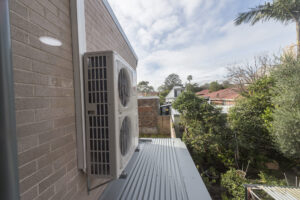
The best air conditioning Sydney homeowners can choose is not one particular brand or system type. It is a correctly sized, energy-efficient system matched to the property, the number of rooms being conditioned, how those rooms are used and the installation conditions.
A split system can make excellent sense for one or two rooms, while multi-split air conditioning can serve several separate rooms without needing an outdoor unit for every indoor unit. Ducted reverse-cycle air conditioning is usually more suitable when you want discreet, whole-home heating and cooling with zoning.
This guide explains the main air conditioning choices, costs, sizing considerations, energy-efficiency factors and installation questions Sydney homeowners and businesses should consider before requesting a quote.
Quick Answer
For one main room, a reverse-cycle split system is often the simplest option. For several separate rooms, a multi-split may work well. For whole-home climate control, ducted air conditioning is usually worth considering.
Whatever system you choose, correct capacity, zoning, installation quality, energy rating and ongoing servicing can matter more than simply choosing the biggest unit or most familiar brand.
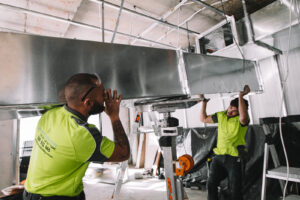
KYNEX technician assessing an air conditioning installation in a Sydney home
Which Type of Air Conditioning Is Best for a Sydney Home?
There is no single air conditioning system that is best for every Sydney property.
The right choice depends mainly on:
- How much of the property you want to heat and cool
- The building layout
- Available roof and outdoor space
- Your budget
- How independently different rooms need to be controlled
- Energy efficiency
- Installation access
- Whether the property is residential, commercial or strata
The main options Sydney property owners are likely to consider include:
- Reverse-cycle split systems
- Multi-split air conditioning
- Ducted reverse-cycle air conditioning
- Cassette air conditioning
- VRV systems
- Floor-standing air conditioners
For a typical Sydney house or apartment, the decision often comes down to split, multi-split or ducted air conditioning.
Split System vs Multi-Split vs Ducted Air Conditioning
Split System Air Conditioning
A split system is usually best suited to a bedroom, living room, studio or individual area.
The main advantages include:
- Independent room control
- Straightforward installation in many homes
- Heating and cooling from a reverse-cycle system
- No need to condition unused rooms
The main limitation is that several rooms may require several indoor and outdoor units.
Multi-Split Air Conditioning
A multi-split system can suit homes and apartments where several rooms need separate indoor units but space for outdoor condensers is limited.
Instead of having one outdoor unit for every indoor unit, multiple indoor units can connect to a single outdoor system.
Whether a multi-split system is practical depends on:
- System capacity
- Number of indoor units
- Refrigerant pipe lengths
- Building layout
- Installation access
- Outdoor-unit location
Ducted Air Conditioning
Ducted air conditioning is generally worth considering when you want whole-home comfort with less visible equipment inside individual rooms.
Conditioned air is distributed through ducts to ceiling or wall outlets, while zoning can allow selected areas of the house to be controlled separately.
Ducted air conditioning can work particularly well in larger family homes, but good system design is important.
Bigger is not automatically better.
Which Air Conditioning System Should You Choose?
A simple starting point is:
One important room: Consider a reverse-cycle split system.
Several separate rooms: Compare individual split systems with a multi-split system.
Most or all of the house: Compare ducted reverse-cycle air conditioning with several room-based systems.
Commercial property: Have the building’s cooling and heating requirements professionally assessed rather than choosing a system based only on floor area.
If you need air conditioning throughout your home, learn more about residential air conditioning services in Sydney.
What Size Air Conditioner Do You Need in Sydney?
Air conditioner capacity should be calculated from the cooling and heating load of the space rather than being chosen from floor area alone.
Floor area is useful as a starting point, but an accurate air conditioning assessment should also consider:
- Ceiling height
- Window area
- Window orientation
- Insulation
- External shading
- Number of occupants
- Room use
- Building materials
- Sun exposure
- Air leakage
- Upper-floor heat load
- Appliances and equipment that produce heat
For example, two Sydney living rooms with identical floor areas may require different cooling capacities.
A room with large west-facing windows and little afternoon shade may require more cooling than a similar-sized room with good insulation and shaded windows.
Why Is Correct Air Conditioner Sizing Important?
A larger air conditioner is not automatically a better air conditioner.
An incorrectly oversized system may reach the thermostat setting very quickly and cycle unnecessarily.
An undersized system may struggle during Sydney’s hotter weather and could run for long periods trying to reach the desired temperature.
The aim is to install enough capacity to handle the expected cooling and heating load without unnecessarily oversizing the equipment.
[Suggested diagram: factors affecting air conditioner sizing, including room size, windows, insulation, orientation and occupancy]
How Much Does Air Conditioning Cost in Sydney?
Air conditioning costs in Sydney vary widely because the equipment itself is only one part of the total installation price.
Current NSW Government guidance provides a broad indication ranging from around $1,500 for a single-split system to more than $10,000 for a fully ducted system.
These figures should only be treated as broad guides.
Actual Sydney air conditioning costs can be lower or substantially higher depending on the property, system and installation requirements.
What Affects Air Conditioning Installation Costs?
Important cost factors include:
- Type of air conditioning system
- Cooling and heating capacity
- Number of indoor units
- Number of ducted outlets
- Brand and model
- Zoning
- Smart controls
- Electrical requirements
- Refrigerant pipe length
- Condensate drainage
- Outdoor-unit location
- Roof or ceiling access
- Duct layout
- Wall construction
- Multi-storey access
- Removal of existing equipment
- Strata requirements
- Installation complexity
For this reason, an advertised “standard installation” price should not automatically be treated as the final cost for every Sydney property.
Why Can Two Air Conditioning Quotes Be Very Different?
Two air conditioning contractors may not necessarily be quoting exactly the same work.
Before comparing quotes, check whether each quote includes:
- Exact air conditioner brand and model
- System capacity
- Installation labour
- Electrical work
- Refrigerant pipework
- Condensate drainage
- Ductwork where required
- Zoning controls
- Outdoor-unit mounting
- Removal of old equipment
- System commissioning
- Testing
- Manufacturer warranty
- Installation warranty
An itemised quote makes it much easier to compare like with like.
If you are planning a new system, you can learn more about air conditioning installation in Sydney.
How Can You Choose Energy-Efficient Air Conditioning in Sydney?
Choose an energy-efficient reverse-cycle system that is correctly sized for your home, then compare the energy performance of systems with similar capacities.
Reverse-cycle air conditioners work by transferring heat rather than creating all heating directly from electricity.
Modern reverse-cycle systems can therefore provide efficient heating as well as cooling.
For eligible air conditioners, the Australian Zoned Energy Rating Label can help customers compare seasonal efficiency across different Australian climate zones.
However, do not compare star ratings without also considering system capacity.
A small air conditioner with an excellent energy rating is not an efficient solution if it is too small to properly condition the room.
What Temperature Should You Set Your Air Conditioner To?
NSW Government energy guidance recommends approximately:
- 24–26°C during summer
- 18–20°C during winter
These settings can help reduce unnecessary energy consumption.
However, the ideal temperature for your household can depend on:
- Personal comfort
- Health requirements
- Humidity
- Clothing
- Number of occupants
- Building insulation
- Outdoor conditions
Turning the thermostat much lower in summer does not necessarily mean the room will cool faster.
How Can You Reduce Air Conditioning Running Costs?
Your air conditioner is only one part of your home’s cooling strategy.
You may be able to reduce cooling demand by:
- Closing blinds before strong afternoon sun reaches windows
- Using external shading where practical
- Improving insulation
- Sealing significant unwanted air leaks
- Cleaning air-conditioner filters
- Avoiding cooling unused rooms
- Using zoning properly
- Keeping doors and windows closed while the system is operating
- Having performance problems professionally investigated
If your air conditioner needs ongoing servicing, consider air conditioning maintenance in Sydney.
What Sydney Property Factors Affect Air Conditioning Installation?
Sydney has a wide variety of housing and commercial buildings, so air conditioning installation conditions can vary considerably.
A freestanding house in Western Sydney can have very different installation requirements from:
- An Inner West terrace
- An Eastern Suburbs apartment
- A North Shore family home
- A Northern Beaches property
- A Sydney CBD office
- A commercial building
- A strata complex
Air Conditioning for Sydney Apartments
Apartment installations can involve additional considerations such as:
- Outdoor condenser placement
- Common property
- External appearance
- Wall penetrations
- Noise
- Pipework routing
- Drainage
- Strata requirements
Do not assume an air conditioner can automatically be installed simply because there is enough physical space for the unit.
Relevant building and strata requirements should be checked first.
Air Conditioning for Older Sydney Homes
Older Sydney properties can require extra planning.
Common issues may include:
- Restricted ceiling cavities
- Solid walls
- Difficult access
- Limited outdoor-unit locations
- Heritage considerations
- Homeowners wanting to minimise visible pipework
Ducted air conditioning may still be possible in many older homes, but available space and the desired finish can influence the design.
How Does Afternoon Sun Affect Air Conditioning?
West-facing windows can significantly increase afternoon cooling demand.
A living area with large west-facing glass may become much hotter than another room of the same size.
That means:
- Window orientation
- External shading
- Curtains
- Blinds
- Insulation
- Glass type
can all influence air conditioning performance.
Improving the building’s ability to keep heat out can sometimes reduce how hard the air conditioner needs to work.
What About Commercial Air Conditioning in Sydney?
Commercial air conditioning requirements should consider more than floor area.
Important factors may include:
- Number of employees
- Computers
- Lighting
- Machinery
- Opening hours
- Ventilation requirements
- Customer traffic
- Separate occupancy zones
- Heat-generating equipment
A small office may therefore have very different air conditioning requirements from a restaurant, warehouse, retail store or medical centre of similar size.
KYNEX provides commercial air conditioning services in Sydney for businesses requiring installation, servicing or repairs.
How Do You Choose an Air Conditioning Installer in Sydney?
Do not choose an air conditioning installer based on price alone.
Licensing, system sizing, installation quality and the proposed installation design are also important.
Air conditioning and refrigeration work is licensed work in NSW, with different requirements depending on the work being completed.
Before approving an installation, consider asking the contractor:
- What air conditioner capacity are you recommending?
- Why have you recommended that capacity?
- How was the cooling load assessed?
- Where will the indoor unit be installed?
- Where will the outdoor unit be installed?
- What electrical work is required?
- How will condensate drainage be handled?
- What exactly is included in the quotation?
- What is excluded from the quotation?
- Who will complete the regulated work?
- What manufacturer warranty applies?
- What installation warranty applies?
- How will zoning work?
- What maintenance will the system require?
A good quotation should help you understand exactly what you are paying for.
Common Air Conditioning Mistakes Sydney Buyers Should Avoid
1. Choosing Air Conditioner Capacity From Room Size Alone
Floor area matters, but it is not the only factor.
Windows, insulation, ceiling height, orientation, sun exposure and occupancy can all change the cooling requirement.
2. Automatically Choosing the Largest Air Conditioner
Oversizing is not a substitute for proper air conditioning design.
The goal should be appropriate capacity for the property.
3. Comparing Quotes Without Comparing the Scope
One quote may include electrical work, drainage, longer pipe runs or removal of an existing air conditioner while another does not.
Always compare what is included.
4. Ignoring Outdoor Unit Positioning
The outdoor condenser needs suitable:
- Airflow
- Access
- Service clearance
- Drainage considerations
- Noise consideration
- Practical location
Apartments and strata properties can have additional restrictions.
5. Focusing Only on Purchase Price
An air conditioner may operate for many years.
You should therefore consider:
- Energy efficiency
- Installation quality
- Controls
- Zoning
- Maintenance
- Serviceability
- Manufacturer support
alongside the initial purchase price.
6. Neglecting Air Conditioner Filters
Dirty filters can restrict airflow and affect performance.
NSW Government energy guidance recommends cleaning air-conditioner filters every few months, although the correct frequency depends on system type, usage and the surrounding environment.
Should You Repair or Replace an Existing Air Conditioner?
Repair can make sense when the problem is economical to correct and the existing air conditioner remains suitable for the property.
Replacement becomes more attractive when:
- Breakdowns are becoming frequent
- Major components have failed
- Parts are difficult to obtain
- The system is inefficient
- The system is incorrectly sized
- Comfort is poor
- Noise has become excessive
- Repair costs continue increasing
Do not assume every air conditioner that stops cooling needs to be replaced.
Some performance problems can result from:
- Dirty filters
- Control problems
- Drainage faults
- Electrical issues
- Airflow problems
- Serviceable components
If your current system is not working correctly, an air conditioning repair service in Sydney can help identify the fault before you decide whether repair or replacement makes better financial sense.
Warning Signs Your Air Conditioner Needs Attention
Consider having your air conditioning system inspected if you notice:
- Poor airflow
- Uneven temperatures
- Water leaking from the indoor unit
- Unusual noises
- Repeated error codes
- The system struggles to reach temperature
- Frequent cycling
- Strange smells
- Repeated breakdowns
- Unexpected changes in performance
The underlying cause should be diagnosed rather than automatically assuming the entire unit needs replacement.
Are Air Conditioning Rebates or Incentives Available in NSW?
Eligible NSW households and businesses may be able to access incentives for certain energy-efficient air conditioning installations or replacements.
As of August 2026, the NSW Government lists an Air Conditioner Energy Saving incentive that may provide eligible customers with an upfront discount when installing or replacing certain systems.
Eligibility and available discounts depend on the equipment and circumstances.
Because government incentives can change, always confirm the latest eligibility requirements before treating a rebate or discount as part of your installation budget.
Air Conditioning Sydney Buying Checklist
Before purchasing a new air conditioning system, use this checklist:
- Decide which rooms actually need heating and cooling
- Compare split, multi-split and ducted systems
- Have the required capacity assessed
- Compare energy efficiency between appropriately sized systems
- Consider outdoor-unit placement
- Check drainage requirements
- Check electrical requirements
- Consider zoning
- Review installation access
- Ask for an itemised quote
- Compare what each quote includes and excludes
- Verify licensing for regulated work
- Understand servicing requirements
- Check filter-maintenance requirements
- Check current NSW energy incentives
How KYNEX Air Conditioning Can Help
KYNEX Air Conditioning supplies, installs, services and repairs air conditioning systems for residential and commercial properties across Sydney.
The company’s website lists services involving:
- Split-system air conditioning
- Multi-split systems
- Ducted air conditioning
- VRV air conditioning
- Cassette air conditioning
- Floor-standing systems
- Air conditioning repairs
- Air conditioning maintenance
Sydney homeowners looking for a new system can explore KYNEX’s residential air conditioning services in Sydney.
If you already know that you need a new system, you can also review its air conditioning installation service.
A site assessment can be particularly useful when you are unsure about:
- Air conditioner capacity
- Split versus ducted air conditioning
- Outdoor-unit position
- Available roof space
- Zoning
- Number of indoor units
- Installation access
For a more accurate quote, the property should be assessed based on its layout, access, comfort requirements and proposed air conditioning system.
Frequently Asked Questions About Air Conditioning Sydney
What Is the Best Type of Air Conditioning for Sydney?
For one or two rooms, reverse-cycle split-system air conditioning is often practical.
Multi-split systems can work well when several separate rooms require individual indoor units.
Ducted reverse-cycle air conditioning is generally worth considering for whole-home heating and cooling.
The best choice depends on property size, layout, available installation space, budget and how different rooms are used.
How Much Does Air Conditioning Cost in Sydney?
There is no single air conditioning price for every Sydney property.
Current NSW Government guidance provides a broad range from around $1,500 for a single-split system to more than $10,000 for fully ducted air conditioning.
Larger systems, difficult installation access, zoning, additional electrical work and complex ductwork can increase the final price.
Always obtain a property-specific quote.
Is Reverse-Cycle Air Conditioning Good for Sydney Winters?
Yes.
Reverse-cycle air conditioners provide both heating and cooling by transferring heat between indoors and outdoors.
They can provide an energy-efficient form of electric heating when the system is correctly selected, installed and operated.
Efficiency still depends on system capacity, property insulation, equipment performance and thermostat settings.
What Temperature Should I Set My Air Conditioner to in Summer?
NSW Government energy guidance recommends approximately 24–26°C in summer.
Lower thermostat settings can increase electricity consumption without necessarily cooling the room faster.
The best temperature can vary depending on humidity, household comfort, health requirements and building conditions.
How Often Should Air Conditioner Filters Be Cleaned?
NSW Government energy guidance recommends cleaning air-conditioner filters every few months.
However, homes with pets, high usage, dust or other airborne contaminants may require more frequent cleaning.
Follow the manufacturer’s maintenance instructions for your particular system.
Do I Need a Licensed Air Conditioning Installer in NSW?
Air conditioning and refrigeration work is regulated in NSW.
The exact licence requirements depend on the work being performed, including associated electrical and refrigeration work.
Before installation or major repairs, check that the people completing regulated tasks hold the appropriate current licences or certificates.
Should I Repair or Replace My Old Air Conditioner?
Repair may be worthwhile if the fault is minor and the system remains reliable, efficient and properly sized.
Replacement becomes more attractive if breakdowns are frequent, major components fail, parts are difficult to source or the system no longer meets the property’s heating and cooling requirements.
A professional diagnosis should normally come before the repair-or-replace decision.
Related Air Conditioning Services
If you need more specific information, you may also find these services useful:
- Residential air conditioning Sydney
- Commercial air conditioning Sydney
- Air conditioning installation Sydney
- Air conditioning maintenance Sydney
- Air conditioning repairs Sydney
Need Help Choosing Air Conditioning in Sydney?
If you are comparing split, multi-split or ducted air conditioning for a Sydney property, start with the property and your heating and cooling requirements rather than choosing a system based only on brand or price.
KYNEX Air Conditioning can assess the property, discuss which areas need heating and cooling and explain suitable installation options.
For the most useful quote, provide details about:
- Property type
- Number of rooms
- Areas you want to cool and heat
- Existing air conditioning
- Preferred system type
- Zoning requirements
- Any known installation-access issues
This gives the installer more information to recommend an air conditioning solution that suits the property rather than relying on a generic estimate.