
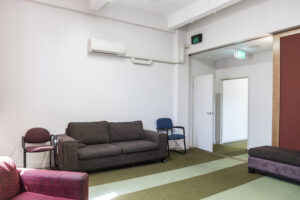
The safest place to buy split system air conditioners in Sydney is through a reliable local air conditioning company that can recommend the correct system, supply the equipment, install it properly and provide support after the job is completed.
You can buy a split system as equipment only, arrange installation for a system you already own or choose a complete supply-and-install package. For most Sydney homeowners, a complete package is the safer option because the sizing, equipment selection, placement, installation and testing are managed by one company.
The unit itself is only one part of the purchase. The comfort, noise level, efficiency and reliability of your new air conditioner depend heavily on correct sizing and professional installation.
A low equipment price may not be a good deal if it excludes electrical work, pipework, brackets, drainage, removal of the old system or final testing.
The better question is not simply, “Where can I buy an air conditioner?”
It is, “Who will take responsibility for the complete result?”
Where Can You Buy Split System Air Conditioners in Sydney?
Sydney buyers generally have three main purchasing options.
Option 1: Buy the Split System as Supply Only
A supply-only purchase means you buy the indoor unit, outdoor unit and included controls, then arrange installation separately.
This option may suit you when:
- You already have a licensed air conditioning installer.
- You know the exact system model and capacity required.
- Your installer has confirmed that the equipment is suitable.
- You understand the manufacturer’s warranty requirements.
- You have checked whether installation by an approved contractor is required.
The main risk is buying the wrong capacity or a system that cannot be installed in your preferred location.
Before purchasing, ask your intended installer to confirm the model, room requirements, outdoor-unit location and installation conditions.
Option 2: Buy the System and Arrange Installation Separately
Some homeowners purchase their system first and then search for split system installation Sydney services.
This can work, but it creates two separate responsibilities.
The equipment seller may be responsible for the unit, while the installer is responsible for the installation. If a problem occurs, it may be difficult to determine whether the issue relates to the equipment, system sizing or installation.
Always confirm the following before buying:
- Whether the installer accepts customer-supplied systems.
- Whether the system is correctly sized.
- Whether installation affects the product warranty.
- Whether the installation quote includes electrical work.
- Whether additional pipework or brackets will cost extra.
- Whether the old unit will be removed.
Option 3: Choose a Supply-and-Install Package
A complete air conditioning supply and install Sydney package is usually the simplest option.
One air conditioning company assesses the property, recommends the system, supplies the equipment and completes the installation.
This provides one point of contact for:
- System sizing.
- Equipment selection.
- Installation planning.
- Electrical requirements.
- Pipework and drainage.
- Testing and commissioning.
- Warranty documentation.
- Future servicing and repairs.
KYC Air Conditioning offers supply-only, installation-only and complete supply-and-install options for Sydney customers.
Why Is Supply and Installation Through One Company Often Safer?
A split system is not a standard plug-in appliance.
The indoor and outdoor units must be positioned, mounted, connected, drained, wired and tested correctly.
The completed system must also be commissioned. Commissioning means checking that the air conditioner is operating correctly before it is handed over to the customer.
When the equipment supplier and installer are different companies, problems may become harder to resolve.
The seller may say that the unit is working correctly. The installer may say that the system was unsuitable for the property or that the equipment had a fault.
A complete air conditioner installation Sydney package reduces this uncertainty because the system recommendation and installation plan are handled together.
A professional assessment should consider:
- Room dimensions.
- Ceiling height.
- Window size.
- Window direction.
- Afternoon sun.
- Insulation.
- Number of occupants.
- Room usage.
- Indoor-unit placement.
- Outdoor-unit airflow.
- Drainage.
- Electrical supply.
- Pipe route.
- Noise near bedrooms.
- Noise near neighbouring properties.
- Future maintenance access.
These factors are especially important for residential air conditioning Sydney projects involving apartments, terraces, older homes and tightly spaced properties.
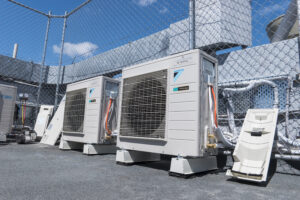
How Do You Choose the Correct Split-System Size?
Split-system capacity is normally measured in kilowatts, shown as kW.
A larger kW rating does not automatically mean that the system is better.
The capacity must suit the size, heat load and usage of the room.
A system that is too small may run continuously and still fail to reach the desired temperature.
A system that is too large may cool the room quickly, switch off and restart repeatedly. This is sometimes called short-cycling.
Incorrect sizing may lead to:
- Uneven temperatures.
- Poor comfort.
- Unnecessary energy use.
- Higher operating noise.
- Increased wear.
- Reduced humidity control.
- Shorter system life.
Room size is important, but it is not the only factor.
Two rooms with the same floor area may require different systems.
For example, one room may face south and receive limited direct sun. Another room of the same size may face west, have large glass doors and sit below a poorly insulated roof.
The second room may have a much higher cooling load.
A proper system recommendation should consider:
- Floor area.
- Ceiling height.
- Roof exposure.
- Window direction.
- Glass area.
- Insulation.
- Occupancy.
- Appliances.
- Open-plan connections.
- How often the room is used.
KYC Air Conditioning considers room dimensions, insulation, window orientation, occupancy and usage when recommending a system.
What Should Sydney Homeowners Consider Before Buying?
Sydney properties vary greatly. An installation that is simple in one home may be difficult in another.
Apartments and Strata Properties
A split system can often be installed in a Sydney apartment, but strata approval may be required.
Approval may be needed for:
- The outdoor unit.
- Balcony placement.
- Pipework.
- Drainage.
- Wall penetrations.
- Changes to common property.
- Noise considerations.
- External appearance.
Before buying the equipment, ask for a proposed installation location and confirm whether the strata manager or owners corporation needs supporting documents.
Do not order a system until the outdoor-unit position has been approved.
Terraces and Narrow Properties
Sydney terraces and narrow properties can create challenges with outdoor-unit placement.
The shortest installation route may not always be the best option.
The installer should consider:
- Neighbouring walls.
- Bedroom windows.
- Shared boundaries.
- Side access.
- Drainage.
- Walkways.
- Future servicing access.
- Noise reflection.
A site assessment can help identify a neat and practical installation route.
Older and Heritage Homes
Older Sydney homes may have solid walls, decorative surfaces, unusual ceiling heights or limited external space.
These conditions can affect:
- Mounting methods.
- Pipe routing.
- Electrical work.
- Drainage.
- Installation time.
- Final appearance.
A site inspection is strongly recommended before buying equipment for a heritage or older home.
Commercial Properties
Commercial air conditioning Sydney requirements are different from standard residential requirements.
A small office, shop or treatment room may have additional heat from:
- Computers.
- Lighting.
- Customers.
- Staff.
- Refrigeration.
- Equipment.
- Frequently opened doors.
The operating hours and number of occupants should be considered before choosing a system.
What Should a Split-System Quote Include?
A useful air conditioning installation quote Sydney homeowners can trust should explain the full job.
It should not only show the model number and total price.
Before paying a deposit, check whether the written quote includes the following.
System Model and Capacity
The quote should clearly identify:
- The system model.
- Cooling capacity.
- Heating capacity.
- Indoor unit.
- Outdoor unit.
- Included controller.
- Relevant system features.
Ask why the recommended capacity is suitable for your room.
Standard Pipework Allowance
Many installation packages include a set amount of pipework.
Ask:
- How much pipework is included?
- What is the cost of additional pipework?
- Will pipework be covered?
- Where will the pipe run be visible?
Long or difficult installation routes may increase the cost.
Electrical Work
Confirm whether electrical work is included.
The project may require:
- A dedicated circuit.
- An isolation switch.
- Switchboard work.
- Cable installation.
- Safety upgrades.
Do not assume that all electrical work is included in an advertised installation price.
Outdoor-Unit Mounting
The quote should explain where and how the outdoor unit will be installed.
Possible options include:
- Ground mounting.
- Concrete slab.
- Wall brackets.
- Balcony placement.
- Roof mounting.
- Raised stands.
The installer should allow enough airflow and future service access.
Drainage
Split systems produce condensation during cooling.
The drainage plan should direct water to a suitable location.
Poor drainage can cause:
- Water stains.
- Wall damage.
- Mould.
- Leaks.
- Slippery outdoor surfaces.
- Complaints from neighbouring properties.
Removal of the Existing System
When replacing an old system, confirm whether the quote includes:
- Safe decommissioning.
- Refrigerant handling.
- Removal of the indoor unit.
- Removal of the outdoor unit.
- Disposal.
- Basic patching or making good.
Testing and Handover
After installation, the technician should test the system and explain:
- How to use the remote.
- Cooling mode.
- Heating mode.
- Fan settings.
- Filter cleaning.
- Basic maintenance.
- Warranty registration.
- When professional servicing may be required.
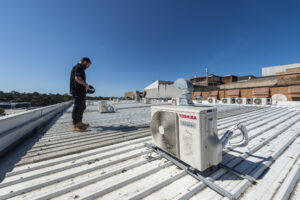
How Much Does a Split System Cost to Buy and Install in Sydney?
There is no single correct price for every split-system installation.
The final cost depends on:
- System size.
- System features.
- Installation location.
- Pipe length.
- Wall type.
- Outdoor-unit mounting.
- Electrical requirements.
- Drainage.
- Access.
- Property type.
- Removal of an existing unit.
- Strata requirements.
- Installation difficulty.
A straightforward back-to-back installation is normally less complex.
Back-to-back installation means the indoor and outdoor units are installed on opposite sides of the same wall.
This usually allows for a short pipe route.
However, not every property qualifies for a basic installation price.
Extra work may be required when:
- The outdoor unit must be installed far from the indoor unit.
- The system is on an upper level.
- Wall brackets are required.
- Access is restricted.
- The switchboard needs upgrading.
- Pipework must pass through several rooms.
- The condensate drain needs a pump.
- The old system must be removed.
- Strata conditions affect the installation.
Compare the complete installed price rather than the equipment price alone.
A cheaper system may become more expensive once labour, pipework, electrical work, brackets and removal costs are added.
What Should a Professional Installation Process Look Like?
A good split-system installation begins before drilling or mounting starts.
The technician should confirm:
- The selected system.
- Indoor-unit placement.
- Outdoor-unit placement.
- Pipe route.
- Drainage.
- Electrical requirements.
- Access.
- Property protection.
A sensible installation process normally includes the following steps.
Step 1: Confirm the System and Position
The installer should check that the recommended capacity and placement remain suitable.
The final position should allow:
- Good airflow.
- Even room coverage.
- Reasonable pipe routing.
- Suitable drainage.
- Future service access.
Step 2: Protect the Property
Floors, furniture and nearby surfaces should be protected before work begins.
This is particularly important in completed homes, offices and renovated properties.
Step 3: Install the Indoor and Outdoor Units
The indoor and outdoor units should be mounted securely and according to the equipment requirements.
Step 4: Complete Pipework, Drainage and Electrical Connections
The refrigerant lines, drainage and electrical components should be installed neatly and safely.
Step 5: Test and Commission the System
The technician should test the completed system and check that it is operating correctly.
Step 6: Clean the Work Area
Packaging, dust and installation waste should be removed.
Step 7: Explain the Controls
The customer should be shown how to use the main operating modes and maintain accessible filters.
Many straightforward single-system installations can be completed within one working day.
More complex work may take longer due to access, electrical requirements, long pipe routes, difficult walls or strata restrictions.
Should You Buy Split-System or Ducted Air Conditioning?
Split system air conditioning Sydney installations are often suitable for:
- One bedroom.
- One living room.
- A home office.
- A small apartment.
- A selected area of the home.
- A room that is used more often than others.
Ducted air conditioning Sydney may be more suitable when you want:
- Whole-home heating and cooling.
- Discreet ceiling outlets.
- Central control.
- Multiple zones.
- A consistent appearance throughout the property.
Split systems usually involve a smaller project, but each indoor unit remains visible.
Ducted systems are more discreet, but they generally require suitable ceiling or roof space and a larger budget.
Choose a Split System When:
- You only need one or two rooms conditioned.
- You want independent room control.
- You have limited roof space.
- You want a smaller initial project.
- The property is an apartment or small home.
Consider Ducted Air Conditioning When:
- You want to condition most rooms.
- You prefer discreet ceiling outlets.
- You want central control.
- The property has suitable roof space.
- Several separate split systems would be impractical.
Read: Split System vs Ducted Air Conditioning Sydney
What Are the Main Benefits of Split-System Air Conditioning?
Split systems remain popular across Sydney because they provide targeted heating and cooling.
Common benefits include:
- Heating and cooling from one system.
- Individual room control.
- Fast temperature adjustment.
- Suitability for apartments.
- Suitability for home offices.
- Smaller installation scope than ducted air conditioning.
- Flexible installation options.
- Independent use in different rooms.
Reverse cycle air conditioning Sydney systems can provide both cooling in summer and heating in winter.
This may reduce the need for separate heating and cooling appliances.
What Are the Limitations of Split Systems?
A split system may not be the best choice for every property.
Possible limitations include:
- The indoor unit remains visible.
- Each additional room may need another unit.
- Several outdoor units may affect appearance.
- Outdoor-unit placement may be restricted.
- Strata approval may be required.
- Noise must be considered near bedrooms and neighbours.
- Poor sizing can reduce comfort.
- Poor installation can cause drainage or performance problems.
A site assessment can help determine whether a split, multi-split or ducted system is more suitable.
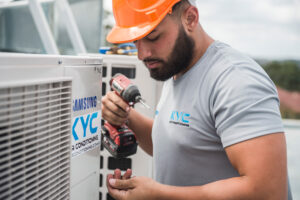
How Can You Check Whether an Installer Is Reliable?
Trust should be based on evidence rather than promotional claims.
Before choosing an air conditioning contractor Sydney homeowners should check:
- Business details.
- Relevant licences.
- Installation experience.
- Written quote quality.
- Recent customer feedback.
- Completed work photographs.
- Warranty information.
- Communication.
- Service coverage.
- Post-installation support.
Give more weight to reviews that explain:
- What work was completed.
- What type of property was involved.
- Whether any problem was solved.
- Whether the team arrived as arranged.
- Whether the property was left clean.
- Whether the system worked as expected.
- How the company handled follow-up questions.
A detailed review provides more useful information than a rating without context.
How Can KYC Air Conditioning Help?
KYC Air Conditioning can assist with the complete buying and installation process.
The company can help with:
- Property assessment.
- Room sizing.
- System recommendations.
- Split-system supply.
- Split system installation Sydney.
- Reverse-cycle air conditioning.
- Air conditioner replacement Sydney.
- New air conditioner installation Sydney.
- Air conditioning repairs Sydney.
- Air conditioning service Sydney.
- Air conditioning maintenance Sydney.
- Ducted air conditioning installation Sydney.
- Residential air conditioning Sydney.
- Commercial air conditioning Sydney.
The process should begin with a discussion about the property, room, preferred location and budget.
KYC Air Conditioning can then recommend suitable options and prepare an itemised quote.
The quote should explain:
- The recommended equipment.
- System capacity.
- Indoor-unit position.
- Outdoor-unit position.
- Installation scope.
- Electrical work.
- Pipework.
- Drainage.
- Removal requirements.
- Testing.
- Handover.
Using one company for supply, installation and ongoing servicing can make the process easier.
It also gives the customer one point of contact if future maintenance or repairs are required.
Questions to Ask Before Buying a Split System
Before approving a quote, ask the following questions:
- Why is this system capacity suitable for my room?
- Is the system reverse cycle?
- Where will the indoor unit be installed?
- Where will the outdoor unit be installed?
- How much pipework is included?
- Is electrical work included?
- Are wall brackets or mounting stands included?
- Where will the condensate drain?
- Is removal of the old unit included?
- Does the property need strata approval?
- How long should the installation take?
- What equipment warranty applies?
- What workmanship warranty applies?
- Will the system be tested before handover?
- Will I receive instructions on system use and filter cleaning?
Frequently Asked Questions
Can I Buy a Split System and Arrange Installation Later?
Yes, but ask your intended installer to confirm the proposed model, capacity, warranty requirements and installation location before purchasing.
Buying first and checking later may leave you with equipment that is unsuitable for the property.
Does KYC Air Conditioning Offer Supply-Only Systems?
KYC Air Conditioning states that customers can choose supply only, installation only or a complete supply-and-install service.
Is Reverse-Cycle Air Conditioning Suitable for Sydney?
Reverse-cycle systems provide both heating and cooling.
They can suit many Sydney homes, but correct sizing and installation remain important.
Can a Split System Be Installed in an Apartment?
Often yes.
However, strata approval may be required for outdoor-unit placement, wall penetrations, drainage, pipework or changes to common property.
How Long Does Split-System Installation Take?
Many straightforward single-system installations can be completed within one working day.
Complex access, electrical work, long pipe routes or strata restrictions may increase the installation time.
Can KYC Remove My Old Air Conditioner?
KYC Air Conditioning can assist with air conditioner replacement Sydney projects.
Confirm that decommissioning, removal and disposal are included in the written quote.
Should I Choose the Cheapest Installation Quote?
Not automatically.
Compare the full scope, including:
- Equipment capacity.
- Electrical work.
- Pipework.
- Mounting.
- Drainage.
- Removal.
- Testing.
- Warranty information.
- Possible additional costs.
The lowest advertised price may not be the lowest final price.
How Often Should a Split System Be Maintained?
Accessible filters should be cleaned according to the equipment instructions.
Professional servicing frequency depends on:
- Usage.
- Property conditions.
- Coastal exposure.
- Dust.
- Pets.
- Commercial use.
- Manufacturer guidance.
Related KYC Air Conditioning Guides
- Split System vs Ducted Air Conditioning Sydney
- What Should a Fair Split-System Installation Quote Include?
- How to Find a Reliable Air Conditioning Installer in Sydney
Final Verdict: Where Should You Buy a Split System in Sydney?
The best place to buy a split system air conditioner in Sydney is usually through a local air conditioning company that can assess the room, recommend the correct capacity, explain the complete installed price and remain responsible for the installation.
Buying equipment only can work when you already know the exact system required and have confirmed the installation with a licensed AC installer Sydney customers can verify.
For most homeowners, however, a complete supply-and-install package creates a clearer process and reduces the risk of purchasing the wrong system.
KYC Air Conditioning offers split-system supply, professional installation, air conditioning repairs, servicing and maintenance across Sydney.
Before buying, ask for an itemised quote, confirm what is included and choose the system that suits your property rather than simply selecting the largest unit or cheapest advertised price.