
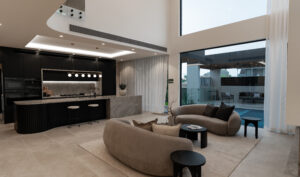
The best energy-efficient air conditioners suited for Sydney’s climate are correctly sized inverter reverse-cycle systems with strong efficiency ratings for Australia’s average climate zone. A split system usually suits one or two main rooms, while a zoned ducted system is often better for whole-home comfort.
The most important point is simple: do not choose an air conditioner based only on brand, maximum output or the headline star rating.
A good system must match the size, design and heat load of your property. It should also have suitable annual energy consumption, manageable noise levels and professional installation by a licensed Sydney air conditioning installer.
For most Sydney homes, an efficient reverse-cycle air conditioner offers one practical appliance for both summer cooling and winter heating.
What Makes an Air Conditioner Suitable for Sydney’s Climate?
Sydney experiences warm and humid summer periods, cool winter mornings and major temperature differences between coastal suburbs and western Sydney.
A shaded apartment near the coast may have very different cooling needs from a west-facing home in Blacktown, Parramatta or Penrith.
The best air conditioning Sydney homeowners can choose is therefore not always the biggest unit.
It is the system that can keep the room comfortable without:
- switching on and off every few minutes
- running at maximum output all day
- creating uncomfortable hot and cold areas
- wasting energy in rooms that are not being used
- producing excessive indoor or outdoor noise
Humid Sydney Summers
Sydney humidity can make a room feel warmer than the temperature shown on the thermostat.
A modern inverter air conditioner can run steadily at a lower output after the room reaches the desired temperature. This can help manage both heat and humidity more smoothly than a poorly matched unit that repeatedly starts and stops.
Cool Winter Mornings
Reverse-cycle air conditioning Sydney households use can provide both heating and cooling.
Instead of directly producing all its heat from electricity, a reverse-cycle system transfers heat from outside to inside during winter.
This makes it a practical year-round option for many Sydney properties.
Different Homes Need Different Capacities
Air conditioner capacity should not be chosen using floor area alone.
A professional assessment should also consider:
- ceiling height
- insulation
- window size
- glass direction
- afternoon sun
- roof type
- room occupancy
- appliances that produce heat
- air leakage
- room layout
For example, two Sydney living rooms may have the same floor area but require different air conditioners.
A ground-floor double-brick room with shaded windows may need less cooling than a top-floor room with a metal roof and west-facing glass.
Which Energy-Efficient Air Conditioning System Is Best for Sydney?
The best system depends on how many rooms you want to condition, how often those rooms are used and whether you prefer individual or central control.
The three main options are split systems, multi-split systems and zoned ducted air conditioning.
Reverse-Cycle Split System Air Conditioning Sydney
Split system air conditioning Sydney installations are often the simplest option for:
- bedrooms
- living rooms
- home offices
- apartments
- open-plan living areas
- small commercial rooms
A standard split system includes one indoor unit connected to one outdoor unit.
Modern inverter split systems can reduce compressor speed after the room reaches the selected temperature. This can provide steadier comfort and lower energy use than older fixed-speed systems.
Split system installation Sydney homeowners arrange should include:
- correct system sizing
- suitable indoor unit placement
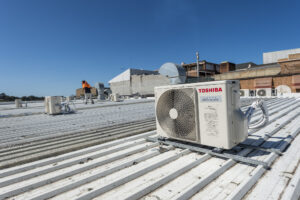
- practical outdoor unit positioning
- safe electrical work
- appropriate drainage
- neat pipework
- proper testing and commissioning
A cheap split system may not deliver good value if the unit is incorrectly sized or poorly installed.
Multi-Split Air Conditioning
A multi-split system connects several indoor units to one outdoor unit.
This may suit:
- apartments
- townhouses
- homes with limited outdoor space
- properties that cannot accommodate several outdoor units
- households that want independent control in different rooms
Each indoor unit can usually be operated separately.
This means you can condition an occupied bedroom or living room without cooling the whole property.
However, multi-split systems require careful planning. The outdoor unit must be able to support the likely combined demand, and the pipe routes must be practical.
Because several indoor units share one outdoor system, a major outdoor-unit fault may affect multiple rooms.
Zoned Ducted Air Conditioning Sydney
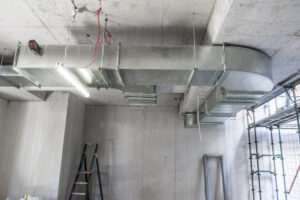
Ducted air conditioning Sydney homes often use provides discreet whole-home heating and cooling through ceiling outlets.
The main indoor equipment is generally installed in the ceiling space, while conditioned air is delivered through ducts to different rooms or zones.
A zoned ducted system allows selected parts of the home to operate independently.
For example, you may be able to run:
- the living area during the day
- the bedroom zone at night
- the home office during working hours
- several occupied rooms at the same time
Ducted air conditioning installation Sydney projects can be efficient when properly designed.
However, performance may be reduced by:
- poorly insulated ductwork
- leaking ducts
- incorrect duct sizing
- weak return-air design
- unsuitable zoning
- restricted airflow
- poor ceiling-space access
- incorrect system capacity
Ducted air conditioning is often best for families that regularly use several rooms at the same time and want a clean, centralised appearance.
Split System, Multi-Split or Ducted: Which Should You Choose?
Choose a split system if you mainly need to condition one room or one open-plan area.
Choose a multi-split system if you want separate control in several rooms but have limited space for outdoor units.
Choose zoned ducted air conditioning if you want discreet whole-home comfort and expect several rooms to be used at the same time.
The right choice depends on how the home is actually used, not just its total floor area.
How Do You Read an Air Conditioner Energy Rating?
Australia’s Zoned Energy Rating Label provides climate-specific information for air conditioners.
Sydney falls within the average climate comparison zone used on the label.
The label may show:
- cooling capacity
- heating capacity
- cooling star rating
- heating star rating
- estimated annual electricity use
- indoor noise
- outdoor noise
Cooling Capacity
Cooling capacity shows how much cooling output the system can provide under defined test conditions.
Capacity is normally shown in kilowatts.
It should be compared only after the room or property load has been properly assessed.
A high-capacity system is not automatically more efficient.
Heating Capacity
Heating capacity shows the output available when the reverse-cycle system is operating in heating mode.
This is important when the air conditioner will be used as the main winter heating system.
Average Climate Zone Stars
The average-zone stars provide a more locally relevant efficiency comparison for Sydney than a single general efficiency rating.
However, star ratings should be compared only between similar system types and similar capacities.
A small high-star air conditioner is not necessarily suitable for a large room.
Estimated Annual Electricity Use
The annual kilowatt-hour figure can help you compare likely electricity consumption between similar air conditioners.
When comparing equivalent systems, a lower annual kilowatt-hour figure will usually suggest lower running costs under the same standard assumptions.
Actual energy use will still depend on:
- electricity tariffs
- weather
- insulation
- thermostat settings
- operating hours
- room size
- maintenance
- system condition
Indoor and Outdoor Noise
Noise ratings matter in bedrooms, apartments and closely built Sydney suburbs.
Outdoor unit noise should be considered carefully when the unit is near:
- neighbouring windows
- balconies
- courtyards
- bedrooms
- common property
- hard walls that reflect sound
Even a relatively quiet outdoor unit can create problems if it is installed in a poor location.
Why Correct Air Conditioner Sizing Matters More Than Brand
Correct sizing is one of the most important parts of air conditioning installation Sydney homeowners should consider.
An undersized system may:
- run continuously
- struggle on hot days
- use more electricity
- wear out faster
- fail to reach the desired temperature
An oversized system may:
- cool the room too quickly
- switch on and off frequently
- provide poor humidity control
- create temperature swings
- cost more to purchase
A properly sized inverter system should be able to meet peak demand while also reducing its output when less heating or cooling is required.
This is why a licensed AC installer Sydney homeowners engage should inspect the property before recommending a system.
What Air Conditioner Performance Features Matter Most?
Inverter Technology
An inverter air conditioner can adjust compressor speed instead of operating only at full power or switching off completely.
Once the room reaches the selected temperature, the system may reduce its output and continue running at a lower level.
This can provide:
- steadier room temperatures
- quieter operation
- fewer harsh start-stop cycles
- improved part-load efficiency
- better day-to-day comfort
Humidity Control
Humidity can make a Sydney room feel warmer than the thermostat suggests.
A correctly selected system can remove moisture while cooling.
An oversized unit may cool the air very quickly and shut down before enough moisture has been removed.
This can leave the room feeling cool but damp or uncomfortable.
Zoning
Zoning can improve the efficiency of ducted air conditioning by reducing energy use in unoccupied areas.
However, zones must be professionally designed.
Closing too many zones without suitable airflow management may increase pressure, noise and strain on the system.
Airflow
Good airflow should reach the occupied part of the room without creating an uncomfortable draught.
Indoor units and ceiling outlets should not be positioned only because the location is easy for the installer.
Placement should consider:
- furniture
- beds
- seating areas
- room shape
- return-air paths
- door positions
- ceiling height
Noise Control
Noise is an important part of air conditioner performance.
The system should not only cool effectively. It should also operate at a reasonable sound level during normal use.
This is particularly important for:
- bedrooms
- nurseries
- home offices
- apartments
- townhouses
- closely spaced homes
Filters and Maintenance Access
Air filters should be easy to access and clean.
Blocked filters restrict airflow and may force the system to work harder.
Air conditioning maintenance Sydney homeowners arrange may also include inspection of:
- coils
- drainage
- electrical connections
- refrigerant performance
- fan operation
- system controls
- overall operating condition
How Much Does an Energy-Efficient Air Conditioner Cost to Run?
Running costs vary significantly.
A simple estimate can be calculated using:
Average input power × hours used × days used × electricity rate
For example, imagine an air conditioner uses an average of 1.2 kilowatts while operating.
If it runs for six hours per day over 180 days, the estimated annual electricity consumption would be:
1.2 × 6 × 180 = 1,296 kilowatt-hours
At an electricity rate of $0.35 per kilowatt-hour, the estimated annual cost would be:
1,296 × $0.35 = $453.60
This is only a rough example.
Actual inverter consumption changes throughout the day because the system adjusts its output.
Real running costs may also be affected by:
- outdoor temperature
- indoor temperature setting
- room insulation
- property orientation
- humidity
- air leakage
- solar panels
- time-of-use tariffs
- filter condition
- maintenance
- system age
What Is an Efficient Air Conditioner Like to Use Every Day?
A well-designed air conditioning system should feel simple and predictable.
It should start smoothly, reach the desired temperature and then settle into quieter operation.
You should not need to keep changing the thermostat because one side of the room is too hot while another area is too cold.
For many Sydney homes, a cooling setting in the mid-20s can feel comfortable when humidity is properly controlled.
Setting the thermostat extremely low does not make the air conditioner cool the room faster.
It simply asks the system to continue working until it reaches a lower target.
Useful everyday controls may include:
- timers
- sleep mode
- weekly scheduling
- Wi-Fi control
- mobile app control
- zone control
- economy mode
- fan-only mode
- dry mode
Smart controls are most useful when they change real behaviour.
For example, remote access may help you switch the system off after leaving home or avoid running unoccupied zones.
What Should Air Conditioning Installation Day Include?
A professional air conditioner installation Sydney service should include more than simply mounting the units.
Installation day should normally involve:
- confirmation of unit locations
- protection of flooring and furniture
- neat pipework
- suitable drainage
- appropriate electrical work
- secure outdoor mounting
- pressure testing
- commissioning
- operating checks
- site clean-up
- customer handover
The technician should explain:
- how to operate the controls
- how to clean the filters
- recommended temperature settings
- which modes to use
- warranty requirements
- when servicing may be needed
A good installer should leave you confident about using the system efficiently.
Split System vs Multi-Split vs Ducted Air Conditioning
Single Split System
Best for: One bedroom, living room, office or open-plan area.
Main benefit: Only the selected room needs to be conditioned.
Main limitation: Several outdoor units may be needed if many rooms require separate systems.
Multi-Split System
Best for: Several rooms where outdoor space is limited.
Main benefit: Independent control from one shared outdoor system.
Main limitation: More complex installation and shared outdoor equipment.
Zoned Ducted System
Best for: Whole homes and larger layouts.
Main benefit: Central control with selectable zones.
Main limitation: Efficiency depends heavily on duct design, sealing, zoning and installation quality.
Is Split System Air Conditioning Cheaper to Run Than Ducted?
A split system is often cheaper to run when only one occupied area needs heating or cooling.
For example, a household that spends most of the day in one living room may not benefit from conditioning the entire home.
A ducted system may be more practical when several bedrooms, living areas and a study are being used at the same time.
Running costs depend on:
- system capacity
- star rating
- annual energy use
- zoning
- insulation
- operating hours
- temperature settings
- weather
- property size
It is not accurate to say that one system type is always cheaper for every Sydney property.
Is Ducted Air Conditioning Energy Efficient in Sydney?
Ducted air conditioning can be efficient when it is properly designed and used.
Important factors include:
- correctly sized equipment
- insulated ductwork
- sealed duct connections
- appropriate return-air design
- practical zoning
- suitable outlet placement
- effective airflow control
- sensible thermostat settings
A high-efficiency outdoor unit cannot fully compensate for leaking ducts or poor zoning.
This is why ducted air conditioning installation Sydney projects should be designed as complete systems rather than treated as equipment-only purchases.
Residential Air Conditioning Sydney Buyers Should Consider
Residential air conditioning Sydney homes require should suit the household’s daily routine.
Before choosing a system, ask:
- Which rooms are occupied most often?
- Are bedrooms used mainly at night?
- Does someone work from home?
- Are several rooms used at once?
- Does the property receive strong afternoon sun?
- Is there ceiling space for ductwork?
- Are there strata restrictions?
- Is outdoor unit noise likely to affect neighbours?
A smaller home may still need more than one system if its rooms are separated.
A larger open-plan home may sometimes be served effectively by fewer carefully positioned units.
Commercial Air Conditioning Sydney Businesses Should Consider
Commercial air conditioning Sydney projects require a different assessment from standard residential installations.
The system may need to account for:
- staff numbers
- customer traffic
- computers
- lighting
- equipment heat
- business hours
- ventilation
- doors opening frequently
- server rooms
- kitchen areas
- maintenance access
- business disruption during installation
A commercial air conditioning contractor Sydney businesses engage should assess how the space is actually used throughout the day.
Benefits of Energy-Efficient Air Conditioning
Energy-efficient air conditioners may provide:
- lower electricity use than inefficient equivalent systems
- heating and cooling from one appliance
- steadier indoor temperatures
- quieter part-load operation
- improved humidity control
- targeted room control
- better zoning options
- lower long-term running costs
- improved comfort during Sydney summers and winters
Limitations to Consider
Energy-efficient air conditioning still has some limitations.
These may include:
- higher upfront purchase costs
- installation costs
- the need for professional sizing
- ongoing filter cleaning
- servicing requirements
- outdoor unit noise
- strata restrictions
- limited ceiling space
- possible duct losses
- repair costs as the system ages
Smart controls and high star ratings cannot correct poor installation.
Who Should Choose a Reverse-Cycle Split System?
A reverse-cycle split system may be best if:
- you mainly need one room conditioned
- you want a lower-cost permanent installation
- you want separate room control
- you do not need whole-home air conditioning
- you have a practical outdoor unit location
Who Should Choose a Multi-Split System?
A multi-split system may be suitable if:
- several rooms need individual control
- outdoor unit space is limited
- the home cannot accommodate several condensers
- pipe routes are practical
- the shared outdoor system is correctly sized
Who Should Choose Zoned Ducted Air Conditioning?
Zoned ducted air conditioning may be suitable if:
- you want whole-home comfort
- several rooms are occupied at once
- you prefer discreet ceiling outlets
- you want central control
- suitable ceiling or bulkhead space is available
- zoning can be professionally designed
When Should You Replace an Existing Air Conditioner?
Air conditioner replacement Sydney homeowners consider may make sense when the existing unit:
- needs frequent repairs
- has become unusually noisy
- cannot maintain temperature
- uses older fixed-speed technology
- has high running costs
- uses obsolete parts
- is no longer supported
- has major compressor or coil problems
However, replacement should not be recommended without a proper diagnosis.
Air conditioning repairs Sydney technicians provide may still be cost-effective when the fault is minor and the system is otherwise in good condition.
How Can KYC Air Conditioning Help Sydney Buyers?
KYC Air Conditioning can assess your property before recommending a system.
This helps reduce the risk of choosing an air conditioner from a basic online room-size chart without considering:
- insulation
- windows
- orientation
- occupancy
- layout
- ceiling height
- heat load
- outdoor unit positioning
KYC Air Conditioning can assist with:
- air conditioning installation Sydney
- air conditioner installation Sydney
- split system installation Sydney
- ducted air conditioning installation Sydney
- reverse-cycle air conditioning Sydney
- air conditioning repairs Sydney
- air conditioning service Sydney
- air conditioning maintenance Sydney
- residential air conditioning Sydney
- commercial air conditioning Sydney
- air conditioner replacement Sydney
- new air conditioner installation Sydney
When requesting an air conditioning installation quote Sydney homeowners should ask for an itemised scope.
The quote should explain:
- equipment model
- system capacity
- indoor unit position
- outdoor unit position
- electrical inclusions
- drainage
- pipework
- brackets or mounting
- access requirements
- commissioning
- possible extra costs
- warranty details
To learn more, visit air conditioning in Sydney from KYC Air Conditioning.
What Evidence Should You Check Before Buying?
Ask for the Exact Energy Label
Ask for the energy label for the exact indoor and outdoor model combination.
Do not rely only on a general brochure for the entire product range.
Compare:
- average-zone stars
- capacity
- annual kilowatt-hour use
- indoor noise
- outdoor noise
Ask How the Capacity Was Calculated
A licensed air conditioning installer Sydney homeowners trust should explain the sizing recommendation in clear language.
Be careful when a recommendation is based only on square metres.
Ask for Recent Installation Examples
Look for evidence of:
- neat pipework
- secure mounting
- sensible outdoor positioning
- suitable drainage
- professional indoor unit placement
- clean finishes
Verify Licensing
Ask who will complete the refrigeration and electrical work.
Also ask:
- what licences apply
- who is responsible for warranty work
- who provides after-sales support
- who you contact if the system underperforms
What Is the Most Energy-Efficient Air Conditioner for Sydney?
The most energy-efficient air conditioner for Sydney is generally a correctly sized inverter reverse-cycle system with strong average-zone efficiency and low annual electricity consumption compared with similar-capacity systems.
The best system type depends on whether you need one room, several rooms or the entire property conditioned.
Does a Bigger Air Conditioner Cool More Efficiently?
No.
A larger air conditioner is not automatically more efficient.
An oversized unit may switch off too quickly, create temperature swings and remove less humidity.
An undersized system may run continuously and struggle during hot weather.
Correct sizing is more important than simply selecting the highest capacity.
How Often Should Air Conditioning Be Serviced?
User-accessible filters should be cleaned according to the manufacturer’s instructions.
Professional servicing frequency depends on:
- how often the system is used
- the property environment
- coastal exposure
- dust
- pets
- system type
- manufacturer guidance
Homes with heavy daily use or higher dust levels may need attention sooner.
Can Air Conditioning Maintenance Reduce Electricity Use?
Maintenance may help restore airflow and identify performance problems.
A service may detect:
- blocked filters
- dirty coils
- restricted drainage
- fan problems
- electrical faults
- operating issues
Maintenance cannot turn an incorrectly sized or inherently inefficient system into a high-efficiency model.
However, it can reduce avoidable performance loss.
What Should an Aircon Installation Sydney Quote Include?
An aircon installation Sydney quote should identify:
- the exact system
- capacity
- indoor unit position
- outdoor unit position
- pipe length assumptions
- drainage
- electrical inclusions
- mounting method
- access requirements
- commissioning
- warranty details
- exclusions
- total installed price
Avoid accepting a quote that gives only one total price with no explanation of what is included.
Related KYC Air Conditioning Guides
Read Best Air Conditioner Options for Sydney in 2026 for more information about efficiency, reliability, noise and local service considerations.
You can also read Reverse-Cycle Air Conditioning Running Costs in Sydney to learn how temperature settings, insulation, usage patterns and maintenance can affect electricity costs.
Final Verdict: What Should Sydney Buyers Choose?
An energy-efficient inverter reverse-cycle air conditioner is well suited to Sydney because it can provide summer cooling and winter heating from one system.
However, there is no single product that is best for every property.
For one main room, start by comparing efficient split systems.
For several independently used rooms with limited outdoor space, consider a properly designed multi-split system.
For whole-home comfort, compare zoned ducted air conditioning systems and pay close attention to ductwork, airflow, sealing and controls.
Before accepting a new air conditioner installation Sydney quote:
- compare systems of similar capacity
- check the average climate-zone rating
- compare annual electricity use
- review indoor and outdoor noise
- ask how the capacity was calculated
- confirm installation and electrical inclusions
- verify licensing
- ask about servicing and warranty support
The best long-term result usually comes from combining an efficient system with correct sizing, professional installation and regular maintenance.
KYC Air Conditioning can inspect your Sydney property, recommend a suitable system and provide an itemised proposal for residential or commercial installation.
Visit KYC Air Conditioning to discuss your air conditioning requirements.