

Why Your Ducted Air Conditioning Bill Is So High in Sydney (And How to Actually Fix It)
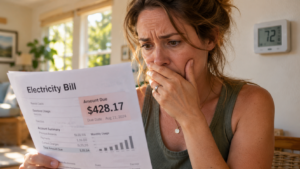
If you’ve just opened a summer electricity bill and felt your stomach drop, you’re not alone. Every year around February and March, Sydney households stare at a number that looks nothing like the one from winter and think the same thing: something must be broken.
Usually, nothing is.
Most of the time, a high ducted air conditioning bill comes down to a handful of ordinary things stacked on top of each other — cooling more of the house than you need to, setting the thermostat lower than the room actually requires, running the system for long stretches, copping expensive electricity during peak periods, or an ageing unit quietly working harder than it should.
Here’s the part people miss, and it matters:
A big bill doesn’t automatically mean your system is inefficient or faulty.
A 14 kW ducted system cooling a four-bedroom house is doing a genuinely enormous job compared to a little wall split humming away in one bedroom. Of course it uses more power. That’s not a fault — that’s physics.
So the real question isn’t “why is ducted so expensive?” It’s this:
Are you paying to cool the parts of the house you actually live in — or the whole house, because nobody’s touched the zone controller since it was installed?
That single distinction is where Sydney households quietly lose hundreds of dollars over a summer.
Quick answer: what does ducted air conditioning cost to run in Sydney?
There’s no single hourly price, no matter how much everyone wishes there were. What you pay depends on three things multiplied together:
electricity used (kW) × your tariff × hours running
Using a rough 2026 Sydney flat rate of about 33.14 cents per kWh as a benchmark, here’s what different system draws look like per hour:
| Average system draw | Approx. hourly cost |
|---|---|
| 2 kW | $0.66 |
| 3 kW | $0.99 |
| 4 kW | $1.33 |
| 5 kW | $1.66 |
Run a system averaging 4 kW for five hours and you’re looking at roughly $6.63 a day. Do that across 30 hot days and it’s about $199 for the month.
But change one thing. If your electricity plan charges a premium during the afternoon and evening peak, those exact same five hours can cost noticeably more. That’s why two houses on the same street, with near-identical systems, can get wildly different bills. Same equipment, different behaviour, different tariff.
Why ducted running costs catch Sydney homeowners off guard
The Australian Government’s energy guidance points out that ducted systems are generally less efficient than wall-mounted splits, because they run a bigger fan and can lose some energy through the ductwork on the way to your rooms.
That doesn’t make ducted a bad choice. It just means whole-home comfort has a price tag attached.
The trouble starts when someone buys whole-home capability and then uses it as though every room is occupied, all day, every day.
Picture it. You’re on the couch in the living room. The kids are out. Nobody’s upstairs. The spare room is empty. The home office is empty. And all six zones are running.
You’re not cooling yourself at that point. You’re paying to air-condition empty rooms.
Let’s walk through the usual suspects.
Problem 1: You’re running too many zones
This is the first place I’d look, nearly every time.
A well-designed ducted system lets different parts of the house run independently. Something like:
- Zone 1: Living and dining
- Zone 2: Main bedroom
- Zone 3: Kids’ bedrooms
- Zone 4: Study
In the evening, maybe only Zone 1 needs to be on. At bedtime, Zone 1 switches off and Zone 2 takes over. That’s far smarter than blasting every outlet from 4 pm until midnight.
One important warning, though: don’t just slam every zone shut to save money.
Ducted systems need a minimum amount of airflow to run safely. Closing too many zones on a system that wasn’t set up for it can create pressure and airflow problems. If you’re not sure how many zones can safely run at once, ask your installer or technician rather than experimenting and hoping for the best. (There’s a real risk here — worth reading up on whether closing too many ducted AC zones could be damaging your system before you start shutting vents.)
Problem 2: Your thermostat is set too low
This one costs more than most people realise.
The classic Sydney summer move goes like this. You walk in. The house is stinking hot. The remote reads 27°C. So you jab it down to 18°C, because surely that cools things faster.
It doesn’t. Setting 18°C doesn’t make the unit work twice as hard or cool twice as quickly. It just tells the system to keep going until the whole house hits a much colder target — which means it runs far longer and burns far more power.
Current NSW and Australian energy advice leans toward moderate summer settings rather than deep-freeze cooling. For a lot of homes, 25–26°C is a sensible starting point.
On the controller, the gap between 25°C and 20°C looks trivial. To the air conditioner, it’s the difference between a light jog and a full sprint.
Problem 3: You’re getting hammered by peak electricity prices
This one’s become a much bigger deal in recent years.
Your air conditioner might be running perfectly. Your usage might even be reasonable. But when you use it can quietly reshape your bill if you’re on a time-of-use plan.
And here’s the cruel bit: the hottest stretch of a Sydney afternoon often lands right in the most expensive electricity window. You come home to a house that’s been baking all day. Dinner goes on. Lights, TV, appliances all fire up. Then the ducted system kicks in. Suddenly you’ve got an enormous household load landing exactly when your tariff peaks.
What helps:
- Check the actual peak window on your plan (not a generic one)
- Shade the house before the heat builds
- Don’t let the place turn into an oven in the first place
- Use zones intelligently
- Pre-cool moderately where it makes sense
- Ease off extreme thermostat settings during peak periods
And don’t assume running the system earlier is automatically cheaper — that depends entirely on your tariff. Check it before you change your routine.
Problem 4: Your roof is quietly heating your ductwork
This is one of those downsides nobody mentions on installation day.
Much of a ducted system lives in the roof cavity. In a Sydney summer, that space can get brutally hot — think 50°C-plus up there. Your nicely cooled air then has to travel through ducts sitting in that heat before it reaches you.
Good insulation reduces the heat transfer, but it doesn’t make the ducts bulletproof against their surroundings. The government’s own guidance specifically flags that ducted systems can lose energy through the ductwork.
It gets worse when ducts are poorly insulated, damaged, crushed, disconnected, or badly sealed. If your system runs for ages yet certain rooms get weak or lukewarm airflow, the ducts are worth a proper look.
Problem 5: Dirty filters are choking your airflow
This is the cheapest problem on the list to prevent — and one of the most common.
Your return-air filter collects dust. That’s literally its job. But eventually enough builds up to restrict airflow, and now the system is straining to pull air through a clogged filter.
You’ll often notice:
- Weaker airflow
- Longer run times
- Slower cooling
- More noise
- Rooms taking forever to reach temperature
And the instinctive homeowner response? Drop the thermostat lower — which usually makes things worse. Check and clean the accessible filters per your system’s instructions. If performance is still poor afterwards, book a service.
Problem 6: You’re cooling a hot house instead of stopping the heat getting in
Air conditioning removes heat. But it’s always cheaper to stop heat entering than to chase it back out afterwards.
Picture a big west-facing Sydney window. From mid-afternoon, sun pours straight through the glass. The room heats up. So do the floors, the furniture, the walls. Then at 5 pm you switch on the ducted system and ask it to drag the whole house down to 21°C.
That’s a massive job you’ve handed it — one you could’ve made smaller for free.
Use blinds, curtains, external shading, and simply keep windows and external doors shut through the hottest part of the day. Your air conditioner shouldn’t be the first line of defence against the sun.
Problem 7: The system’s bigger than the way you actually live
Bigger isn’t automatically better.
A large ducted system makes total sense for a household that regularly wants the whole home comfortable. But think about a couple in a four-bedroom place who really only use one living room in the evening and one bedroom at night. Their needs are completely different from a family of six using nearly every room.
If you mostly condition one or two areas, it’s genuinely worth understanding the ducted vs split system running cost before you replace or redesign anything. Sometimes ducted is still the right call. Sometimes a couple of well-placed split systems make more financial sense.
Problem 8: Your system actually does need maintenance or repair
This is where a sudden jump in your bill really matters.
If your usage has always been roughly the same and then the air conditioner starts:
- Running much longer than usual
- Taking ages to cool
- Pushing weak airflow
- Cooling rooms unevenly
- Making new noises
- Cycling on and off oddly
…don’t just blame electricity prices. Something inside may have changed.
Possible culprits include clogged filters, damaged ductwork, fan problems, sensor faults, refrigerant-side issues, zone-control faults, or a blocked outdoor unit. If performance has clearly gone downhill, a professional doing air conditioning repairs near me can often find a fault that’s forcing the equipment to work harder than it should.
A simple ducted air conditioning cost calculator you can do in your head
You can estimate your own usage with the same formula from earlier:
average draw × electricity rate × hours
Say your system averages 3.5 kW, you’re paying $0.3314/kWh, and you run it 6 hours:
3.5 × $0.3314 × 6 = about $6.96 a day, or roughly $209 over 30 days.
Now imagine you trim it to 2.5 kW by running fewer zones:
2.5 × $0.3314 × 6 = about $4.97 a day, or roughly $149 over 30 days.
That’s around $60 saved in a single month — just from being smarter about zones. These are illustrative numbers, not guarantees, and inverter systems constantly vary their draw. But the point stands: zoning moves the needle.
What can a 4-bedroom house cost to run?
There’s no single ducted air conditioning cost 4 bedroom house figure, because a four-bedroom home might run one living zone, two bedroom zones, or the whole lot — and each gives a different result.
As a rough example, a larger system averaging 4 kW at 33.14c/kWh runs about $1.33 an hour — roughly $7.95 for six hours, or about $239 a month.
Push that to 5 kW for long stretches and you’re at about $1.66 an hour, near $9.94 for six hours, or around $298 a month. Add a time-of-use peak tariff and it climbs from there.
What about a 3-bedroom house?
Same logic applies to ducted air conditioning cost 3 bedroom house searches. Bedroom count alone tells you almost nothing. What actually decides your bill is system size, zones running, hours, thermostat setting, tariff, and how well the building holds temperature.
A well-insulated three-bedroom home running two zones can easily cost less than a draughty one running every zone at 20°C. Your floor plan isn’t your electricity bill. Your behaviour is.
Installation cost vs running cost: don’t confuse the two
These are two completely separate numbers, and people mix them up constantly.
A typical Sydney ducted installation runs roughly $9,500–$18,000+, with larger, more complex or double-storey homes sitting higher — many four-bedroom jobs land somewhere around $12,000–$18,000.
But once it’s in, you’ve got the second cost forever: electricity.
That’s exactly why the cheapest quote isn’t automatically the cheapest system to own. A well-designed setup might cost more upfront because it includes proper zoning, suitable duct insulation, correct sizing, good airflow design and smart control — decisions that shape how the system runs for the next decade.
Cheap ducted air conditioning in Sydney: when cheap turns expensive
Everyone loves a bargain. But there’s a real difference between genuine value and a system designed mainly to win on quote price.
Ask what the quote actually covers: system capacity, number of zones, duct insulation, return-air design, outlets, controller, electrical work, and commissioning.
Poor duct design leads to noisy airflow, hot rooms, cold rooms, long run times and uncomfortable zones. Spend ten years fighting all that with the thermostat and the “cheap” quote stops looking cheap pretty fast.
Seven things to try before you blame the system
- Raise the temperature. Try 25–26°C instead of reflexively hitting 20–22°C.
- Only run the zones you need. Don’t cool the spare room just because it exists.
- Block the afternoon sun. Close blinds before the room heats up.
- Clean the return-air filter. Follow the manufacturer’s instructions.
- Check your tariff. Know whether you’re on flat or time-of-use pricing.
- Use timers or smart controls. Match cooling to when people are actually home.
- Investigate sudden changes. If the same system suddenly costs more and cools worse, get it checked.
Quick “why is my bill high?” checklist
Give yourself a point for every yes:
- I normally run every zone
- I set cooling below 23°C
- The system runs 6+ hours on most hot days
- Strong western sun gets into the house
- I can’t remember when the filters were last cleaned
- Some rooms have weak airflow
- My plan has peak pricing
- I leave cooling on in empty rooms
- The system takes longer to cool than it used to
0–2: Your system’s probably well managed already. Look closely at your tariff and actual consumption. 3–5: There are likely some easy savings on the table. 6+: Your high bill almost certainly has more than one cause.
How much could better zoning really save?
There’s no honest one-size-fits-all percentage, and you should be suspicious of anyone who quotes one.
Zoning savings depend entirely on what you were doing before. If you already cool only the occupied rooms, the gain is modest. If you’re currently running eight rooms to cool two people on the couch, the difference can be dramatic.
That’s why claims like “zoning saves exactly 40%” need a big asterisk. Instead of trusting a marketing figure, measure your own usage before and after you change how you run the zones. Your bill is far better evidence than a brochure.
Is ducted air conditioning still worth it?
For the right household — absolutely.
Ducted shines when several rooms are occupied together, when you want genuine whole-home comfort, when you like discreet ceiling outlets, when zoning suits your routine, and when you use heating and cooling year-round.
The mistake was never buying ducted. The mistake is buying whole-home capability and never learning to run it efficiently. For Sydney households that really do use multiple rooms at once, a properly designed Ducted Air Conditioning Systems Sydney setup delivers a level of whole-home comfort that scattered wall units can’t match as neatly.
How KYNEX Air Conditioning can help lower a high ducted bill
KYNEX Air Conditioning works on ducted systems right across Sydney — installation, repairs, servicing and zoning-related assessments.
If your bill feels abnormally high, the smart move isn’t to start swapping out equipment blindly. The system should be assessed as a whole: capacity, zone configuration, airflow, return-air setup, filters, duct condition, thermostat settings, outdoor unit and operating schedule.
Our team has more than 10 years of industry experience and has serviced or installed over 2,000 systems across Sydney.
The most useful question to ask is this: “Is this system expensive because of how we use it, or because something’s actually wrong?” Those are two very different problems — and they call for two very different fixes.
What Sydney homeowners should actually compare
Don’t judge ducted systems on purchase price alone. Compare:
- Installation price — what does it cost to install properly?
- Running cost — how much of the house will you really condition?
- Control — can you manage zones easily?
- Efficiency — how hard will the system have to work?
- Maintenance — can filters, ducts and equipment be serviced properly?
- Lifestyle — two rooms or eight?
A useful related read on air conditioning running costs Sydney can help you compare real electricity usage instead of leaning on system size alone.
Frequently asked questions
Why is my ducted air conditioning so expensive to run? Usually a combination: too many zones running, a low thermostat setting, long hours, poor insulation, high peak tariffs, dirty filters, or a system fault.
How much does ducted air conditioning cost per hour in Sydney? Using a flat benchmark of about 33.14c/kWh, a system averaging 2–5 kW runs roughly 66 cents to $1.66 an hour. Your actual tariff and consumption may differ.
Does zoning reduce ducted air conditioning costs? It can. Conditioning only the occupied parts of the home may cut electricity use — as long as you respect the system’s minimum airflow requirements.
Is 20°C too low for ducted air conditioning? For most households, yes — it’s colder than necessary. Around 25–26°C is a more energy-conscious summer starting point for many Sydney homes.
Why does my ducted system run all day? Possibly extreme weather, poor insulation, an unsuitable thermostat setting, too many zones, dirty filters, airflow problems, incorrect sizing, or a mechanical fault.
Is ducted more expensive than split-system air conditioning? Generally ducted costs more to run, because it uses a larger fan and can lose energy through ductwork — but the fair comparison depends on how many rooms you actually need to cool.
Does duct insulation matter? Yes. Ducts usually run through hot roof spaces, and better insulation limits unwanted heat transfer.
How often should ducted filters be cleaned? Follow your manufacturer and installer guidance. Homes with more dust, pets or heavy use may need it more often.
Can damaged ducts increase my bill? Yes. Leaks, disconnections or crushed ducts reduce the conditioned air reaching your rooms and drag down performance.
Does a high electricity bill mean my air conditioner needs replacing? No. Check usage, tariffs, zones, filters and system condition first. Replacement should follow a diagnosis — not a single scary bill.
Related Readings:
The bottom line: why is your ducted bill so high?
Start with the boring, simple explanations before you convince yourself you bought the wrong system.
Your bill is probably high because you’re cooling too much house, for too many hours, at too low a temperature, during an expensive electricity window.
Then check the equipment. Look at the filter. Check the airflow. Ask yourself whether rooms are taking longer to cool than they used to — and if performance has clearly changed, get a professional to take a look.
The most useful question isn’t “Is ducted air conditioning expensive?” It’s: “How much house am I conditioning, how efficiently am I doing it, and what am I paying for the electricity while I do it?”
Get those three under control and a ducted system becomes genuinely predictable to run. Ignore them, and whole-home comfort quietly turns into whole-home bill shock.