

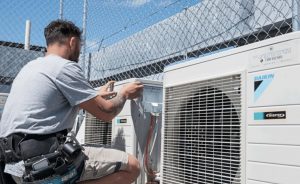
If you’re searching for top-rated air conditioning repair companies in my area, here’s the first bit of advice: don’t let the star rating make the decision for you. For anyone sorting out air conditioning in Sydney, a genuinely strong repair company is a combination of things — current reviews, NSW licensing, honest diagnosis, fair quotes, real system experience, and a clear plan if the same fault comes back.
That’s the gap between “highly rated online” and “actually reliable when your aircon dies on a 40°C Saturday.”
A five-star profile looks reassuring. What it doesn’t tell you is whether those reviews are recent, whether they’re even about repairs, whether the technicians are licensed, whether the company tests before it swaps parts, or what happens if the repair doesn’t hold. So before you tap the first “Top Rated AC Repair Company” you see, it’s worth checking the evidence behind the label.
Quick answer: what makes an AC repair company top-rated?
Run these seven checks first.
| What to check | Why it matters |
|---|---|
| Current review score | Reflects recent customer sentiment |
| Number of reviews | Gives the rating real context |
| Repair-specific reviews | Install reviews alone aren’t enough |
| NSW licensing | Air-conditioning repair is regulated work |
| Diagnostic process | Cuts unnecessary parts replacement |
| Transparent pricing | Avoids surprise repair bills |
| Repair warranty | Tells you what happens if the fault returns |
A business doesn’t become the “best AC technician near me” just because it sits at the top of a search page. You still have to verify it — and it’s easier than you’d think.
1. Start with recent ratings, not an old badge
Ratings age. A company that was brilliant three years ago might not deliver the same service today, because staff change, standards drift, ownership shifts and response times wander. So look at the current rating, the total review count, the newest reviews, and — most importantly — what customers are actually talking about.
KYNEX Air Conditioning’s current profile is a useful example: 4.5 out of 5 from 192 Google reviews, with feedback running right through to September 2026. That paints a far clearer picture than an undated “Rated 5 stars!” badge with no source attached. Always read the newest feedback first — it’s the closest thing to a real-time signal you’ll get.
2. Look for repair reviews, not just new installs
This is one of the easiest traps to fall into. You search Air Conditioning Repairs Near Me, land on a company with glowing reviews… and then notice nearly every one is about installing a shiny new ducted system. That’s great evidence for installation. It tells you almost nothing about how they diagnose and fix a fault.
When you need HVAC Repair Services, hunt specifically for reviews that mention repairs, servicing, maintenance, fault-finding, failed parts, poor cooling, pumps, error codes and responsiveness. KYNEX has some recent repair-specific evidence worth pointing to: in June 2026, Mike Morgan described an ageing system being serviced, cleaned, diagnosed and having a failed pump replaced. In March 2026, Andrew Barlow noted it was his second time using KYNEX across installation, maintenance and repairs, and called the team responsive and knowledgeable. For a repair customer, that’s far stronger evidence than a review about a brand-new fit-out.
3. Check the NSW licence before you book
This one actually matters more than the reviews. Air-conditioning and refrigeration repair is licensed work in NSW — current NSW Government rules require an appropriate licence or certificate to carry it out, and companies advertising or contracting the work also need the right contractor licensing and qualified supervision.
There’s a good reason for that. AC repair can involve electrical work, compressors, refrigeration, control boards, motors and refrigerant circuits — a long way from appliance cleaning. So just ask: “Are your technicians appropriately licensed for this repair?” A professional outfit won’t hesitate to answer.
4. A top-rated repairer diagnoses before selling parts
This is where the good companies pull away from the bad ones. Picture ringing up and saying “the air conditioner isn’t cooling,” and someone instantly firing back “you need more gas.” That isn’t a diagnosis — it’s a guess with a price tag.
Poor cooling can come from dirty filters, blocked airflow, an outdoor-unit problem, a sensor issue, a fan fault, a refrigerant problem or the compressor. A water leak doesn’t automatically mean a blocked drain. An outdoor unit that won’t run doesn’t automatically mean a dead compressor. A good technician works through symptom → testing → fault → repair — never symptom → guess → expensive part.
What should proper HVAC diagnosis include?
Depending on the fault, a technician may check the electrical supply (correct power getting in?), the controller and error codes (has the system flagged a fault?), filters and airflow (is restriction hurting performance?), the indoor and outdoor fans (both running?), the compressor (starting and running normally?), the sensors (accurate readings?), the drainage (is condensate leaving safely?), and the refrigeration conditions (any sign of a refrigeration-side problem?). That’s what you’re paying a professional for — not just someone who owns tools.
5. Compare diagnostic fees properly
Homeowners tend to ask “who’s got the cheapest call-out?” The sharper question is “what does the call-out actually include?”
A $79 attendance fee isn’t automatically cheaper than a $149 diagnostic fee. The first might cover arrival and little else, while the second includes fault-finding, electrical testing, error-code checks, airflow assessment and a repair recommendation. So ask: does the diagnostic fee include fault-finding? Will I get the repair price before any extra work starts? If a part needs ordering, is there a second attendance fee? Those answers tell you far more than the headline number.
6. Be careful with “24/7 air conditioning repair”
Urgent service is genuinely valuable — during extreme Sydney heat, electrical faults, major water leaks, or a business losing all its cooling. But don’t assume every company advertising emergency AC repair actually has technicians on deck around the clock.
KYNEX’s own published guidance is refreshingly honest here: urgent and same-day repair may be available depending on suburb, schedule, fault and parts availability. That’s a lot more realistic than a blanket promise that anything can be fixed at any hour — because no one can install a replacement PCB at midnight if the correct part has to be ordered in first. The better question to ask isn’t “do you advertise emergency service?” It’s simply “can you attend today?”
When is an AC repair actually an emergency?
Take these seriously: a burning smell, electrical buzzing, repeated breaker trips, water near electrical fittings, significant ceiling leakage, or vulnerable people left without cooling in dangerous heat. Other issues — a slight airflow drop, a minor noise, overdue maintenance, a gradual performance decline — can usually wait for normal scheduling. Match the urgency to the actual risk and you’ll often save on after-hours rates.
7. Ask whether they work on your type of system
Not every repairer has equal experience with every system, so tell them what you’ve got: split, multi-split, ducted, cassette or commercial. Different gear brings different headaches. Ducted systems can involve zone motors, dampers, ductwork, central controllers and airflow balancing. Split systems tend to revolve around the indoor PCB, the drain, the fan, the outdoor unit, the compressor and the refrigeration circuit.
KYNEX currently states its team works across split, ducted, VRV, cassette, multi-split and floor-unit systems — and that breadth matters most exactly when the fault isn’t obvious.
8. Ask whether they know your brand and model
“We repair all brands” sounds great, but a better question is “have you worked on this make and model before?” Brand familiarity helps with error-code interpretation, parts sourcing, controller quirks, common faults and model-specific service steps.
KYNEX currently lists experience across several major air-conditioning brands and recommends confirming the exact model before repair — which is sensible. An experienced technician can still tackle a less familiar brand, but you want them to verify the model, the fault and parts availability before they start making promises.
9. Check what the repair warranty covers
Ask the plain version of the question: “What happens if the same fault comes back?” Coverage can differ between the replacement part, the labour and any manufacturer-supplied component. Don’t assume a repair warranty means the whole air conditioner is now covered — ask exactly what’s included, and expect a clear answer before any expensive work begins.
10. Look for clear communication
This is one of the most underrated trust signals going. A good HVAC technician should be able to explain what failed, what test proved it failed, what repair they’re proposing, what it’ll cost, and whether repair or replacement makes more sense — all without you needing an engineering degree to follow along.
Be a little cautious if the explanation lands as “the PCB capacitor compressor board’s gone, that’s $2,400.” Ask “what testing confirmed that?” A genuinely good technician can always break the diagnosis down simply.
How do you compare affordable air conditioning repairs?
Affordable doesn’t mean the lowest number. It means a reasonable cost for the right repair. Picture two repairers. Repairer A charges a $120 call-out, correctly identifies a failed sensor, and finishes at $350. Repairer B charges a $50 call-out, replaces a board that was never faulty, then has to come back — total $1,200. Which one was actually cheaper? Diagnostic quality is the whole game.
What about local AC repair companies?
Local genuinely helps — a Sydney-based team can mean faster scheduling, easier follow-up, better suburb knowledge and less travel. KYNEX currently states it provides residential and commercial repair across Sydney suburbs, with service info covering repair, maintenance, installation, and both residential and commercial air conditioning. For anyone searching Aircon Repairs Near Me, local coverage is a real plus — but it should still sit alongside licensing and repair evidence, not replace them.
A top-rated company knows when not to repair
Not every air conditioner deserves another expensive repair, and a trustworthy technician will weigh system age, condition, repair history, parts availability, repair cost and overall efficiency before advising you. A ten-year-old unit with one modest sensor fault? Repair probably makes sense. An ageing system carrying a failed compressor, a damaged PCB and repeated refrigerant leaks? That’s a replacement conversation. Good repairers are happy to lay out both options.
Residential air conditioning repair: what should homeowners expect?
Residential repair should start with the symptom. If the AC won’t turn on, they’ll check power, the breaker, the controller and any error code. If it’s leaking water, they’ll check the drain, drain pan, coil and condensate pump. If it’s not cooling, they’ll check the mode, airflow, outdoor unit and refrigeration conditions. If a ducted zone isn’t working, they’ll check the controller, zone motor, damper and duct.
For homeowners with broader residential air conditioning sydney needs, that distinction matters — because repair, maintenance and replacement are three different services, not one.
Repair vs maintenance: don’t confuse them
Maintenance is preventative; repair fixes a fault. Book maintenance when the system still works, filters need attention, routine servicing is due, or performance has slowly slipped. Book an air conditioner repair service when the system has stopped, a fault code appears, the unit’s leaking, cooling has vanished, the breaker trips, or strange noises start. And a maintenance visit should never be used to quietly paper over a genuine breakdown.
A simple “top-rated AC repair company” scorecard
Give one point for every “yes.”
- ☐ The current review rating is visible
- ☐ Recent 2026 reviews exist
- ☐ Repair-specific reviews exist
- ☐ NSW licensing can be verified
- ☐ They service my system type
- ☐ The diagnostic fee is explained
- ☐ Repair cost is approved before major work
- ☐ The repair warranty is explained
- ☐ The technician asks detailed questions about the fault
- ☐ There are clear Sydney contact details
9–10: strong trust indicators. 6–8: probably worth considering — just clarify the gaps. Below 6: do more checking before you book. The scorecard doesn’t crown a winner; it helps you judge the evidence for yourself.
What do KYNEX’s 2026 reviews actually show?
Rather than leaning on a single number, it’s the details that count. As of September 2026, KYNEX’s public profile shows 4.5/5 from 192 Google reviews. Recent feedback includes Mike Morgan (June 2026), describing an ageing unit serviced and cleaned with a failed pump replaced; Andrew Barlow (March 2026), who’d used the team twice across installation, maintenance and repairs and called them responsive and knowledgeable; Alex (February 2026), who highlighted speedy, efficient service; and Val (February 2026), who mentioned both home and workplace servicing and installation. Those reviews are more useful than the rating alone precisely because they describe actual service experiences.
How KYNEX Air Conditioning can help
KYNEX Air Conditioning handles repairs, maintenance and installation for homes and businesses across Sydney. Its current service information points to 10+ years in the industry, 2,000+ Sydney homes serviced and installed, residential and commercial repair coverage, and experience across split, ducted, multi-split, cassette and other systems.
The part that matters most for a repair customer is the sequence: KYNEX’s approach puts diagnosis before any repair-or-replace recommendation, which can involve checking the electrical supply, refrigerant condition, indoor and outdoor units, drainage, filters and airflow. For anyone chasing a top-rated local repairer, that’s the useful combination — reviews plus credentials plus diagnosis plus clear communication. Not just the star score.
What should you tell the technician when you call?
Detail makes the visit better. Instead of “aircon’s broken,” try “Wall split. Indoor unit turns on but the outdoor unit doesn’t start. No cooling, no breaker trip.” Or “Ducted system. Three zones work fine. Bedroom zone shows ON but has no airflow.” Also mention any error code, water leaks, noises, the system’s age, and when the fault began. The more precise the symptom, the better prepared the technician can arrive.
Red flags when choosing a repair company
Be careful if you hear any of these:
- “We already know what’s wrong” — before seeing the system.
- “Definitely needs gas” — without any testing.
- “Definitely the compressor” — based purely on a phone call.
- “No need for licence details” — there absolutely is.
- “We’ll tell you the price afterwards” — sort out approval first.
- “Every old system should be replaced” — age alone isn’t a diagnosis.
- “Guaranteed fixed today” — before checking parts availability.
Good repair companies are comfortable admitting a bit of uncertainty. The ones who claim total certainty before testing are the ones to watch.
Frequently asked questions
What are the top-rated air conditioning repair companies in my area?
Look for Sydney repairers with strong current reviews, NSW licensing, repair-specific feedback, transparent diagnostic pricing and clear warranty terms — not just a high rating.
Is 5 stars always better than 4.5?
Not necessarily. A 4.5 from a large pool of recent reviews can be more useful evidence than a perfect score from a handful of customers.
How can I verify an AC repair company?
Check licensing, recent reviews, business details, system experience, the pricing process and the repair warranty.
Should I search for Air Conditioning Repairs Near Me?
Yes — but treat proximity as just one filter. Licensing and diagnostic quality matter more.
What is a normal AC diagnostic fee?
There’s no universal Sydney figure. Ask what the fee includes rather than comparing prices alone.
Does a technician need a licence in NSW?
Yes. Air-conditioning and refrigeration work requires the appropriate licence or certificate.
What should I ask before approving a repair?
What failed, how it was tested, what repair is required, what it costs, and what warranty applies.
Should I use emergency AC repair?
Use urgent service for serious electrical symptoms, large leaks, or complete cooling loss during dangerous heat. Not every fault needs after-hours attendance.
Is the cheapest AC repair company a good option?
It can be — but only if the diagnosis, repair scope and warranty are genuinely comparable.
Should I repair or replace my old air conditioner?
It depends on the fault, system age, repair cost, condition and parts availability.
What should I look for in repair reviews?
Recent mentions of diagnosis, repairs, responsiveness, servicing, communication, and whether the problem was actually resolved.
Related Blogs:
- Where Can I Find Reliable Air Conditioning Repair Services Near Me?
- Can I Book A Same-Day Air Conditioning Repair Service Locally?
The verdict: how do you find a top-rated AC repair company?
If you’re searching for top-rated air conditioning repair companies in my area, don’t let one number decide for you. Check the current rating, the total review count, recent repair-specific reviews, NSW licensing, the diagnostic process, pricing transparency, the repair warranty and experience with your system. That gives you a far better picture than “4.9 stars — book now.”
KYNEX Air Conditioning currently shows a strong Sydney review footprint, including recent 2026 repair and service feedback, and provides residential and commercial repairs across the city. But the broader lesson is the one worth keeping: the top-rated repair company for your job is the one that can prove its credentials, diagnose the fault properly, and explain the repair clearly — before you spend a cent.