

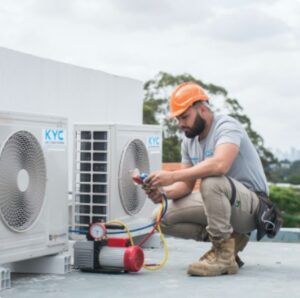
If you’re typing “reliable air conditioning repair services near me” into your phone at 6pm on a 38°C day, here’s the honest answer: start with a licensed local technician who explains the fault before recommending parts, gives you clear pricing up front, and has recent, verified repair reviews. For anyone sorting out air conditioning in Sydney, those three checks matter far more than clicking the first business that pops up.
Because here’s the thing nobody tells you. The closest technician isn’t automatically the best one. The cheapest call-out isn’t automatically the cheapest repair. And the company with the biggest ad isn’t automatically the one that’ll actually work out what’s wrong with your system.
A good repair service should be able to answer three questions without dancing around them: What’s wrong? How do you know? What will it cost to fix? If the answers are vague, keep asking. Vagueness at the booking stage tends to become surprises on the invoice.
Quick answer: how do I find a reliable AC repair service?
Run through this before you book anyone.
| What to check | Why it matters |
|---|---|
| NSW licence | Air-conditioning repair is regulated work |
| Refrigerant credentials | Required for any regulated refrigerant work |
| Recent repair reviews | Shows current, real-world service |
| Diagnostic process | Cuts guessing and needless parts |
| Clear call-out fee | Prevents surprise costs |
| Repair quote before work | Lets you approve the price |
| Warranty info | Tells you what happens if the fix fails |
| Local coverage | Often means faster response |
| Experience with your system | Split, ducted and commercial faults differ |
| Communication | Good techs explain what they found |
You don’t need to become an HVAC expert. You just need to ask the right questions — and here’s what they are.
1. Start with the licence, not the star rating
Reviews are handy. Licensing comes first, full stop.
In NSW, air-conditioning and refrigeration work requires the appropriate licence or certificate — and for good reason. This isn’t swapping a remote-control battery. AC repair can involve electrical circuits, refrigeration systems, compressors, fan motors, control boards, refrigerant and drainage, often all in the one job.
So when you book, just ask: “Are you licensed for air-conditioning and refrigeration work in NSW?” And for anything involving refrigerant, ask whether the technician holds the appropriate refrigerant-handling authority. A reliable business won’t get prickly about that question. If they do, that tells you something.
2. Look for repair reviews — not just installation reviews
This one trips people up constantly. A company might have hundreds of glowing five-star reviews… but read what those reviews are actually about. Plenty of them are for brand-new installs, which tells you almost nothing about how the same team handles a fiddly fault diagnosis on a Sunday.
If you need repair work, hunt for reviews that mention repairs, diagnosis, servicing, maintenance, fault-finding, responsiveness and — crucially — whether the technician explained what was going on.
Recent 2026 KYNEX feedback is a decent example of the difference. In June 2026, Mike Morgan described having an ageing unit serviced and cleaned, with a failed pump replaced. In March 2026, Andrew Barlow noted it was his second time using KYNEX across installation, maintenance and repairs, and singled out how responsive and knowledgeable the team was. Reviews like that carry far more weight for a repair customer than an anonymous “Great service!” with nothing behind it.
3. Ask what the call-out or diagnostic fee actually covers
This might be the most useful money question you’ll ask all week. Don’t just ask “how much is the call-out?” Ask “what does the diagnostic fee include?”
A rock-bottom attendance fee sounds great until you realise it covers someone turning up in the driveway and not much else. What you actually want to know is whether it includes travel, fault diagnosis, electrical checks, error-code investigation, airflow testing and a written repair quote — or whether all of that gets added on afterwards. The fee itself isn’t the problem. Lack of clarity is.
KYNEX’s current repair guidance suggests asking exactly this: does the diagnostic fee cover fault-finding, do you get the repair price before any extra work starts, does a second attendance fee apply if a part has to be ordered, and does the repair come with a warranty. Those are the right questions, and any solid operator will answer them happily.
4. Be wary of anyone who “diagnoses” over the phone
Symptoms are useful. Symptoms are not diagnoses. There’s a big difference.
Take “my AC is leaking.” That could be a blocked drain, a damaged drain pan, a frozen coil or a failing condensate pump. Or “it’s blowing warm air” — could be the wrong mode, an airflow issue, an outdoor-unit fault, a refrigerant problem, or the compressor. Or “it keeps switching off” — thermostat, airflow, an electrical fault, short cycling, or the system protecting itself.
So if someone hears “my AC isn’t cooling” and instantly says “you need refrigerant,” be cautious. A proper technician diagnoses first and prescribes second — not the other way around.
5. Ask whether they repair your type of system
Not every AC problem is the same animal, so tell the repairer what you’ve got: a wall-mounted split, a multi-split, ducted, a commercial system, or an older reverse-cycle unit.
Ducted repairs can drag in zone motors, dampers, ductwork and central controllers. Split-system repairs tend to live around indoor boards, the outdoor fan, the compressor, the drain and the refrigerant circuit. A technician who works with your kind of system every week will usually pinpoint the fault faster — and that efficiency shows up on the bill.
6. Describe the symptom properly when you book
A little detail here makes the whole visit smoother. Instead of “my air conditioner is broken,” try: “Wall-mounted split. Indoor unit turns on, outdoor unit doesn’t start, and it’s blowing room-temperature air.” Or: “Ducted system. Living zone works fine, but the bedroom zone shows ON with almost no airflow.”
Handy details to have ready: system type, age if you know it, any error code, unusual noises, water leaks, whether the breaker trips, whether the indoor and outdoor units actually start, and when the trouble began. If you need Air Conditioning Repairs Near Me, handing over that information at booking means the technician can turn up prepared instead of diagnosing from scratch.
7. Don’t judge a repairer on speed alone
Fast service genuinely matters — during a Sydney heatwave, when there are vulnerable people at home, when a business has no cooling, when water’s leaking or power keeps tripping. Nobody’s arguing against speed.
But fast arrival + poor diagnosis is not a good repair. Sometimes the right technician needs a bit of diagnostic time, some model information, or a part ordered in. A company promising “fixed in 20 minutes, guaranteed” before they’ve even seen your equipment is making a promise they can’t actually stand behind. Ask for the next available appointment — then ask whether your fault sounds urgent.
When is emergency AC repair actually appropriate?
Treat it as urgent if you’ve got a burning smell, a breaker that keeps tripping, water near electrical equipment, a heavy ceiling leak, loud electrical noise, or a total failure during dangerous heat where someone’s health is on the line.
Less urgent: a slight drop in cooling, a minor noise, a slow airflow decline, or routine servicing. That distinction can save you real money, because after-hours attendance usually costs more — and not every problem needs the emergency rate.
8. Get the repair price before you approve the big work
A reliable repair generally runs like this: diagnose the fault, explain the fault, explain the fix, quote the fix, get your approval, then proceed. Six clean steps. You should understand the cost before any expensive work starts.
Two questions do a lot of heavy lifting here: “Is this price for diagnosis only, or does it include the repair?” and “If you find something else while you’re in there, will you call me before doing extra work?” That protects you and the technician — everyone’s clear on what was agreed.
What do air conditioning repairs near me cost?
There’s no honest universal figure, because “a repair” covers a huge range. A small job might be a blocked drain, a filter issue or a basic sensor. A medium one could be a fan motor, a condensate pump, a thermostat or a control component. A major repair might mean a PCB, inverter electronics, a compressor or a refrigerant leak.
Access changes the maths too — a wall split at ground level is a very different job to ducted gear crammed into a tight roof cavity, an apartment balcony unit, or commercial ceiling equipment. Which is exactly why any price quoted before diagnosis should be taken with a grain of salt.
9. Ask what warranty applies to the repair
Don’t skip the after-the-fact question: “What warranty applies to the repair and the part?” Coverage can differ between the replacement part, the labour and any manufacturer component. And ask the follow-up that really matters — what happens if the same symptom comes back? A reliable repairer can explain all of that without stumbling.
10. See whether maintenance is worth doing at the same time
Repair and maintenance aren’t the same thing — a repair fixes a fault, while maintenance keeps the rest of the system running properly — but pairing them can be smart. If a technician’s already got the system open and serviced, it can be practical to check the filters, drain, indoor and outdoor coils and airflow in the same visit.
KYNEX’s current guidance notes that repair and maintenance can often be combined when you flag it in advance, though a major fault or a part that has to be ordered may split the work across two visits. For routine servicing, take a look at air conditioning maintenance Sydney.
What should an AC technician actually check?
It depends on the symptom, but thorough diagnosis usually touches on the electrical supply (is the system getting correct power?), error codes (has the controller logged a fault?), airflow (are filters, fans or ducts restricted?), the indoor and outdoor fans (running normally?), the compressor (starting and running right?), the sensors (sensible temperature readings?), drainage (is condensate actually leaving?), and the refrigeration system (any abnormal operating conditions?).
Good repair work moves from symptom → testing → cause. Dodgy repair work jumps straight from symptom → guess → expensive part. Knowing the difference is half the battle.
Repair or replace: how should a good technician advise you?
Not every broken aircon should be repaired — and not every old one should be replaced, either. A trustworthy technician will talk you through both paths honestly.
Replacement starts to make sense when the compressor has failed, the equipment is very old, major parts aren’t available, several expensive faults are brewing, or the repair cost is creeping up toward the price of a new unit. Repair usually wins when the system’s relatively young, the fault is isolated, the part is available, and the unit’s in good overall shape.
The key tell: a reliable technician explains both options where they apply. They don’t need to turn every service call into a replacement sale.
Local air conditioner repair: does “near me” really matter?
It can. A genuinely local or Sydney-wide team often means faster scheduling, better suburb knowledge, less travel and easier follow-up. But proximity is only one ingredient — you still need licensing, repair experience, clear pricing and current reviews.
Searching air conditioning sydney will throw up dozens of options. The useful filter isn’t who appears first? It’s who can prove they’re qualified and explain the repair in plain English?
Red flags when choosing an AC repair company
Be cautious if you hear any of these:
- “It definitely needs gas” — before any testing has happened.
- “The compressor’s dead” — based purely on a phone call.
- “Cash only, no paperwork” — ask why.
- “We don’t share licence details” — not reassuring.
- “We’ll tell you the price after the repair” — sort out approval terms first.
- “Every unit this age needs replacing” — age alone doesn’t diagnose a fault.
- “Your whole system’s shot” — ask which test proved that.
A good technician can always walk you through their reasoning. Reluctance to do so is the red flag.
What can you safely check before calling?
Plenty, actually. You can check the controller mode, the thermostat setting, the remote batteries, an accessible filter, the breaker once (if it’s safe to), any obvious outdoor blockage, and the error code.
What you should not do: open electrical panels, test live wiring, open the refrigerant circuit, or repeatedly reset a breaker that keeps tripping. That’s professional territory, and it’s not worth the risk.
Reliability scorecard: use this before you book
Give one point for every “yes.”
- ☐ NSW licensing can be verified
- ☐ They service my system type
- ☐ Recent repair reviews exist
- ☐ The diagnostic fee is explained
- ☐ The repair price comes before major work
- ☐ Warranty terms are clear
- ☐ They ask about the actual symptom
- ☐ They explain the likely next steps
- ☐ They give normal business contact details
- ☐ They don’t diagnose expensive parts without testing
8–10: strong trust signals. 5–7: ask more questions. Below 5: you don’t have enough to go on yet.
What do 2026 customers say about KYNEX repairs?
Recent 2026 reviews give some repair-specific evidence to go on. In June 2026, Mike Morgan described technician Jason servicing and cleaning an ageing unit and replacing a failed pump. In March 2026, Andrew Barlow called KYNEX responsive and knowledgeable, noting he’d used the team twice across installation, maintenance and repairs. Recent installation reviews repeatedly mention professional workmanship, clear communication and fair pricing.
None of that guarantees the outcome of a future repair, of course. But specific, dated, repair-focused feedback is far stronger trust evidence than an anonymous marketing line.
How KYNEX Air Conditioning can help
KYNEX Air Conditioning handles residential and commercial AC repairs and maintenance across Sydney — including residential repair, commercial repair, maintenance, installation and fault diagnosis. Their published maintenance process covers circuit voltages, refrigerant condition, the internal and external units, drainage, filters and airflow.
For anyone trying to find a reliable local repairer, the useful part is the sequence: KYNEX’s repair process is built around diagnosing the fault before landing on a final recommendation. Whether it’s leaking water, poor cooling, short cycling, no power, an outdoor unit that won’t run, or a zone problem, the sensible first step is always the same — identify the actual cause, rather than guessing at the most expensive part.
Residential HVAC repair vs maintenance: which do you need?
Choose repair when something’s broken, the system won’t start, it’s leaking, cooling has failed, or an error code has appeared. Choose maintenance when the system works but you want routine cleaning and checks, cooling has gradually faded, or a filter and coil service is overdue.
Simple rule: if you already have a known fault, book it as a repair — then ask whether maintenance can be tacked onto the same visit.
Frequently asked questions
Where can I find reliable air conditioning repair services near me?
Start with a licensed Sydney repair company that has recent repair reviews, clear diagnostic pricing, and technicians experienced with your system type.
How do I know if an AC technician is licensed?
Ask for licence details and confirm the technician or company is properly authorised for air-conditioning and refrigeration work in NSW.
Should I choose the cheapest AC repair service?
Not automatically. Compare the diagnostic process, inclusions, warranties and repair experience — not just the call-out fee.
What does an AC diagnostic fee cover?
It may cover attendance and fault-finding, but it varies. Ask exactly what testing is included before you book.
Can an AC technician give me a repair price over the phone?
They can offer rough guidance, but an accurate final price normally depends on diagnosing the actual fault first.
When do I need emergency AC repair?
Burning smells, repeated breaker trips, heavy water leakage near electrics, and total loss of cooling during dangerous heat all deserve urgent attention.
What should I tell the technician when booking?
The system type, symptoms, error codes, noises, leaks, and whatever you’ve already checked yourself.
Should I repair or replace an old air conditioner?
It depends on age, condition, the fault, parts availability and repair cost — and diagnosis should come first.
Can AC repair and maintenance happen on the same visit?
Often yes, especially once the technician already has access to the system, though major repairs or parts ordering may need a separate visit.
What are the signs of a reliable AC repair company?
Licensing, recent reviews, clear diagnostic fees, transparent repair quotes, warranty information, and technicians who explain how they reached the diagnosis.
Related Readings:
- Why Are Some Ducted Air Conditioning Zones Not Working? Sydney Troubleshooting Guide
- What Are the Top-Rated Air Conditioning Repair Companies in My Area?
The verdict: where should you look for reliable AC repairs?
If you’re searching for reliable air conditioning repair services near me, don’t pick by distance, ad position, or the cheapest call-out fee. Pick by evidence.
Look for proper licensing, recent repair reviews, clear diagnostic fees, real experience with your type of system, repair approval before any extra costs, warranty information, and a technician who can actually explain the fault. That process dramatically cuts the odds of paying for the wrong repair.
Because the best technician isn’t the one who can name a failed part the fastest. It’s the one who can show you why that part is the problem.