


Air Conditioning Repairs Near Me: The Complete Sydney Homeowner’s Guide to Fast, Reliable AC Repairs
It always seems to happen on the worst possible day. A 39°C Sydney scorcher, the house is closing in on you, and the air conditioner that worked fine last summer is now blowing warm air, dripping onto the floorboards, or refusing to switch on at all.
The first thing most people do is grab their phone and search air conditioning repairs near me. Fair enough. But knowing what to search is only half the battle — knowing what’s actually wrong, what’s safe to check yourself, and when to stop and call a professional is what saves you time, money and a very sweaty afternoon.
This is the complete guide. Whether you’ve got a wall-mounted split in the bedroom or a full ducted system cooling the whole house, here’s how to think about AC repairs in Sydney like someone who’s seen it all before.
The Most Common Air Conditioning Problems (And What They Usually Mean)
Most AC breakdowns come down to a handful of recurring culprits. Recognising the symptom is the first step to describing it properly when you call a technician.
The aircon won’t turn on at all. Before you panic, check the obvious: has the breaker tripped, is the remote’s battery flat, is the unit actually getting power? If everything’s on but nothing responds, you’re likely looking at a control board, a capacitor, or an electrical fault that needs a licensed hand.
It runs but blows warm air. Cooling relies on refrigerant and airflow. Warm air often points to a refrigerant issue, a frozen coil, a dirty filter choking the airflow, or a compressor that’s struggling. A refrigerant leak in particular isn’t a DIY job — it’s a licensed task by law in Australia.
Weak or poor airflow. Clogged filters are the number one cause and the easiest to fix yourself. Beyond that, blocked coils, failing fan motors or (in ducted systems) leaking or crushed ductwork all restrict airflow.
Water leaking from the indoor unit. That drip usually means a blocked condensate drain, a full drain pan, or a frozen coil that’s melting. Left alone, water damage adds up fast, so it’s worth acting on quickly.
Strange noises. Every noise tells a story. Grinding suggests a motor or bearing problem. Buzzing can be electrical. Rattling is often a loose panel or debris. A hissing sound may hint at a refrigerant leak. Clicking on every cycle can point to a relay.
Short cycling. If the system switches on and off every few minutes without properly cooling, that’s short cycling. It’s hard on the compressor and usually signals a thermostat problem, low refrigerant, an oversized unit or a dirty coil. Don’t ignore it — it shortens the life of the most expensive component you own.
Electrical faults. Tripping breakers, burning smells, scorched wiring or visible damage are stop-immediately signs. Turn the system off and call a professional. This is never a “have a go yourself” situation.
What You Can Safely Check Yourself
Before you book anyone, there are a few genuinely safe checks that resolve a surprising number of “faults”:
- Clean or replace the filters. A blocked filter is behind an enormous share of poor-airflow and weak-cooling complaints.
- Check the thermostat settings. It sounds too simple, but wrong mode (fan vs cool) and wrong temperature catch people out constantly.
- Reset the breaker once. A single reset is fine. If it trips again, stop and call someone.
- Clear the outdoor unit. Leaves, garden clippings and rubbish piled against the condenser choke airflow. Keep it clear with the power off.
- Restart the system once. If a one-off glitch clears, great. If the fault returns, resist the urge to keep resetting — you’re just asking the system to repeat a failed action.
Where DIY stops: anything involving refrigerant, wiring, capacitors, the compressor or opening the electrical section. Those are licensed jobs, both for safety and for legal reasons.
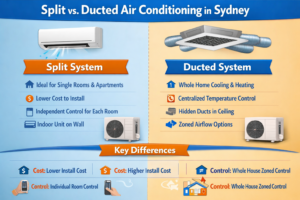
Split System vs Ducted: Why the Repair Differs
Not all AC repairs are the same job, and the type of system you own changes the approach.
A split system is the wall-mounted unit connected to a single outdoor condenser. Repairs tend to be more contained — a faulty indoor fan, a blocked drain, a sensor issue or an outdoor fan fault. If you’re weighing up an ageing unit, it’s worth understanding how split system air conditioning Sydney systems are configured before deciding between a repair and an upgrade.
A ducted system cools your whole home through ceiling vents and a network of ducts fed by a central unit. There’s more to go wrong — zone motors, dampers, ductwork leaks, controllers — and diagnosing a fault takes more investigation. If a ducted problem keeps recurring, it’s worth reviewing how ducted air conditioning Sydney systems are designed so you know whether you’re facing a simple repair or a bigger job.
The takeaway: when you call for help, mention which type you have. “Ducted system, no airflow to the upstairs zones” gives a technician a running start compared with “my aircon’s broken.” Read: Split System vs. Ducted: The Sydney Energy Trap Costing Homeowners Thousands
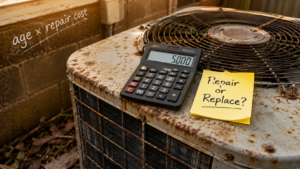
Repair or Replace? How to Make the Call
This is the question everyone eventually asks, and the honest answer is: it depends on the numbers, not on emotion.
Leaning towards repair makes sense when the system is relatively young, the fault is isolated to one part, replacement parts are available, and the compressor is healthy. A single fan motor or capacitor on a five-year-old unit is almost always worth fixing.
Leaning towards replacement deserves serious thought when the system is old, multiple major components are failing, the compressor is on its way out, parts are hard to source, or you’re calling for repairs every season. At that point you’re pouring money into a system that’s already telling you it’s done. When replacement is the smarter path, exploring your air conditioning installation Sydney options gives you a modern, efficient system rather than a patched-up old one.
A rough rule of thumb some people use: if a repair costs more than half the price of a new system and the unit is past the halfway point of its expected life, replacement usually wins. Read: The ‘$5,000 Rule’ That Tells You Whether to Fix or Replace Your Air Con
Service vs Repair: They’re Not the Same Thing
People use these words interchangeably, but they’re different jobs.
A repair fixes something that’s already broken — a reactive call-out when the system has failed.
A service (or maintenance) is proactive: cleaning coils and filters, checking refrigerant, testing electrical components and catching small problems before they become breakdowns. Regular air conditioning maintenance Sydney is genuinely the cheapest way to avoid emergency repairs, because most catastrophic failures start as small, ignorable warning signs.
The systems that break down on the hottest day of the year are almost always the ones that haven’t been looked at in years.
Emergency Air Conditioning Repairs in Sydney
Some faults can wait a few days. Others can’t. You’re in emergency territory when there’s a burning smell, sparking, water pouring out, a repeatedly tripping breaker, or a total failure during an extreme heat event — especially in a home with elderly residents, young children or anyone medically vulnerable.
When you’re searching for same day air conditioning repair or emergency air conditioning repair, the details you provide matter enormously. Tell the technician the symptom, the system type, and what you’ve already checked. It helps them arrive with the right parts and prioritise correctly.
For non-urgent faults — weak cooling, an odd noise, a system that still runs but isn’t quite right — a standard booking is fine, and often cheaper than an after-hours call-out.
What Do AC Repairs Cost in Sydney?
Nobody can quote a repair sight unseen, and you should be wary of anyone who tries. Cost depends on the fault, the part, the system type and accessibility.
Broadly, minor jobs — a blocked drain, a filter clean, a simple sensor — sit at the lower end. Mid-range repairs like a fan motor or capacitor cost more. The big-ticket items are compressor faults, control boards and refrigerant leaks, where the repair cost starts to bump up against replacement territory.
The most useful thing you can do is get a proper diagnosis first. A technician who inspects the system and explains what’s wrong and why is worth far more than a phone quote based on a guess. Ask for the diagnosis, the fix, and the cost before work begins.
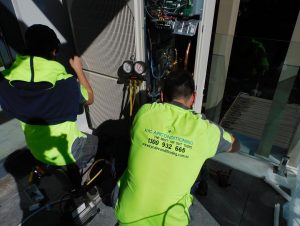
How to Choose a Local Air Conditioning Technician
A search for air conditioner technician near me returns plenty of names. Here’s how to sort the reliable ones from the rest:
- Licensing. Refrigerant handling and electrical work require proper licensing in Australia. Non-negotiable.
- Local knowledge. A technician who works across Sydney understands the local conditions — coastal salt air, western-suburbs heat, older homes with dated wiring.
- Transparent diagnosis. Good technicians explain the fault before quoting the fix. Be cautious of anyone who wants to replace a major part without testing anything.
- Genuine reviews. Recent, specific customer feedback tells you more than a star rating alone.
- Clear communication. You should understand what’s wrong, what it’ll cost, and what your options are before work starts.
Whether it’s residential air conditioning Sydney or a commercial air conditioning Sydney setup, the fundamentals are the same: proper diagnosis, honest advice, and a fix that lasts.
Sydney-Specific Repair Considerations
Sydney throws a few unique challenges at air conditioners. Coastal salt air in the eastern and northern beaches suburbs accelerates corrosion on outdoor units. Extreme heat spikes in the western suburbs push systems to their limits, exposing weak components on the hottest days. Bushfire smoke and dust clog filters and coils faster than you’d expect. And plenty of Sydney homes — especially older terraces and character properties — have electrical setups that complicate installation and repair.
All of which is a long way of saying: local experience genuinely matters here. A technician who understands Sydney conditions diagnoses faster and recommends solutions that actually suit the climate.
For fast, reliable air conditioning repairs Sydney homeowners can rely on, the goal is always the same — find the real cause, fix it properly, and keep the system running when you need it most.
Frequently Asked Questions
How do I find reliable air conditioning repairs near me? Look for a licensed local technician with recent, specific reviews and transparent pricing. Describe your system type and symptom clearly when you book to get an accurate response.
Why is my air conditioner blowing warm air? Common causes include a refrigerant issue, a frozen or dirty coil, a clogged filter or a struggling compressor. Refrigerant work is a licensed job, so warm air that isn’t fixed by cleaning the filter usually needs a professional.
Why is water leaking from my indoor unit? Most often a blocked condensate drain, a full drain pan or a frozen coil melting. Act quickly to avoid water damage.
Is it cheaper to repair or replace my air conditioner? Repair usually wins for younger systems with a single fault. Replacement makes more sense for old units with multiple failures, compressor problems or repeat breakdowns.
How much do AC repairs cost in Sydney? It depends entirely on the fault. Minor jobs are inexpensive; compressor, control board and refrigerant repairs cost significantly more. Always get a proper diagnosis before agreeing to work.
Can I fix my air conditioner myself? You can safely clean filters, check the thermostat, reset the breaker once and clear the outdoor unit. Anything involving refrigerant, wiring or the compressor requires a licensed technician.
How often should I service my air conditioner? Once a year is a good baseline for most homes. Regular servicing is the cheapest way to prevent expensive emergency repairs.
What’s the difference between a split system and ducted repair? Split systems are more contained and usually simpler to diagnose. Ducted systems involve zones, dampers and ductwork, so faults take more investigation to trace.
Related Readings:
- Why Is My Air Conditioner Leaking Water? Causes, Fixes and When to Call a Technician
- Air Conditioner Won’t Turn On? 9 Things to Check Before Calling an AC Technician
- Why Does My Air Conditioner Keep Turning On and Off Every Few Minutes?
- Why Is My Air Conditioner Outdoor Unit Not Running While the Indoor Unit Works?
The Bottom Line
An air conditioner breakdown is stressful, but it’s rarely a mystery once you know what to look for. Identify the symptom, do the safe checks, and when the problem sits beyond a filter clean or a single reset, call a licensed local technician rather than gambling on a guess.
Describe your system, describe what it’s doing, and let a proper diagnosis lead the repair — not the other way around. That’s how you turn a sweaty, panicked afternoon into a quick, sorted fix, and keep your home comfortable through whatever Sydney’s weather decides to throw at you next.