
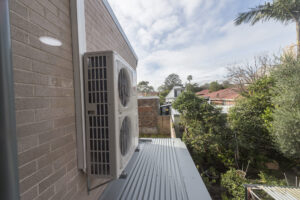
Yes, portable air conditioners can work effectively in Sydney apartments during heatwaves, but mainly in small, closed rooms with a properly sealed exhaust window. They are far less effective when asked to cool a large open-plan apartment, a sun-baked west-facing living area or several rooms at once.
For renters and apartment residents who cannot install permanent residential air conditioning in Sydney, a portable unit can provide useful short-term relief. However, it should not be expected to perform like a correctly sized split system or ducted system.
Quick Verdict
Overall rating: 7/10 for temporary apartment cooling
- Small closed bedroom: 8.5/10
- Small lounge with good window sealing: 7/10
- Large open-plan apartment: 4/10
- Whole-apartment cooling: 3/10
- Ease of installation: 8/10
- Bedroom noise comfort: 5/10
- Long-term value: 5.5/10
The biggest factors are not the brand name or the number on the remote. Room size, direct sunlight, insulation, humidity, exhaust-hose sealing and air leakage often decide whether the unit feels useful or disappointing.
Why Are Sydney Heatwaves So Difficult for Portable Air Conditioners?
Sydney recorded a temperature of 42.2°C at Observatory Hill on 10 January 2026. During conditions like these, an apartment can gain heat through windows, balcony doors, external walls, the ceiling and warm air entering through gaps. A west-facing apartment may continue releasing stored heat after the sun goes down.
A portable air conditioner must remove this heat while its compressor and hot exhaust hose remain inside the room. That is a harder job than a split system, which keeps its compressor and heat-rejection equipment outside.
This does not mean portable air conditioners are useless. It means expectations must be realistic.
A portable unit may make one bedroom comfortable enough for sleeping. It will rarely make an entire two-bedroom Sydney apartment feel evenly cool during a severe heatwave.
A Typical Apartment Example
Consider a 16-square-metre bedroom with a door, curtains and a sliding window. If the exhaust panel is sealed and the room is cooled before the afternoon heat peaks, a suitable portable unit may provide meaningful relief.
Now consider a 45-square-metre open living and kitchen area with west-facing glass and an open hallway. The same unit must fight sunlight, cooking heat, hot surfaces and warm air arriving from the rest of the apartment. It may blow cool air near the unit without bringing the full room down to the selected temperature.
That difference explains many conflicting residential air conditioning Sydney reviews.
How Does a Portable Air Conditioner Work?
A true portable air conditioner uses refrigeration to remove heat and moisture from indoor air.
Warm room air passes across a cold coil. The unit returns cooler air to the room and sends collected heat outside through a flexible exhaust hose. Moisture may be evaporated through the hose, collected in a tank or drained through a separate tube.
This is different from a portable fan or evaporative cooler. A fan moves air but does not lower the room’s actual temperature. An evaporative cooler adds moisture and tends to be less useful during humid Sydney weather.
Single-Hose Versus Dual-Hose Units
Most affordable portable systems use one exhaust hose. They take air from the room and send part of it outdoors. This can create slight negative pressure, which pulls warm air back through door gaps and other leaks.
A dual-hose arrangement uses separate intake and exhaust air paths. This can reduce the amount of warm replacement air entering the room. Current 2026 technical guidance continues to identify dual-hose designs as the stronger choice for cooling efficiency, although the quality of the window seal remains critical.
What Is Normally Included in the Box?
A typical portable air conditioner package contains:
- The wheeled air-conditioning unit
- A flexible exhaust hose
- A hose connector
- A window slider or venting panel
- A remote control
- A drain outlet or drain hose
- An instruction manual
Do not assume the supplied window kit will fit every Sydney apartment window.
Many kits work best with vertical or horizontal sliding windows. Hinged, awning and unusually tall balcony windows may need a removable fabric seal or a custom insert. Any temporary solution should remain secure and should not create a fall, weather or security risk.
Which Portable Air Conditioner Specifications Actually Matter?
Cooling Capacity
Cooling capacity is normally shown in kilowatts or BTU per hour.
Do not buy solely from a broad room-size claim on the box. Sydney apartment cooling loads can change because of:
- West-facing windows
- Large glass doors
- Top-floor exposure
- High ceilings
- Weak insulation
- Open-plan layouts
- Cooking appliances
- Several occupants
- Poor window sealing
KYC’s guide to choosing the right air conditioner size for a Sydney home explains why floor area alone does not provide a complete answer.
Energy Rating
Check the Australian Zoned Energy Rating Label and compare the annual energy-use information for the relevant climate zone. Portable air conditioners are covered by Australian energy-labelling requirements, but actual running costs still depend on weather, room construction, usage and electricity tariffs.
Noise Level
Residential air conditioning noise levels matter most in bedrooms.
A portable unit keeps its compressor inside the room. You may hear the compressor start, the fan run and the casing vibrate. The sound may be acceptable during the day but distracting at night.
When comparing specifications, check whether the figure refers to sound pressure or sound power. They are different measurements and should not be compared as though they are identical.
Condensate Management
Sydney humidity can cause the unit to collect more water. Some systems evaporate much of this moisture through the exhaust. Others may require manual draining during humid weather.
Before buying, check:
- Whether continuous drainage is supported
- Where the drain outlet is located
- Whether a tank-full warning is provided
- Whether the unit automatically stops when full
A 2026 experimental study also identified low efficiency and condensate-related shutdowns as continuing limitations for conventional portable air conditioners in humid conditions.
How Effectively Will a Portable Unit Cool Your Sydney Apartment?
Scenario One: Small Closed Bedroom
Expected performance: Good
This is the strongest use case. Close the door, block direct sunlight and seal the window around the exhaust panel.
Start cooling before the room becomes extremely hot. The unit must then maintain comfort rather than cool walls, furniture, bedding and flooring that have already absorbed hours of heat.
Scenario Two: Small Living Room
Expected performance: Moderate
A small lounge can be cooled when it is separated from the kitchen and hallway. Performance drops when people repeatedly open doors or when warm air enters from other rooms.
A small fan can help move cooled air away from the portable unit, but it will not increase the machine’s actual cooling capacity.
Scenario Three: West-Facing Open-Plan Apartment
Expected performance: Weak
Large glass areas and afternoon sun create a high heat load. A portable air conditioner may cool the area immediately around it without controlling the entire space.
Thermal curtains, external shading where permitted and early pre-cooling can help. However, a fixed system is normally the more effective long-term answer.
Scenario Four: Two-Bedroom Apartment
Expected performance: Limited to One Room
Portable air conditioners are not good at moving cooling through doorways and around corners. Moving the machine between rooms also means moving the hose, window kit and drainage arrangement.
For several occupied rooms, a properly designed split, multi-split or ducted air conditioning Sydney solution provides better temperature control.
How Can You Improve Portable Air Conditioner Performance?
Seal the Window Properly
A poor window seal can undo much of the cooling.
Block gaps around the window panel and hose connector. The seal should be removable, weather-resistant and safe for the type of window.
Keep the Exhaust Hose Short
Use the shortest practical hose route. Avoid tight bends and do not crush the hose behind furniture.
The hose becomes hot while the unit runs. A long hose places more heat inside the room before that heat reaches the window.
Close Doors and Curtains
Choose one priority room. Close its door and reduce direct sunlight before the hottest part of the day.
Trying to cool unused spaces wastes capacity.
Clean the Filter
Dust reduces airflow. Check the filter regularly during heavy summer use and follow the manufacturer’s cleaning instructions.
Set a Realistic Temperature
Selecting an extremely low temperature will not make an undersized unit cool faster. It usually makes the compressor run for longer.
A stable, realistic setting is normally more comfortable than repeatedly switching between maximum cooling and turning the unit off.
Are Portable Air Conditioners Expensive to Run?
Portable air conditioner prices vary with cooling capacity, controls, hose design and noise features. As a broad Australian buying guide, medium-room models can range from about A$349 to A$1,200, although sale prices and stock levels change quickly during hot weather.
The hourly running cost can be estimated with this formula:
Input power in kW × electricity price per kWh = approximate hourly cost
For example, a unit drawing 1.2 kW on a tariff of A$0.35 per kWh would cost about A$0.42 per hour while drawing that full input.
Actual use may be higher or lower. Heatwave conditions, air leaks, thermostat cycling, humidity and filter condition all affect consumption.
The cheapest residential air conditioning Sydney option is not always the cheapest to own. A low-cost portable unit that runs continuously may offer poor value compared with a more efficient fixed system used over several summers.
Portable Air Conditioner Versus Fixed Residential Air Conditioning
| Factor | Portable unit | Split system | Ducted system |
|---|---|---|---|
| Initial commitment | Low | Medium | High |
| Permanent work | Usually none | Required | Required |
| Best coverage | One small room | One room or defined area | Several rooms |
| Indoor noise | More noticeable | Usually lower | Usually low in occupied rooms |
| Heatwave performance | Limited to moderate | Strong when correctly sized | Strong when correctly designed |
| Renter suitability | Good | Written permission needed | Rarely renter-led |
| Floor space | Required | None | None |
| Long-term efficiency | Usually weaker | Usually stronger | Depends on zoning and design |
For owners planning to stay in the apartment, split air conditioning installation in Sydney is often the practical step up from portable cooling.
A fixed installation may involve common property, external appearance, penetrations, drainage and outdoor-unit placement. NSW guidance says an outdoor unit may sometimes be installed on an apartment balcony as exempt development, but strata by-laws can still control where and how it is installed. Always check the scheme’s rules before work begins.
KYC also provides a detailed guide explaining whether strata approval is required for air conditioning in a Sydney apartment.
Portable Air Conditioner Pros and Cons
What We Like
- No permanent wall-mounted indoor unit
- Useful for many renters
- Can cool one priority room
- Quick to set up with a suitable window
- Removes some moisture while cooling
- Lower upfront commitment than permanent installation
- Can provide emergency relief during a heatwave
Areas for Improvement
- Noisy compared with many fixed systems
- Takes up floor space
- Exhaust hose releases heat into the room
- Window sealing can be awkward
- Weak for open-plan layouts
- Poor choice for whole-apartment cooling
- May need draining in humid weather
- Heavy and less portable than the name suggests
- Usually less efficient than a correctly installed split system
Who Should Buy a Portable Air Conditioner?
Best For
A portable unit makes sense when:
- You rent and cannot make permanent changes
- You need to cool one small bedroom
- Your stay in the property is temporary
- A split-system installation is still awaiting approval
- You need short-term heatwave relief
- The window can be safely and tightly sealed
Skip It If
Choose another type of residential air conditioner when:
- You need whole-apartment cooling
- Your living area is large and open
- The apartment receives strong western sun
- You are sensitive to compressor noise while sleeping
- Your windows cannot accept a safe exhaust seal
- You expect to use air conditioning daily for many years
Apartment owners looking for the best residential air conditioning Sydney solution should compare portable ownership costs with a correctly sized split or multi-room system.
Where Should You Buy One?
Buy from a seller that provides:
- A clear Australian warranty
- A compliant energy label
- Cooling capacity and electrical-input figures
- Measured noise information
- A suitable return policy
- Replacement window-kit parts
- Local warranty support
Check what is included before paying. A lower advertised price may not include the correct window seal, delivery or accessories needed for your apartment.
Avoid buying during the first severe heatwave where possible. Stock may be limited and there is less time to compare residential air conditioning Sydney prices properly.
How Can KYC Air Conditioning Help?
KYC Air Conditioning can assess whether a portable unit is a sensible temporary solution or whether the apartment would benefit from a permanent system.
Its residential air conditioning services in Sydney include system advice, installation, maintenance and residential air conditioning repairs.
KYC reports more than 10 years of industry experience, more than 2,000 Sydney homes serviced or installed and a five-year labour and manufacturer warranty offering. These are company-published figures and should be confirmed as part of the quotation process.
For apartment work, KYC can help with:
- Heat-load and room-size assessment
- Split, multi-split and ducted comparisons
- Indoor and outdoor unit placement
- Residential AC installation cost estimates
- Noise and neighbour considerations
- Condensate drainage planning
- Strata-supporting installation information
- Ongoing residential air con servicing
- Diagnosis of weak cooling or faulty fixed systems
This is particularly useful when searching for “residential air conditioning installers near me” or a “residential air conditioner service near me” because apartment installation involves more than choosing a machine.
Customer Feedback
Verifiable 2026 KYC Review Snapshot
Fabulous job. From the very beginning to the very end, KYC have been professional and exceeded all expectations. Competitive pricing and the only company who came out to quote us who asked reasonable and logistical questions. They have been solution orientated and friendly to work with. Thanks
—Utopia Art Sydney
https://maps.app.goo.gl/bAzs8udoLud4DzhC7
Can’t recommend highly enough, Kristian, Rhys, Jason and Victoria have been fantastic. Great quotes, fitting was excellent – great finish with attention to detail, 2 units done in one day and to really high spec. Thanks so much!
—Rachel Forth
https://maps.app.goo.gl/suoHuSgLyuDkJaBp8
Final Verdict: Do Portable Air Conditioners Work During Sydney Heatwaves?
Portable air conditioners work best as one-room survival tools, not whole-apartment climate-control systems.
Buy one when you need a reversible, renter-friendly way to cool a small enclosed room. Seal the window, shorten the exhaust hose, block direct sun and begin cooling early.
Do not buy one expecting quiet, efficient cooling across a large Sydney apartment during a 40°C-plus day. In that situation, a correctly sized fixed system will normally provide better comfort, lower indoor noise and stronger long-term value.
Final score: 7/10 for temporary cooling and 4/10 as a permanent substitute for residential air conditioning in Sydney.
Frequently Asked Questions
Can a portable air conditioner cool a two-bedroom apartment?
Usually not evenly. It may cool one closed bedroom, but cooled air will not move efficiently through hallways and into other rooms.
Should I leave the bedroom door open?
No. Closing the door normally improves performance because the unit has a smaller volume of air and fewer heat sources to manage.
Can I use a portable air conditioner without the exhaust hose?
No. A refrigerated portable unit must release heat outside. Without the hose, it will return that heat to the room and may make the space warmer overall.
Is a portable air conditioner better than a fan?
A portable air conditioner can lower room temperature and remove moisture. A fan only moves air, although the airflow can make a person feel cooler.
Are portable air conditioners too noisy for sleeping?
Some people tolerate them, while others find the compressor distracting. Check the published noise specification and, where possible, listen to an operating unit before buying.
Do portable units need professional installation?
They generally do not need refrigeration installation. However, the exhaust arrangement must be secure and suitable for the apartment window. Do not make holes or alter common property without the required permission.
What is the normal lifespan of residential air conditioners?
Lifespan varies by system type, usage, installation quality, environment and maintenance. KYC states that a good-quality fixed residential system maintained at recommended intervals may last approximately 10 to 20 years.
When should I replace portable cooling with a split system?
Consider upgrading when the portable unit runs constantly, cannot cool the room, disrupts sleep, needs frequent draining or is being used daily for long periods.