
Sydney split system troubleshooting
Why Does My Split System Freeze Up Again Shortly After I Clean the Air Filter?
A split system freezing after filter cleaning often still has poor airflow, leftover ice from the first freeze, or a fault with the fan, refrigerant or temperature sensor. Switch the unit off and let it thaw on its own. If it has already frozen again after a full thaw, leave it off and arrange a fault check.
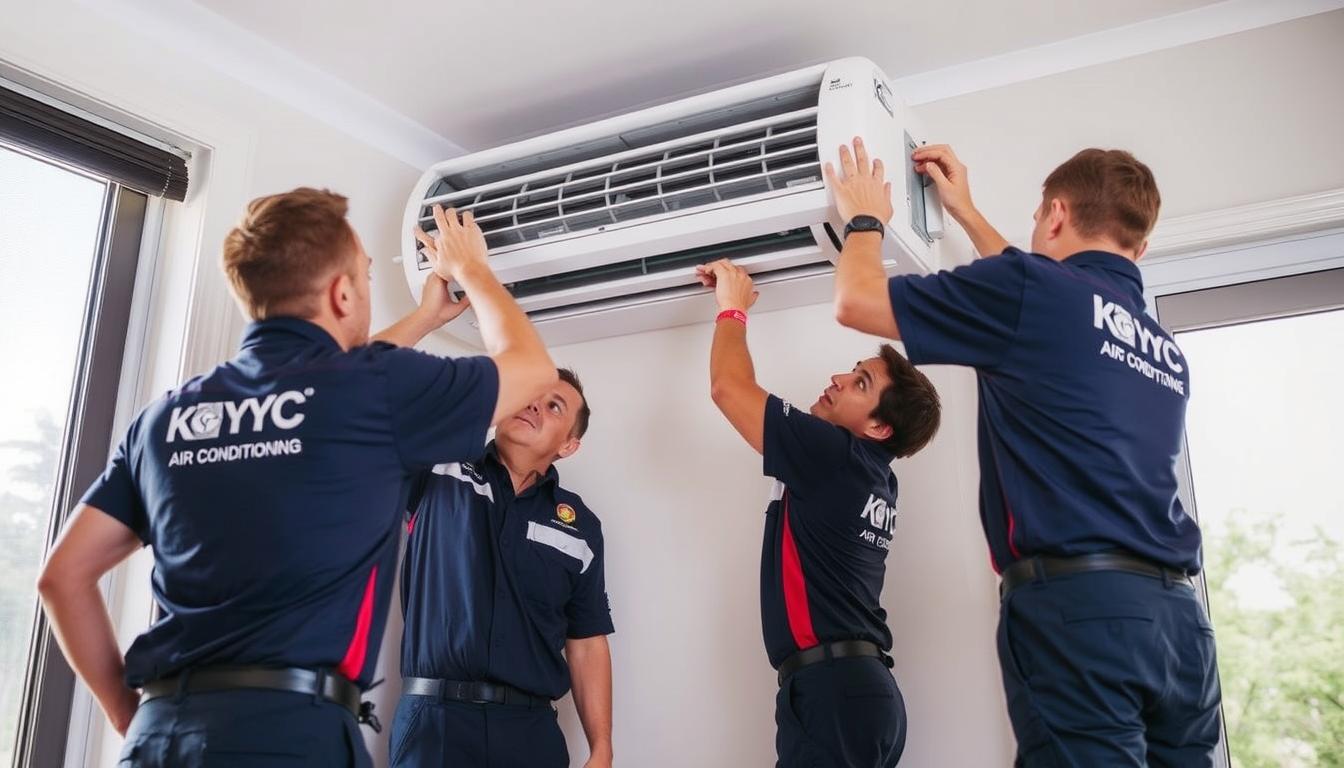
Split system freezing after filter cleaning? Here’s why the ice comes back
A wall-mounted split system has an indoor head that cools the room and an outdoor unit that releases heat. In cooling mode, the indoor fan draws warm room air across a cold metal coil behind the filter. That part is called the evaporator. Water from the air normally beads on the coil, drops into a tray and drains away. If the coil gets cold enough, that water can freeze instead.
Once ice starts to build, it can block more air from passing through the coil. That can make the freeze worse. It’s why a unit might start out cold, then blow a faint stream of air and leave the room warm. A clean filter helps air reach the coil, but it can’t melt old ice or fix an issue deeper in the unit.
Did it really thaw before you switched it back on?
The ice you see at the outlet can disappear before the coil behind it is clear. If you cleaned the filter and put the unit back on Cool soon after, some of the original ice may still have been there. The first drip doesn’t mean the thaw is done. The amount of ice and the room conditions affect how long it takes, so a fixed wait time isn’t a good test.
What can still block airflow with a clean filter?
The filter can sit out of place after cleaning. A curtain or shelf can block the air path. Inside the head, dust can cling to the coil or to the long fan wheel that pushes air back into the room. The fan itself may be slow or may cut out. If the air was weak before you saw ice, say so when you book. If it only went weak after frost formed, the ice itself may have been blocking the air.
Could it be refrigerant or a sensor?
Yes, but the ice doesn’t tell you which. Low refrigerant charge can make part of the coil too cold. If the charge is low, the technician should find out why. A leak is one possibility, and a top-up alone won’t fix a leak. A coil temperature sensor that reads wrong can also affect how the unit controls cooling. These faults need tests. You can’t tell them apart by looking at a patch of white frost.
What should you do when you find ice again?
- Switch the system off. Use the remote if you can do so safely. Leave it off while it thaws. Don’t keep switching it back on to see whether the ice returns.
- Let the ice melt on its own. Don’t chip it off or use hot water or a hair dryer. Move belongings away from drips if the area is safe and dry to approach.
- Check only what the manual says you can reach. Once the unit is off and safe to approach, check that the filter went back in the right way. If the manual calls for a washable filter to dry first, let it dry fully. Don’t remove fixed covers or reach into the fan or coil.
- Leave it off if it froze again after a full thaw. If the visible ice has gone but you’re not sure the coil thawed, don’t use another cooling run to find out.
If you can take a photo safely from the floor, get one of where the ice first showed up. A photo taken before the thaw can be more useful than one of a fully dry unit when the technician arrives. You don’t need to run it again to get the photo.
What did you notice before your split system iced up?
Open the clue that fits what you saw. These patterns help explain what to report. They don’t confirm what broke.
The airflow was weak from the start
Report that it felt weak before the first bit of ice. Airflow checks can then focus on the filter fit, coil, fan wheel and whether the fan reaches its set speed.
It blew well at first, then got weak
Note roughly how long it ran before the change. Ice may have begun to choke the airflow. The timing is useful, but it still doesn’t prove a refrigerant fault.
The fan stopped or made an odd sound
Say whether the fan slowed, stopped or made a new noise while the unit was calling for cooling. Note any flashing light or code. Don’t reach in to try to start the fan.
Water dripped only after I switched it off
It may be meltwater from the ice. A tray or drain issue can also make water spill inside. Tell the technician whether you saw ice before the drip or noticed water on other days as well.
Tick what you already have. This checklist doesn’t send any information.
Two Sydney examples that look alike at first
Illustrative example, Randwick flat. You wash the filter after finding frost and switch back to Cool once the outlet looks clear. Ice returns that evening. The best clue is that the coil behind the cover may never have thawed. The quick return alone isn’t proof that the wash caused a fault.
Illustrative example, Inner West terrace. You leave the unit off long enough for it to thaw. Next time it runs, the clean filter is in place but the airflow is weak right from the start. Then the frost comes back. That makes the fan and the air path worth checking early. The exact cause still takes an on-site check.
On a muggy Sydney day, there may be more moisture for a cold coil to collect. But a hot or humid day doesn’t make repeat ice inside the head normal. In a flat, tell the booking team if the outdoor unit is on a high balcony or behind a locked gate. If you rent, let your property manager know and share any safe photos.
What should a technician check before quoting a repair?
A useful visit starts with a simple question. What was the unit doing before the ice came back? Once it’s thawed, a technician can inspect the filter fit, indoor coil and fan. They can check whether the fan runs as called for and watch how the unit behaves in Cool. If the clues point to a sensor or control fault, they can test that part against the model’s service data.
If airflow checks out and the unit still shows signs of a refrigerant problem, ask what evidence points to low charge and how a leak will be checked. Refrigerant work needs someone with the right handling licence. There’s no single temperature or pressure figure that proves the fault on every split system. The model, room and outdoor conditions, and the way the unit is running all matter.
Ask three questions before you approve work. What did you find? What will the quote cover? How will you check the fault is gone? A useful final test looks beyond whether the unit blows cold air for a moment. Ask whether the airflow holds and whether water drains as it should during the test. If the original fault took a long time to show up, ask what to watch for after the visit.
Is this a maintenance job, a repair or time to replace?
Maintenance makes sense when the unit cools well and needs a routine clean and check. If dust has built up past the filter, a deeper clean may be part of the fix, but ask what caused the ice before assuming that a clean will solve it. For routine care, see air conditioning maintenance Sydney.
Repair diagnosis is the better booking when a split system keeps icing up, the fan cuts out or water spills indoors after a thaw. A fan fault, a sensor fault and a refrigerant leak are different jobs. Each needs a different scope.
Replacement is worth discussing if parts are hard to get, the unit has had several major faults, or the repair scope is large for a system near the end of its working life. Ice on its own isn’t a reason to replace the unit. Look for the cause, ask about any warranty that still applies, and compare the two options after you have the findings.
How can KYNEX Air Conditioning & Trades help?
When you call, lead with what changed. “The filter is clean, but it froze again after thawing” gives KYNEX a better starting point than “it’s not cold”. The team can arrange an on-site assessment, explain what they find and quote for the work that fits the fault. Use the air conditioning repair Sydney service if the unit has frozen more than once.
KYNEX Air Conditioning & Trades
Suite 206 Level 2/71 Belmore Rd, Randwick NSW 2031
0484 59 59 59
For a job-specific cost, call KYNEX. The quote depends on the fault, parts, access and work needed.
What did KYNEX customers report in 2026?
- Mike Morgan, 6 June 2026. Reported that an older air conditioner was serviced and cleaned, and that its pump was replaced during the visit.
- Andrew Barlow, 13 March 2026. A repeat customer who described the team as responsive and knowledgeable.
These are summaries of dated public reviews. Neither review describes a confirmed split-system icing repair. The examples above are illustrative, and no timed product test was conducted for this guide.
Watch a KYNEX Sydney project
This video shows a ducted installation. It’s a look at the team’s work, not a guide to fixing a frozen wall-mounted split system.
Common questions about repeat aircon icing
Did cleaning the filter cause the freeze?
Usually the timing alone doesn’t show that. The unit may still have been iced up when it went back into Cool. A filter that was put back incorrectly can also restrict air. If the fit is right and ice comes back after a full thaw, arrange a fault check.
Can I run the unit with the filter out to test it?
No. Don’t run it without the filter as a test. It won’t tell you why the coil froze, and it lets more dust reach the coil. Follow the model’s instructions for refitting the filter.
Is frost outside in heating mode the same thing?
No. A reverse-cycle unit can frost at the outdoor coil in heating mode and clear it during a defrost cycle. This guide is about ice on the indoor head during cooling. That’s not part of normal operation.
Will a regas fix repeat freezing?
Only a proper diagnosis can tell you whether the refrigerant system needs work. A top-up won’t fix a leak, a slow fan or a blocked coil. Ask what was found and what repair deals with the cause.