
Why Does My Air Conditioner Trip the Safety Switch Only When It Rains in Sydney?
during rain, moisture may be entering an electrical
component, damaged cable or outdoor connection, causing
electricity to leak to earth. An air conditioner
trips safety switch when raining fault should
never be ignored, even if the system works perfectly
again when the weather clears.
Picture this. It is a humid afternoon in Sydney,
a storm rolls in, and suddenly your air conditioner
stops working. You discover that the safety switch
has tripped. The following morning, the sun comes out,
and everything seems normal again.
Sound familiar? Unfortunately, the sunshine has not
necessarily fixed the problem. It may simply have dried
out enough moisture for the electrical fault to become
less noticeable.
If this keeps happening, leave the system off and
arrange professional air conditioning repairs Sydney
homeowners can access through KYNEX Air Conditioning
& Trades.
- Water entering the outdoor isolator.
- Damaged electrical cable insulation.
- Moisture affecting outdoor components.
- Compressor or fan motor insulation faults.
- Corroded electrical connections.
- Faults elsewhere on a shared safety switch.
Do not repeatedly reset the safety switch.
Do not open electrical covers or attempt to dry
electrical components yourself.
Air Conditioner Trips Safety Switch When Raining:
Why Does It Happen?
Most split-system and ducted air conditioners have
an outdoor unit designed to operate in normal rain.
However, weather-resistant does not mean completely
waterproof.
As equipment ages, seals, cable insulation and
protective enclosures can deteriorate. Water may then
reach areas that should remain dry.
When moisture creates an unintended path for
electricity, the safety switch may detect the imbalance
and disconnect the power. This is called earth leakage.
Rain exposure
Moisture ingress
Current leakage
Safety switch trips
The fault might be inside the outdoor unit, the
electrical supply cable, the outdoor isolator or
another part of the electrical installation.
Rain does not automatically mean the air conditioner
itself is faulty. It provides an important clue for
the investigation.
Why Are Sydney Air Conditioners Vulnerable to
Wet-Weather Electrical Faults?
Sydney homes experience coastal humidity, heavy
rainfall, thunderstorms and hot summer conditions.
The outdoor unit’s location can influence its exposure
to these conditions.
Coastal homes in Bondi, Coogee and Maroubra
Salt carried in coastal air can contribute to
corrosion. Over time, exposed metal surfaces,
electrical connections and equipment enclosures
may deteriorate. Moisture can worsen existing damage.
Older homes in the Inner West
Older properties in Marrickville and Newtown may
have ageing electrical installations. An air conditioner
might be modern while parts of its electrical supply
are considerably older.
Apartments in Randwick and the Eastern Suburbs
Balcony-mounted outdoor units may be exposed to
wind-driven rain, overflowing gutters or water running
down walls. Restricted spaces can also make inspection
and maintenance harder.
Homes in the Sutherland Shire
Equipment installed near gardens, retaining walls
or poorly drained areas may experience persistent
dampness. The location alone is not proof of a fault,
but it is worth considering during an inspection.
7 Reasons Your Air Conditioner Safety Switch
Trips After Rain
1. Water entering the outdoor electrical isolator
The outdoor isolator is a switch located near the
external equipment. Its enclosure should protect the
electrical connections from the weather conditions for
which it is rated.
Cracks, damaged cable entries and deteriorated
seals can compromise that protection. Never open
or touch a suspected water-damaged isolator.
2. Damaged electrical cable insulation
Cables have protective insulation that keeps current
within its intended path. Ageing, sunlight and physical
damage may weaken this protection.
A cable might work normally in dry conditions but
develop leakage when damp. This type of air conditioning
insulation fault requires suitable electrical testing.
3. Moisture entering the outdoor unit
The outdoor unit contains the compressor, fan motor
and control electronics. Damaged panels or seals can
create opportunities for water ingress.
An outdoor aircon moisture electrical fault may
remain intermittent as moisture levels change.
Drying the equipment does not repair the original defect.
4. Compressor insulation deterioration
The compressor motor relies on electrical insulation.
As that insulation deteriorates, moisture and temperature
changes may affect an existing electrical weakness.
If the system trips when the compressor starts,
a qualified technician may investigate the compressor,
its electrical supply and control components.
5. Outdoor fan motor faults
An outdoor fan motor can develop electrical insulation
problems as it ages. Moisture may worsen an existing
weakness, particularly when the motor operates.
Trip timing offers useful information but cannot
confirm which component has failed.
6. Corroded connectors and enclosures
Air conditioners near Sydney beaches can experience
significant exposure to salty air. Corrosion can affect
connections, cable entries and equipment enclosures.
Corroded electrical parts need proper assessment
rather than surface cleaning alone.
7. A fault elsewhere on a shared safety switch
A safety switch may protect several circuits.
Outdoor lighting, garden equipment or another appliance
could develop a fault during rain.
The air conditioner might be operating when combined
leakage causes the switch to trip. A licensed electrician
may need to investigate the wider electrical installation.
Interactive Wet-Weather Air Conditioning Fault Checker
Record symptoms you have already observed.
Do not restart the equipment to reproduce the fault.
What could my observations mean?
Rain-related trips may indicate moisture ingress,
damaged insulation or compromised outdoor enclosures.
Startup-related trips may require compressor or fan
motor testing. If other circuits are affected, a
licensed electrician may need to investigate the
electrical supply.
professional assessment. This checklist does not
establish that equipment is safe.
If there is fire, smoke or an electric shock, keep
clear and call Triple Zero (000).
Is It a Safety Switch or a Circuit Breaker?
Although people often use these terms interchangeably,
the devices have different jobs.
| Protection device | Primary purpose |
|---|---|
| RCD or safety switch | Detects unwanted electrical current leakage. |
| Conventional circuit breaker | Protects against excessive current and short circuits. |
| RCBO | Combines residual-current and overcurrent protection. |
A safety switch trip may indicate earth leakage,
whereas a conventional circuit breaker trip may indicate
excess current or a short circuit.
For more general causes, read our guide to
why an air conditioner keeps tripping the breaker.
Why Does My Air Conditioner Work Again When the
Rain Stops?
As the outdoor unit and its surroundings dry,
electrical leakage may fall below the level that
caused the protective device to operate.
The system appears to return to normal, but the
underlying problem may still exist.
A damaged seal remains damaged. A cracked cable
does not repair itself. Corrosion does not disappear
when the sun comes out.
If your split system trips power after rain,
do not assume the issue has resolved simply because
the weather has improved.
Realistic Sydney Wet-Weather Fault Scenarios
These examples illustrate possible faults.
They are not verified customer case studies or
testimonials.
Scenario 1: A coastal apartment in Coogee
A resident notices their split system loses power
during wind-driven rain. In dry weather, the equipment
appears normal. An investigation might focus on the
balcony isolator, cable entries and corrosion.
Scenario 2: An older house in Marrickville
A homeowner notices the safety switch trips during
storms, sometimes even when the air conditioner is off.
Because other equipment is affected, the investigation
may need to include outdoor lighting or other circuits.
Scenario 3: A ducted system in the Sutherland Shire
A household experiences a trip when the outdoor unit
starts after prolonged rain. The compressor, fan motor,
wiring and control electronics may need assessment.
The timing helps guide professional diagnosis.
What Should You Do When Your Aircon Safety
Switch Keeps Tripping?
- Stop using the air conditioner.
Turn it off at the indoor controller if safe.
This does not electrically isolate the equipment. - Leave the tripped protection alone.
Do not repeatedly reset it to reproduce the fault. - Keep away from wet equipment.
Avoid touching outdoor units, damaged switches
or water-affected wiring. - Record what happened.
Note the weather, timing, system behaviour and other
equipment that lost power. - Arrange qualified assistance.
Contact KYNEX Air Conditioning & Trades or a
licensed electrician as appropriate.
How Does a Technician Diagnose an Aircon Electrical
Fault in Wet Weather?
Intermittent electrical faults require a systematic
approach. Replacing parts based only on symptoms may
create unnecessary expense without fixing the problem.
| Professional assessment | Purpose |
|---|---|
| Insulation resistance testing | Investigate deteriorated electrical insulation. |
| Earth leakage assessment | Identify unwanted current leakage. |
| Outdoor isolator inspection | Identify damage or water ingress. |
| Compressor assessment | Investigate motor and electrical faults. |
| Fan motor assessment | Identify motor insulation problems. |
| RCD assessment | Confirm correct protective device operation. |
| Electrical enclosure inspection | Identify corrosion and weather damage. |
Some faults require both HVAC expertise and licensed
electrical work. The goal is to establish the root cause,
complete the appropriate repair and verify safety before
returning the affected equipment to service.
Can You Prevent Rain From Damaging Your
Air Conditioner?
You cannot control Sydney’s weather, but suitable
installation and maintenance can reduce avoidable
exposure.
A well-maintained outdoor unit should have
appropriate clearance, stable mounting, sound
protective enclosures and suitable drainage around
its installation area.
Do not wrap the outdoor unit in plastic, build an
unapproved enclosure or pressure-wash electrical
components. Have overflowing gutters and drainage
problems assessed where necessary.
Regular residential air conditioning service
appointments provide an opportunity to discuss
equipment condition and signs of deterioration.
Maintenance cannot guarantee that electrical faults
will never occur, but it can help identify developing
problems.
Should You Repair or Replace an Air Conditioner
With a Moisture Fault?
Not every wet-weather electrical fault requires a
new air conditioner. The right decision depends on
what has failed and the equipment’s overall condition.
| Option | When it may be appropriate |
|---|---|
| Targeted electrical repair | Damaged cable, isolator or repairable connection. |
| Component replacement | Confirmed motor or electronics fault. |
| Installation improvements | Poor drainage or unsuitable exposure. |
| System replacement | Extensive deterioration or unavailable parts. |
Professional diagnosis should come before a major
purchasing decision.
How Much Does It Cost to Repair an Air Conditioner
That Trips During Rain?
Repair costs depend on the electrical fault, system
condition, replacement parts and accessibility.
Repairing a damaged external connection is different
from replacing a major internal component. Apartment
balconies and restricted outdoor unit locations can
also affect the work required.
For specific costs, contact KYC Air Conditioning
on 0484 59 59 59 and arrange a
suitable assessment.
How KYNEX Air Conditioning & Trades Can Help
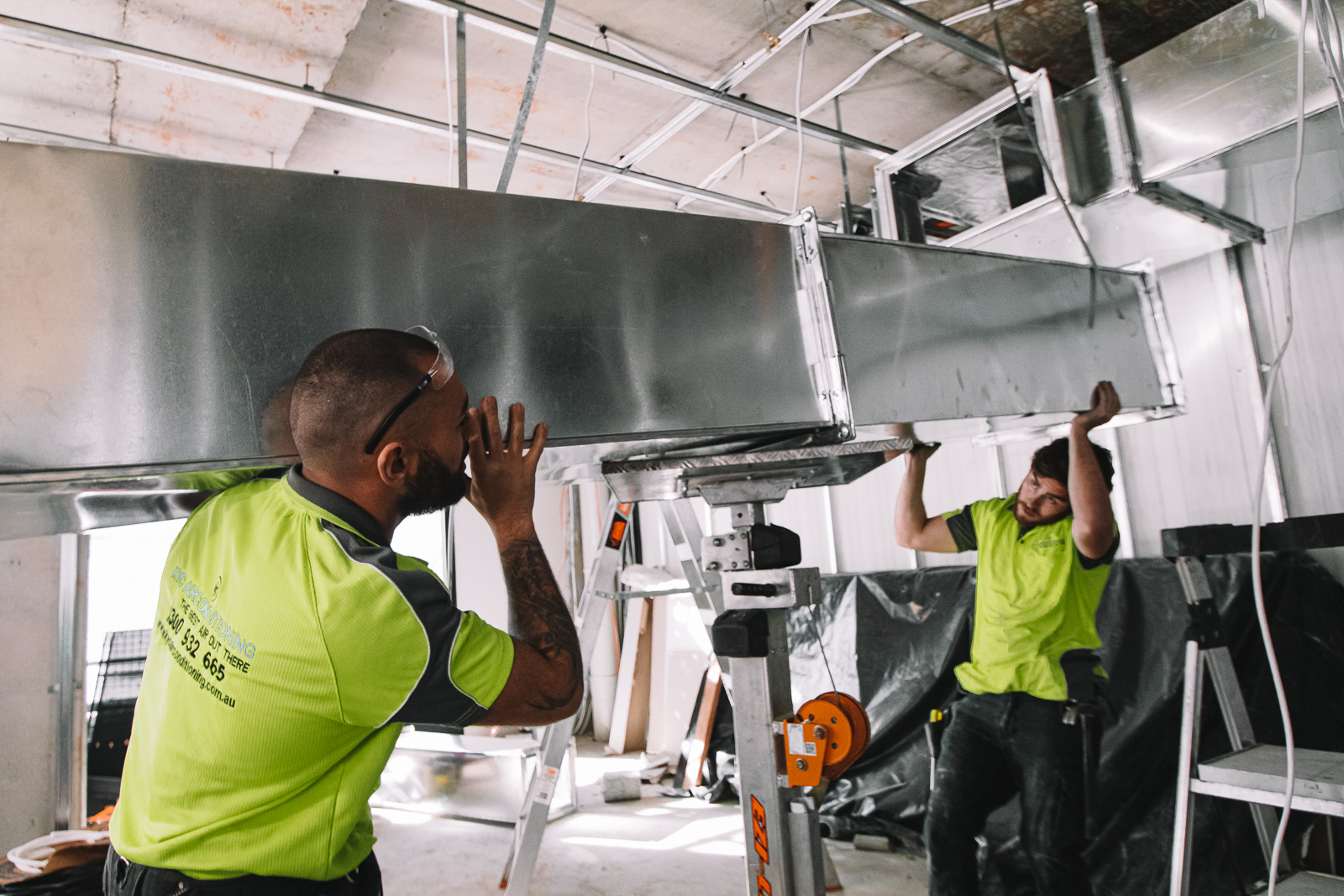
Image source: KYNEX Air Conditioning & Trades.
KYNEX Air Conditioning & Trades provides
residential and commercial air conditioning repair
services across Sydney.
If your air conditioner develops an electrical
fault during wet weather, the team can arrange an
assessment and investigate the reported symptoms.
Where additional electrical wiring work is
necessary, an appropriately licensed electrician
must undertake that work.
The repair process may involve identifying the
affected component, assessing equipment condition,
discussing repair options and completing appropriate
final testing.
Whether you have a split system or ducted system,
finding the reason for the fault is more useful than
repeatedly restoring power without understanding
why it failed.
Watch: Ducted Air Conditioning Installation in Sydney
Frequently Asked Questions
Is it normal for an air conditioner to trip when it rains?
No. Outdoor equipment should tolerate normal
weather exposure within its design limits.
Wet-weather trips require investigation.
Can rain damage an outdoor air conditioner?
Yes. Flooding, damaged enclosures, compromised
seals and unsuitable installation conditions can
allow harmful water ingress.
Can humidity alone trip a safety switch?
Humidity can contribute to condensation or affect
weakened electrical insulation. Diagnosis is required
to identify the actual fault.
Can a faulty compressor trip the RCD?
Yes. Deteriorated compressor motor insulation may
cause electrical leakage to earth.
Can I reset the safety switch after the rain stops?
Do not restore power to an air conditioner with
a suspected moisture-related electrical fault until
a qualified professional has assessed it.
Should I cover my outdoor air conditioner when it rains?
Do not wrap or obstruct the operating equipment.
Any permanent weather protection must meet
manufacturer clearance and installation requirements.
Should I call an electrician or an air conditioning technician?
An air conditioning specialist can assess equipment
faults. A licensed electrician may need to investigate
fixed wiring, the supply circuit or switchboard.
Can the safety switch itself be faulty?
Yes, but this should not be assumed without testing.
The device may be responding correctly to a fault.
Can a blocked air conditioner drain cause electrical tripping?
Potentially, if condensate reaches electrical parts.
Some systems also have separate condensate overflow
protection devices.
Is a wet-weather electrical fault dangerous?
It can present a shock or fire risk. Leave the
affected equipment off and obtain qualified assistance.
Final Verdict: Do Not Wait for the Next Sydney Storm
An air conditioner that trips the safety switch
during rain is providing an important warning.
The cause could be moisture entering an enclosure,
damaged insulation, corrosion, a faulty motor or a
problem elsewhere in the electrical installation.
What matters most is not whether the air conditioner
starts working again after the rain. It is whether the
underlying fault has been identified and safely resolved.
Stop using the affected equipment and arrange a
professional inspection.
Get your air conditioner professionally assessed
KYNEX Air Conditioning & Trades
Suite 206 Level 2/71 Belmore Rd,
Randwick NSW 2031, Australia
Phone: 0484 59 59 59
Contact our team to discuss wet-weather electrical
faults, split-system repairs and ducted air conditioning
inspections.