
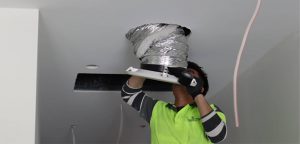
How Does Ducted Air Conditioning Work?
Ducted air conditioning has become one of the most popular climate-control solutions for Australian homes and businesses, and for good reason. Unlike wall-mounted split systems that cool a single room, a ducted system delivers consistent, whisper-quiet temperature control throughout an entire property, all while staying discreetly hidden from view. But behind that seamless comfort sits a genuinely clever piece of engineering. Understanding how it all fits together helps you appreciate why ducted systems are so effective, and how to get the most out of yours.
In this guide, we’ll walk through exactly how ducted air conditioning works, step by step, before looking at the standout features and benefits that make it worth considering for your own space.
How does ducted AC work?
At its core, a ducted air conditioning system works by centralising the cooling and heating process in a single indoor unit, then distributing conditioned air around your property through a network of insulated ducts hidden in the roof space or under the floor. Air is drawn in, treated, and pushed back out through discreet ceiling or floor vents in each room.
The magic lies in how these components work together as a continuous cycle. Rather than treating your home as a collection of separate rooms, a ducted system treats it as one connected environment, maintaining an even temperature everywhere the ducting reaches. Let’s break the process down into the individual stages that make it all happen.
1. Air intake
The cycle begins with air intake. A central return-air grille, usually located in a hallway or another central part of the home, draws warm indoor air into the system. This is the starting point of the entire process. The fan inside the indoor fan-coil unit creates negative pressure that pulls air in from the living spaces, ensuring a steady supply of air to be treated. In larger properties, there may be more than one return-air point to keep airflow balanced across the whole system.
2. Air filtration
Before the incoming air is heated or cooled, it passes through a filter. This filtration stage traps dust, pollen, pet dander, and other airborne particles, helping to improve the indoor air quality of your home. Clean filters are essential not only for healthier air but also for the efficiency of the whole system, since a clogged filter forces the unit to work harder. This is one of the simplest yet most important aspects of a well-running system, and it’s a key focus during any professional service visit.
3. Cooling or heating
Once filtered, the air moves across a coil where the actual temperature change takes place. In cooling mode, refrigerant circulating through the indoor coil absorbs heat from the air, carrying it outside to the condenser unit where it’s released. In heating mode, a reverse-cycle system flips this process, extracting warmth from the outside air, even on cold days, and transferring it indoors. This reverse-cycle capability is what allows a single ducted system to provide both summer cooling and winter warmth, making it a true year-round comfort solution.
4. Fan operation
With the air now cooled or heated to the desired temperature, a powerful fan takes over. This fan drives the treated air out of the indoor unit and into the duct network. The ducts, typically flexible insulated tubes, channel the conditioned air to each vent throughout the property. The insulation on these ducts matters a great deal, as it prevents the treated air from losing or gaining heat as it travels, so the air arriving at the far end of your home is just as comfortable as the air near the unit.
5. Zoning control
One of the biggest advantages of a ducted system is zoning. Zoning allows you to divide your property into separate areas, or zones, that can be controlled independently. Motorised dampers within the ductwork open and close to direct airflow only to the zones you want conditioned. This means you can cool the living areas during the day and switch to the bedrooms at night, without wasting energy on unoccupied spaces. Zoning is a defining feature of a well-designed ducted air conditioning installation, and it’s one of the main reasons ducted systems can be so economical to run when set up correctly.
6. Thermostat control
The thermostat is the brain of the operation. It continually monitors the temperature and signals the system to adjust output accordingly. When the space reaches your set temperature, the thermostat tells the system to ease off; when it drifts away from that target, the system ramps back up. Modern controllers make this incredibly precise, and many allow you to set different temperatures for different zones, giving everyone in the household the comfort level they prefer.
7. Return air
As conditioned air fills each room, the slightly warmer or cooler indoor air is continuously drawn back toward the return-air grille to be filtered and treated again. This return-air loop is what keeps the cycle going, recirculating and reconditioning the air rather than starting from scratch each time. It’s an efficient closed loop that maintains stable, even temperatures while using less energy than repeatedly treating fresh outside air.
8. Humidity control
Beyond temperature, ducted air conditioning also helps manage humidity. As warm, moisture-laden air passes over the cold cooling coil, water vapour condenses and is drained away. This dehumidifying effect is especially valuable in humid climates, where high moisture levels can make a space feel stickier and warmer than it actually is. By removing excess moisture, a ducted system creates a more comfortable environment and helps protect your home from issues like mould and condensation.
9. Smart integration
Today’s ducted systems increasingly connect to smart home technology. Wi-Fi-enabled controllers and smartphone apps let you adjust temperatures, switch zones on or off, and schedule operation from anywhere. You can pre-cool your home before you arrive, check whether you left the system running, or fine-tune settings without getting off the couch. Some systems even integrate with voice assistants and smart sensors, learning your routines to optimise comfort and energy use automatically.
10. Maintenance
Like any hard-working system, ducted air conditioning performs best when it’s looked after. Regular cleaning of filters, inspection of ductwork, checking refrigerant levels, and servicing the indoor and outdoor units all help keep the system running efficiently and extend its lifespan. Booking routine air conditioning maintenance with a qualified technician catches small issues before they become expensive breakdowns, keeps your energy bills in check, and ensures the air you’re breathing stays clean. A neglected system loses efficiency over time, so a little preventative care goes a long way.
What are some of the top features and benefits of ducted AC?
Now that you understand the mechanics, it’s worth pulling together why so many households and businesses choose ducted air conditioning over the alternatives. The benefits go well beyond simply keeping cool.
The most obvious advantage is whole-home comfort. Because conditioned air reaches every room through the duct network, you enjoy consistent temperatures throughout the property rather than hot and cold spots. There’s no need to move from room to room chasing a single cooling unit, and no awkward temperature gradients between spaces.
Aesthetics are another major draw. With only slim vents visible in the ceiling or floor, the bulk of the system stays hidden away in the roof or subfloor. This keeps your walls clear and your interiors clean and uncluttered, an appealing feature for anyone who values the look of their home. For renovators and new builds especially, this discreet profile is a significant selling point.
Energy efficiency, particularly through zoning, is a standout benefit. By conditioning only the areas in use, you avoid wasting energy on empty rooms, which can meaningfully reduce running costs. Combined with modern inverter technology and smart controls, a well-designed ducted system can be surprisingly economical to operate.
Ducted systems are also quiet. Because the noisy components are housed away from living areas, all you’re left with is the gentle whisper of air from the vents. This makes them ideal for bedrooms, studies, and any space where peace and quiet matter.
There’s also the year-round versatility of reverse-cycle operation, delivering both cooling in summer and heating in winter from a single system. This dual functionality makes ducted air conditioning a genuinely all-season investment, and it often replaces the need for separate heating appliances entirely. Whether you’re fitting out a family home or a workplace, professional residential air conditioning and commercial solutions can be tailored to suit the exact size and layout of your space.
Finally, ducted systems can add real value to a property. A quality, well-installed climate-control system is an attractive feature to prospective buyers and tenants, and it signals a home that’s been thoughtfully finished and cared for.
Elevate your comfort with a tailored ducted AC solution
Ducted air conditioning is more than a luxury; it’s a smart, long-term investment in the comfort, efficiency, and value of your property. From the moment air is drawn in and filtered, through cooling or heating, zoning, and smart control, every stage is designed to deliver seamless comfort with minimal fuss. The result is a home or workplace that stays perfectly balanced all year round.
Of course, the performance you get from a ducted system depends heavily on how well it’s designed and fitted to your specific space. Factors like the layout of your property, the number of zones, ceiling space, and insulation all influence how the system should be configured. That’s why a professionally planned and expertly executed ducted air conditioning installation in Sydney makes all the difference between a system that merely works and one that truly excels.
If you’re ready to enjoy consistent, energy-efficient comfort throughout your home or business, the team is here to help. From an initial consultation and tailored system design through to installation and ongoing air conditioning repairs and service, you’ll have expert support at every stage. Get in touch today to discuss a ducted air conditioning solution designed around the way you live.