
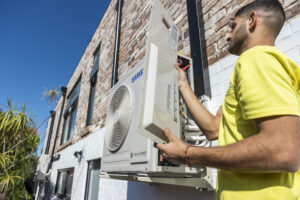
The best place to install a split-system air conditioner is high on an external wall where it can distribute air across the room without blowing directly onto people. The outdoor unit should sit in a shaded, open and easy-to-service area with enough airflow around it.
Correct placement matters almost as much as choosing the right air conditioner. A powerful unit installed in the wrong position may leave hot spots, create unwanted noise, use more electricity and struggle to control the room temperature.
For Sydney homes, the installer must also consider direct afternoon sun, salty coastal air, apartment rules, neighbouring bedrooms, drainage and the position of the switchboard.
This guide explains where to position both parts of a split system, which locations to avoid and how professional air conditioning installers in Sydney plan a practical installation.
Quick Answer
For most Sydney rooms, the indoor unit should be:
- High on an external wall
- Around 15 to 20 centimetres below the ceiling, subject to the manufacturer’s instructions
- Clear of tall furniture and curtains
- Positioned to blow air along the length of the room
- Away from beds, sofas and desks where possible
- Close enough to a practical outdoor-unit position
The outdoor unit should be:
- In an open, well-ventilated area
- Protected from harsh afternoon sun where practical
- Away from bedroom windows and close neighbours
- Raised above soil, leaves and standing water
- Easy for a technician to reach
- Installed within the manufacturer’s pipe-length limits
A licensed split-system installer should inspect the whole property before confirming either position.
Why Does Split-System Installation Position Matter?
A split-system air conditioner has two main components. The indoor unit moves conditioned air through the room. The outdoor unit releases or collects heat, depending on whether the system is cooling or heating.
The two units are connected by refrigerant pipework, electrical cables and a drain.
Poor positioning can cause:
- Uneven temperatures
- Weak airflow
- Higher running costs
- Frequent cycling on and off
- Water drainage problems
- Vibration or humming inside the property
- Noise complaints from neighbours
- Difficult and expensive future maintenance
- Long, unattractive pipe covers
A professional split-system installation should balance comfort, appearance, cost, access and technical requirements.
The shortest pipe route is not always the best final design. A cheap installation position may save money on the first day but create years of poor airflow or unwanted noise.
Where Is the Best Place for the Indoor Split-System Unit?
The indoor unit normally works best when installed high on a wall with a clear path for airflow.
Cool air moves down as it enters a warm room. A high wall position helps the system mix conditioned air with the room air instead of cooling only one small area.
Choose a central position where possible
The unit should be able to send air through the main occupied part of the room.
In a long living area, it will often work better when it blows along the length of the space rather than across the narrowest section. This gives the air more time to spread before it reaches the opposite wall.
A central wall position is helpful, but it is not always essential. The final location must also account for studs, electrical wiring, plumbing, drainage and the outdoor condenser.
Use an external wall when practical
An external wall can make the split-system installation process simpler because the refrigerant pipes and drain can pass directly outside.
This is commonly known as a back-to-back split-system installation.
An internal wall can still be used, but it may require:
- Longer pipe runs
- More wall or ceiling access
- A condensate pump
- Additional surface ducting
- More labour
- A higher installation price
The position should never be chosen from inside the room alone. The installer must check what is behind and outside the wall.
Keep the airflow path clear
Do not place the indoor unit directly above a tall wardrobe, bookshelf or cabinet.
Large furniture can block the intake or redirect the conditioned air back towards the unit. This may cause the air conditioner to read the nearby temperature rather than the temperature across the room.
Curtains should also be kept away from the air intake and moving louvres.
Avoid blowing air directly onto people
Direct cold airflow can feel uncomfortable even when the room temperature is reasonable.
In a bedroom, avoid pointing the unit straight at the bed. In a home office, avoid placing it directly above or opposite the main desk. In a lounge, do not aim the airflow at the sofa when another practical position is available.
A better layout lets the air move above or beside the occupied zone before mixing through the room.
Leave the required clearances
Every wall-mounted air conditioner has minimum clearance requirements.
The exact distances vary by model, but the indoor unit needs space around its top and sides to draw in air and allow servicing. The installer must follow the manufacturer’s current installation instructions rather than relying on a general rule.
Explore professional split air conditioning installation in Sydney
Where Is the Best Place for the Outdoor Air Conditioner Unit?
The best outdoor-unit position is usually a shaded, open and stable area where heat can escape freely.
The outdoor unit should not be hidden inside a tightly enclosed box simply because the owner does not want to see it.
Choose an open, well-ventilated area
The condenser needs to move a large volume of air. If the hot discharge air becomes trapped, the system may draw that heated air back through its coil.
This makes the air conditioner work harder.
Avoid positions:
- Inside small unventilated cupboards
- Under very low enclosed decks
- Between walls with little clearance
- Behind solid screens placed too close to the unit
- In spaces filled with stored items
- Directly beside another unit’s hot discharge air
A screen may be possible, but it must preserve the clearances and airflow specified by the equipment manufacturer.
Use shade without blocking airflow
Shade can help reduce exposure to harsh sun, especially on west-facing sides of Sydney properties.
However, ventilation is more important than shade alone. A shaded but enclosed location may perform worse than a warmer open location.
A roof, awning or naturally shaded side passage may offer protection as long as it does not restrict the airflow or make servicing difficult.
Keep it away from bedroom windows
Outdoor units create fan and compressor noise. Modern systems can be quiet, but no condenser is completely silent.
Avoid installing one:
- Beneath the homeowner’s bedroom window
- Beside a neighbour’s bedroom
- In a narrow passage that amplifies sound
- On a lightweight wall that transfers vibration
- Inside an echo-prone apartment balcony
- Directly beside an outdoor entertaining area
A rear corner or well-ventilated side yard may be more suitable, provided the pipe length and access remain practical.
Install it on a stable base
The outdoor unit may be installed on a concrete slab, suitable ground stand or properly rated wall brackets.
The base should:
- Remain level
- Support the unit’s weight
- Resist vibration
- Keep the unit above standing water
- Reduce contact with soil and leaves
- Allow safe access for servicing
Wall brackets may help where ground space is limited, but the mounting surface must be suitable. Poorly isolated brackets can transfer vibration into the building.
Protect future service access
The outdoor unit contains parts that technicians may need to inspect, clean, test or replace.
Leaving only a few centimetres between the unit and a wall may make normal maintenance difficult. Placing it high above the ground may require access equipment every time it is serviced.
The best outdoor-unit position supports both current performance and future maintenance.
What Is the Best Position in Each Room?
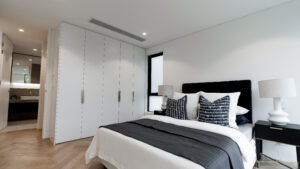
Bedrooms
In a bedroom, the indoor unit should normally be placed so air moves across the room rather than directly onto the bed.
A position above the bed may look neat, but it can create direct airflow, make filter cleaning awkward and raise concerns about condensation if the drain is not installed correctly.
A side wall may provide better comfort when the air can travel above the sleeping area.
Living rooms
In a living room, aim the airflow towards the open part of the space.
Avoid placing the unit where a tall entertainment cabinet, open door or structural beam will block the airflow.
For open-plan living and dining areas, the installer should consider the full connected area. A unit selected only for the dimensions of one section may be too small for the combined load.
Home offices
The unit should not blow directly towards the desk or computer workstation.
The installer should also consider heat from monitors, computers, printers and afternoon sun. A small office with several devices may need more cooling than a bedroom of the same size.
Kitchens and dining areas
Avoid installing the indoor unit too close to cooking steam, grease or strong heat sources.
Grease can build up on filters and internal components. Cooking heat can also affect how the unit senses the room temperature.
For an open-plan kitchen and living space, a position closer to the living zone is often better than installing the unit above the cooking area.
Shops and offices
Commercial split-system installation requires attention to occupancy, operating hours, doors, lighting and equipment.
A wall-mounted unit should not blow directly onto a receptionist, cashier or customer waiting area. It should also remain accessible without disrupting normal business operations.
Learn about commercial air conditioning services in Sydney
Which Split-System Installation Locations Should You Avoid?
Directly above electrical equipment
Avoid placing an indoor unit above televisions, computers, switchboards or valuable electronics when another suitable position exists.
A correctly installed air conditioner should not leak, but blocked drains, damaged components or poor installation can cause water problems.
Above tall furniture
Tall cabinets can block the intake, restrict maintenance access and disturb the airflow pattern.
In strong direct sunlight
Direct sunlight can heat the indoor unit’s casing and affect the temperature around its sensor. It can also make the system appear less effective when the room has a large unmanaged heat load.
Window coverings and insulation may need attention alongside the air conditioner.
In a corner with restricted airflow
A corner position may be necessary, but the manufacturer’s side clearance must be maintained.
Installing the unit tightly against a return wall can restrict the intake and make filter removal difficult.
Near a constant source of steam or grease
Avoid placing it directly above a cooker or close to a steamy bathroom opening. Airborne grease and moisture can increase dirt build-up.
Where drainage cannot be managed
The indoor unit creates water during cooling.
In many installations, this water flows outside through a drain using gravity. The drain must have a suitable fall and discharge safely.
When gravity drainage is not possible, a pump may be required. Pumps add cost, noise and another component that may need maintenance.
How Does Sydney’s Climate Affect Placement?
Sydney’s conditions vary from coastal suburbs to the hotter western areas.
Western Sydney heat
Homes in Western Sydney can face strong summer heat, especially in west-facing rooms.
The installer should consider:
- Afternoon sun
- Large unshaded windows
- Roof insulation
- Room orientation
- Heat stored in brickwork
- Whether the system will run during the hottest part of the day
Moving the unit to another wall will not correct an undersized system. Placement and capacity must be assessed together.
Coastal salt exposure
Outdoor units near the coast may face salt-laden air.
A position that offers some protection from direct sea exposure may support long-term durability, but it must still have free airflow. Regular cleaning and professional maintenance may also be important.
Sydney apartments
Apartment installations may be limited by balcony space, common walls and owners corporation rules.
Even when a balcony has enough physical room, the outdoor unit’s noise, drainage and appearance may affect other residents.
Most Sydney apartment owners should confirm strata requirements before drilling walls or ordering equipment.
Read the Sydney split-system strata approval guide
Heritage and conservation properties
Wall penetrations, visible pipe covers and condenser positions may require additional care in heritage properties or conservation areas.
A discreet position may be preferred, but the installation must still meet technical and access requirements.
Check when council approval may apply to Sydney air conditioning installation
What Is a Back-to-Back Split-System Installation?
A back-to-back installation normally places the indoor unit on the inside of an external wall and the outdoor unit close to the same position on the other side.
This creates a short, direct connection between the two components.
Potential benefits include:
- Shorter refrigerant pipework
- Simpler drainage
- Less visible pipe covering
- Faster installation
- Lower labour and material costs
- Fewer wall or ceiling access requirements
It is often the most affordable form of wall-mounted air conditioner installation.
However, back-to-back placement is not automatically the best choice.
It may be unsuitable when the outdoor side of the wall is:
- Beside a neighbour’s bedroom
- In a narrow echo-prone passage
- Exposed to flooding or standing water
- Difficult to access
- Visually sensitive
- Poorly ventilated
- Used as a main walkway
The installer should not sacrifice comfort or compliance merely to create the shortest pipe run.
Does Placement Affect Split-System Installation Cost?
Yes. The indoor and outdoor unit positions can significantly affect the split-system installation cost.
KYNEX’s published 2026 Sydney guide places many single split-system supply-and-install projects between approximately $1,600 and $3,500. The final amount depends on system capacity, electrical work, access and installation complexity.
See the 2026 split-system installation cost guide
Costs may rise when the job requires:
- Long refrigerant pipe runs
- A new electrical circuit
- Switchboard upgrades
- A condensate pump
- High wall access
- Concrete drilling
- Difficult ceiling access
- Custom brackets
- Removal of an old unit
- Strata documentation
- After-hours commercial work
A split-system installation quote should identify what is included instead of showing only one total.
Ask how much pipework, electrical work and drainage are covered by the quoted price.
Should You Install One Split System or a Multi-Head System?
One split system is often suitable for a bedroom, office or main living area.
A multi-head split-system installation connects several indoor units to one outdoor condenser. It can be useful when:
- Several rooms need conditioning
- Balcony or yard space is limited
- Multiple outdoor units would look untidy
- Each room needs separate control
- The property does not have space for ductwork
A multi-head system requires more planning. The indoor units must be positioned for room comfort, while all pipe routes must return to the shared outdoor unit.
For a small home, two separate split systems may sometimes offer simpler pipework or greater redundancy. For an apartment with strict condenser limits, a multi-head system may be more practical.
The decision should follow a site assessment rather than a fixed rule.
How Can KYNEX Air Conditioning & Trades Help?
KYNEX Air Conditioning & Trades provides residential and commercial split-system installation across Sydney.
Its published installation process includes:
- Discussing the property and comfort needs
- Assessing room size, layout and use
- Recommending suitable indoor and outdoor positions
- Preparing a formal written quote
- Installing the system
- Testing its cooling and heating operation
- Checking airflow and drainage
- Explaining basic operation and maintenance
KYNEX states that its team has more than 10 years of industry experience and has serviced or installed systems in more than 2,000 Sydney homes.
The company also states that it offers a five-year labour and manufacturer warranty for eligible work. The exact warranty terms should be confirmed in the written quote before installation.
A site assessment can help identify problems that are easy to miss in photographs, including an unsuitable wall, restricted outdoor airflow, drainage limits and noise risks.
Learn how to select reliable air conditioning installers in Sydney
Questions to Ask Your Split-System Installer
Before accepting a quote, ask:
- Why do you recommend this indoor-unit position?
- Will the air blow directly onto a bed, sofa or desk?
- Where will the outdoor unit be installed?
- Could the outdoor unit disturb a bedroom or neighbour?
- Is the proposed area well ventilated?
- How will condensate water drain?
- Is a drain pump required?
- How much pipework is included?
- Will visible pipework be covered?
- Is electrical work included?
- Can both units be reached for maintenance?
- Are wall brackets or a ground stand included?
- Does the installation require strata approval?
- What warranties apply?
- Will the system be tested in both cooling and heating modes?
A licensed split-system installer should be able to explain the reasoning behind the proposed layout in plain language.
Pros and Cons of Common Installation Positions
Back-to-back external wall
Advantages
- Short pipe route
- Usually lower installation cost
- Straightforward drainage
- Less visible trunking
Limitations
- Outdoor location may be noisy or exposed
- The best external wall may not give the best indoor airflow
- It may not suit apartments or narrow side passages
Internal wall
Advantages
- May provide better room coverage
- Can improve the appearance inside the room
- May avoid direct airflow onto furniture
Limitations
- Longer pipework
- More visible surface covering
- Drainage may be harder
- A pump may be required
- Installation can cost more
Outdoor unit on wall brackets
Advantages
- Keeps the condenser above ground
- Useful where floor space is limited
- Can reduce contact with leaves and water
Limitations
- May transfer vibration if poorly installed
- Access can be harder
- The wall must support the load
- Extra labour or equipment may be required
Outdoor unit on a ground base
Advantages
- Easier servicing
- Stable when installed correctly
- Less vibration transfer into the wall
Limitations
- Uses ground space
- Must be protected from leaves and water
- May obstruct a path if poorly positioned
Frequently Asked Questions
Can a split-system indoor unit be installed above a bed?
It may be technically possible, but it is not always the best comfort position. Direct airflow can disturb sleep, and filter access may be awkward. A side wall that directs air across the room is often preferable.
Can an outdoor unit be installed in direct sunlight?
It can operate outdoors, but a shaded and well-ventilated position is preferable when practical. Never restrict airflow simply to create shade.
Can the outdoor unit be placed higher than the indoor unit?
Sometimes, subject to the manufacturer’s pipework and elevation limits. The installer must follow the technical requirements for the selected model.
Can a split system be installed on an internal wall?
Yes. It may require longer pipework, ceiling access, surface ducting or a condensate pump, which can increase the installation cost.
How close can the outdoor unit be to a boundary?
There is no single distance that suits every property. Noise, airflow, local requirements, access and the neighbouring building’s layout must all be considered.
Should the air conditioner face the bed or sofa?
Direct airflow onto people should generally be avoided. It is better to direct air into an open part of the room and let it mix naturally.
Can I choose the unit position myself?
You can nominate a preferred position, but the installer should check its airflow, drainage, structure, electrical access and outdoor connection before approving it.
Do I need a licensed split-system installer?
Yes. Split-system installation involves refrigerant, electrical connections and compliance obligations. Check the relevant trade and refrigerant-handling credentials before work begins.
How long does a standard installation take?
A simple back-to-back installation can often be completed within several hours. Difficult access, longer pipework, electrical upgrades or removal of an old system can extend the job.
Related Sydney Air Conditioning Guides
- How to choose reliable air conditioning installers in Sydney
- What does a single split-system installation cost in Sydney?
- Do Sydney apartments need strata approval for split systems?
Final Verdict: Where Should You Install a Split-System Air Conditioner?
The best indoor position is usually high on an external wall with a clear path across the room. It should not blow directly onto a bed, desk or sofa, and it must remain accessible for filter cleaning.
The best outdoor position is a stable, shaded and well-ventilated area away from bedroom windows and neighbouring living spaces. It must also allow safe maintenance access.
A back-to-back installation can be affordable and neat, but it should only be chosen when both sides of the wall are suitable.
The correct decision balances six factors:
- Air distribution
- Outdoor ventilation
- Drainage
- Noise
- Service access
- Installation cost
KYNEX Air Conditioning & Trades can inspect the room, review the available outdoor positions and provide a written split-system installation quote for Sydney homes or businesses.
Bottom line: Do not choose the unit position based only on where it looks best or costs the least. The best placement is the one that delivers even comfort, manages water safely, limits noise and allows the system to operate efficiently for years.