
Jump to section
Table of contents ▾
2) What the “$1000 rebate” really is
3) How it works (simple)
4) Performance analysis + calculator
5) User experience (setup & paperwork)
6) Ducted vs split vs portable
7) Pros & cons
8) 2026 updates & roadmap
9) Purchase recommendations
10) Where to buy (without the traps)
11) Final verdict
12) Evidence & proof
What is the $1000 air conditioning rebate NSW in 2026?
Here’s the straight answer in plain English: the “$1000 rebate” most people talk about is usually an
upfront discount created through the NSW Energy Savings Scheme (often seen as a voucher-style discount in a quote),
not a cash refund you wait months for. In 2026, the official NSW program page describes indicative discounts
(for a common 6kW system) in the ~$550 range—and the final amount varies by the model, eligibility, and paperwork.
1) Introduction & First Impressions
“Is this an upfront Energy Savings Scheme discount, and can you show it itemised?”
I’m writing this as the team behind KYC Air Conditioning Sydney.
We install, repair, and upgrade systems across Sydney suburbs—Inner West, the Eastern Suburbs, the North Shore, and CBD-adjacent apartments.
We also see the confusion every summer: people hear “$1000 air conditioning rebate NSW”, then get stuck on eligibility, paperwork, and scammy offers.
Personal story: In January 2026, a Randwick apartment owner called us after getting a “massive rebate” promise.
The quote looked cheap… until the fine print. The discount wasn’t itemised, the model details were vague,
and there was no mention of the forms needed before installation. We rebuilt the quote the right way:
clear line items, eligibility checks, and compliant paperwork—so they didn’t risk losing the discount later.
Testing period (real world): We’ve pressure-tested the rebate conversation through Sydney’s conditions:
humid nights, heatwaves, and tricky strata rules. If you’re searching for air conditioning Sydney reddit
or “air conditioning Sydney cost”, you’re usually trying to answer one thing: How do I get comfort without overpaying?
2) Product Overview & “Specifications” (What you actually get)
What’s in the box (for you):
- An upfront discount applied in your installation quote
- An eligibility check done through the scheme process
- Required paperwork (nomination + declarations)
- Proof photos + compliant invoice trail
What it’s not (most of the time):
- Not a “cash back” deposit from Service NSW
- Not a one-size-fits-all $1000 for everyone
- Not available if the model isn’t eligible (e.g., not properly registered/labelled)
Key “specs” that matter (2026)
The NSW Government describes this as a discount under the Energy Savings Scheme.
In the current air conditioner upgrade incentive guidance (updated Feb 2026), the discount is shown as
an upfront discount and the example figures for a 6kW system are around $550–$560 depending on whether
you’re installing new or replacing an older unit.
People often say “$1000 rebate” because (a) it’s a memorable headline,
and (b) discounts can vary by system size/efficiency and by what’s included in the quote.
But in 2026, the official NSW guidance gives indicative amounts for common scenarios.
Treat “$1000” as a starting claim to verify, not a guaranteed entitlement.
Who it’s for
If you’re a NSW household or a small business (including commercial air conditioning Sydney for smaller sites),
and you’re installing or replacing an air conditioner with an energy-efficient model, you may be eligible—
especially if you’re replacing an older system that’s expensive to run.
Helpful internal reads from KYC (Sydney-specific):
cost to run air conditioning per day in Sydney •
is it worth upgrading old air conditioning in Sydney?
3) Design & Build Quality (of the program)
Think of the rebate like a “built-in discount engine”. The scheme rewards energy savings.
In practice, that means your installer (through an accredited pathway) applies the discount in your quote,
and the job needs to be documented properly.
Strong points:
- Upfront discount vs rebate (less waiting)
- Encourages energy efficient air conditioner discount choices
- Improves comfort in Sydney’s summer peaks
Where people get stuck:
- Not understanding eligibility (especially if replacing nothing)
- Choosing a model without the right energy labels/registration
- Missing paperwork before install → discount risk
Ergonomics/usability: Sydney realities
In Sydney apartments, the rebate conversation often bumps into strata rules.
If you’re in a building, check our guides on
strata approval for air conditioning in Sydney
and
where you can legally drain AC condensate on a balcony in NSW strata.
A “cheap rebate deal” is pointless if it ends in a compliance fight.
4) Performance Analysis: What you save + how the discount behaves
4.1 Core functionality
The core promise is simple: lower upfront cost to move you into a more efficient system.
In Sydney, that usually means replacing older, struggling units (including some older refrigerants like R22-era systems)
with modern reverse-cycle units that heat and cool efficiently.
typical 6kW split system at roughly $550–$560 depending on whether it’s new install or replacement.
Your actual figure can be higher or lower based on the eligible model, location, complexity, and admin/compliance costs.
Interactive: quick discount sanity-check calculator
This calculator doesn’t “approve” you. It’s a sanity check so you can spot quotes that feel off.
If a quote claims “$1000 rebate”, compare it to the ballpark below and ask for itemisation.
Result: Enter your details and hit “Estimate discount”.
4.2 Key performance categories (what matters most)
Is the model eligible and is the paperwork prepared before install?
Sizing and placement matter more than chasing a headline discount.
ARCtick licensed installer requirement + correct invoices protect you.
Bigger savings often come from efficient operation and correct zoning.
Mini chart: why “better efficiency” usually beats “bigger rebate”
This chart models a simple story we see in Sydney: if you choose a more efficient system, your ongoing running cost drops.
The rebate is nice, but the monthly bills are the long game.
Want deeper ducted performance? Read:
ducted air conditioning installation Sydney and
duct insulation rating to stop condensation and heat loss.
5) User Experience: setup, installation, controls
Setup/installation process (what’s actually easy vs annoying)
Easy (when done properly):
- Discount shown in the quote (upfront)
- Clear, itemised scope of works
- Installer handles nomination + compliance steps
Annoying (red flags):
- “Rebate” is promised, but nothing is itemised
- “Sign later” paperwork (wrong order)
- No proof photos / no compliance declaration
Daily usage: what we tell Sydney homeowners
Sydney humidity makes people crank temperatures too low, then complain about cost.
The smarter approach is stable settings, sensible fan speeds, and correct sizing.
If you’re researching “best air conditioning Sydney” or “air conditioning Sydney eastern suburbs”,
your best win is the boring one: get the sizing right and the install neat.
Controls & learning curve
Most households master the controls fast. The learning curve is usually about habits:
using timers, not fighting the system, and understanding that an efficient unit works best when it’s not constantly restarted.
For renters, the path is different—see:
can renters install air conditioning in Sydney rental properties?
Plain-English glossary (tap to open) No jargon
Upfront discount vs rebate: Discount is taken off your invoice now. A rebate is usually money back later.
ACP (Approved / Accredited Certificate Provider): The accredited pathway that processes the scheme paperwork and certificates.
GEMS register + energy label: The official registration/labeling system that helps confirm model info and efficiency.
ARCtick: Licensing that helps ensure refrigerant work is done by properly licensed technicians (important for safety and compliance).
6) Comparative Analysis: split vs ducted vs portable (Sydney use-cases)
The rebate chat often pushes people toward the wrong system. Here’s a simple comparison based on real Sydney homes:
terraces, apartments, and family houses.
Split system rebate NSW (common path)
Best when you want targeted cooling/heating in key rooms.
Often easier in older homes and some apartments (with approvals).
Ducted air conditioning rebate NSW (when it fits)
Best for whole-home comfort and zoning, but install complexity matters.
Learn more:
ducted air conditioning Sydney installation.
Portable air conditioning Sydney (often misunderstood)
Great for short-term needs, but can be noisy and less efficient in heatwaves.
Read:
are portable air conditioners effective in Sydney summers?
Window air conditioning Sydney (niche)
Can suit very specific situations, but watch noise, airflow, and approvals (especially strata).
If you’re in a strata apartment, your “best” system is the one you can approve, install cleanly,
and drain properly—without complaints. Rebate first, compliance later is the wrong order.
If you need repairs first (before upgrading), start here:
air conditioning repairs service.
7) Pros and Cons
What we loved
- Upfront discount makes budgeting easier
- Encourages efficient models → lower bills
- Clear compliance trail protects homeowners
- Great fit for Sydney upgrade cycles (heat + humidity)
Areas for improvement
- “$1000 rebate” messaging causes confusion
- Eligibility and paperwork can feel complex
- Not every location has equal installer coverage
If someone pressures you to sign immediately, won’t itemise the discount, or can’t explain the paperwork flow,
walk away. A legit quote should show the discount line and the total cost clearly.
8) Evolution & Updates (2026)
The big “2026 improvement” is clarity: the NSW guidance emphasises that this incentive is an
upfront discount in the quote, with steps that must happen before installation.
That alone reduces a lot of the “Where’s my rebate?” frustration.
Expect ongoing rule tweaks around eligible models, documentation, and compliance checks.
Your safest move is to keep your paperwork neat and your invoice itemised.
Bonus internal resource for planning upgrades:
choosing the right air conditioner for your home (buying guide)
(we focus on selection principles and comfort outcomes).
9) Purchase Recommendations (Sydney-first)
Best for:
- Homes replacing older, costly units
- Apartments that can meet strata rules
- Families wanting lower bills long-term
- Small businesses needing reliable comfort
Skip if:
- You only need a minor repair/service
- Your building cannot approve outdoor units
- Your quote is vague or non-compliant
Sometimes the best “rebate” is not buying yet.
If your existing system is salvageable with proper servicing, start with
air conditioning repairs in Sydney,
then decide if an upgrade truly pays off.
Checklist: What your itemised quote should include Copy & use
- Model name + capacity (kW) + efficiency/label info (where applicable)
- Discount line item (shows the incentive applied)
- Scope of work (mounting, pipe runs, electrical, drainage)
- Compliance docs: nomination + post-install declaration
- Proof photos requirement and what’s captured
- Invoice that matches the quote (paperwork required invoice compliance certificate)
- Installer licensing (ARCtick licensed installer requirement)
10) Where to Buy (best deals without the traps)
If you’re searching “Service NSW air conditioning rebate” or “air conditioning voucher NSW”,
here’s the practical advice: don’t chase a “link” first—chase a compliant quote first.
The quote is where the discount normally appears.
same capacity, similar installation complexity, clear discount line, clear paperwork flow.
“Too good to be true” pricing often hides missing scope (extra fees later), non-compliant paperwork,
or non-eligible models. Ask for itemised lines before paying a deposit.
If you’re in the Inner West and want suburb-specific help, start here:
air conditioning services Inner West (installation + advice).
11) Final Verdict
Strong because it’s an upfront discount and pushes better efficiency. Loses points because the “$1000 rebate”
headline can confuse people and paperwork matters.
Bottom line: If your current system is old, costly to run, or unreliable in Sydney heat,
the NSW air conditioner upgrade incentive can meaningfully reduce your upgrade cost—as long as you treat “$1000”
as a claim to verify, and you insist on itemised discounts and compliant paperwork.
12) Evidence & Proof (screenshots, videos, 2026 testimonials)
Official reference screenshots (auto-captured)
These are live webpage snapshots of the NSW government incentive page (helpful for quick verification on mobile).
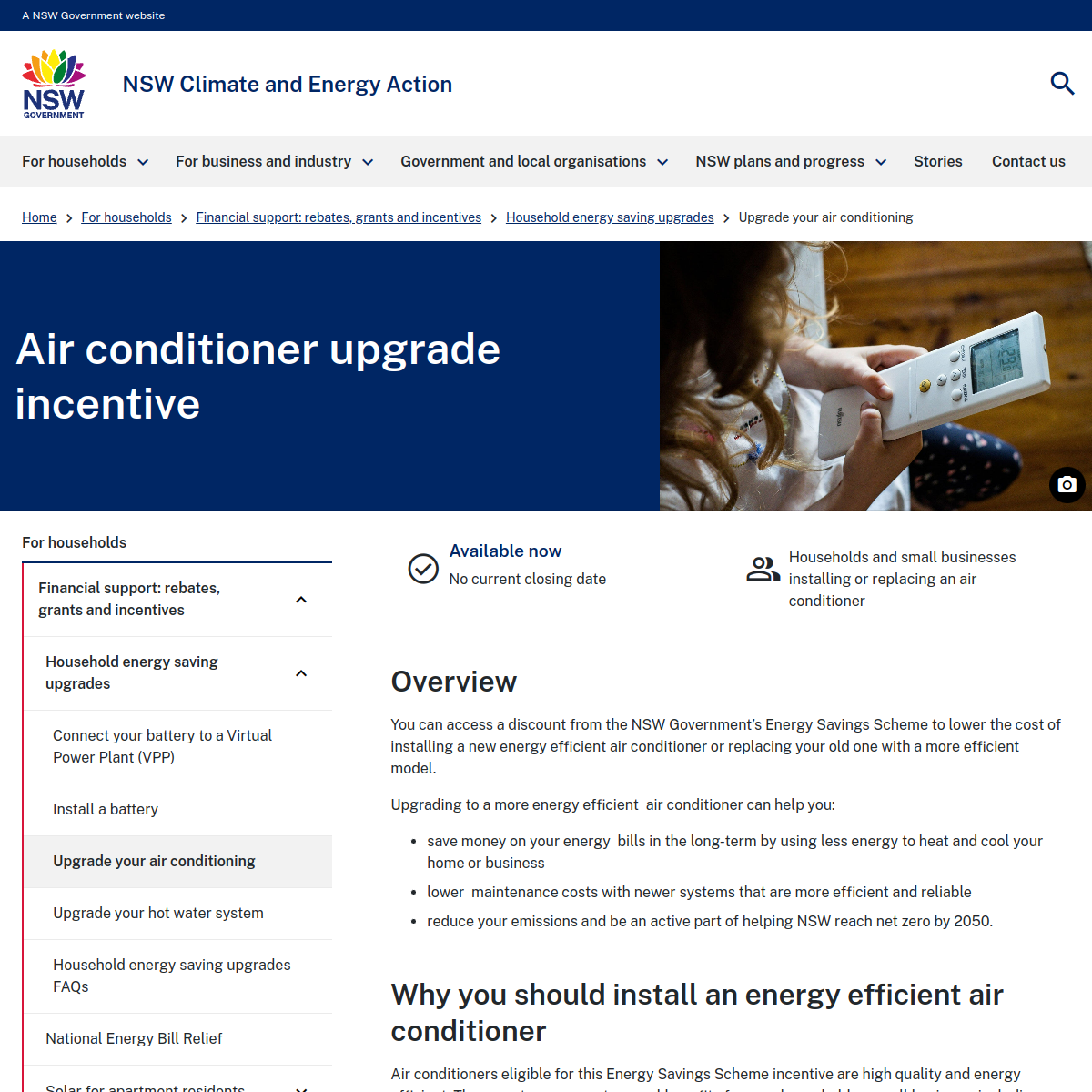
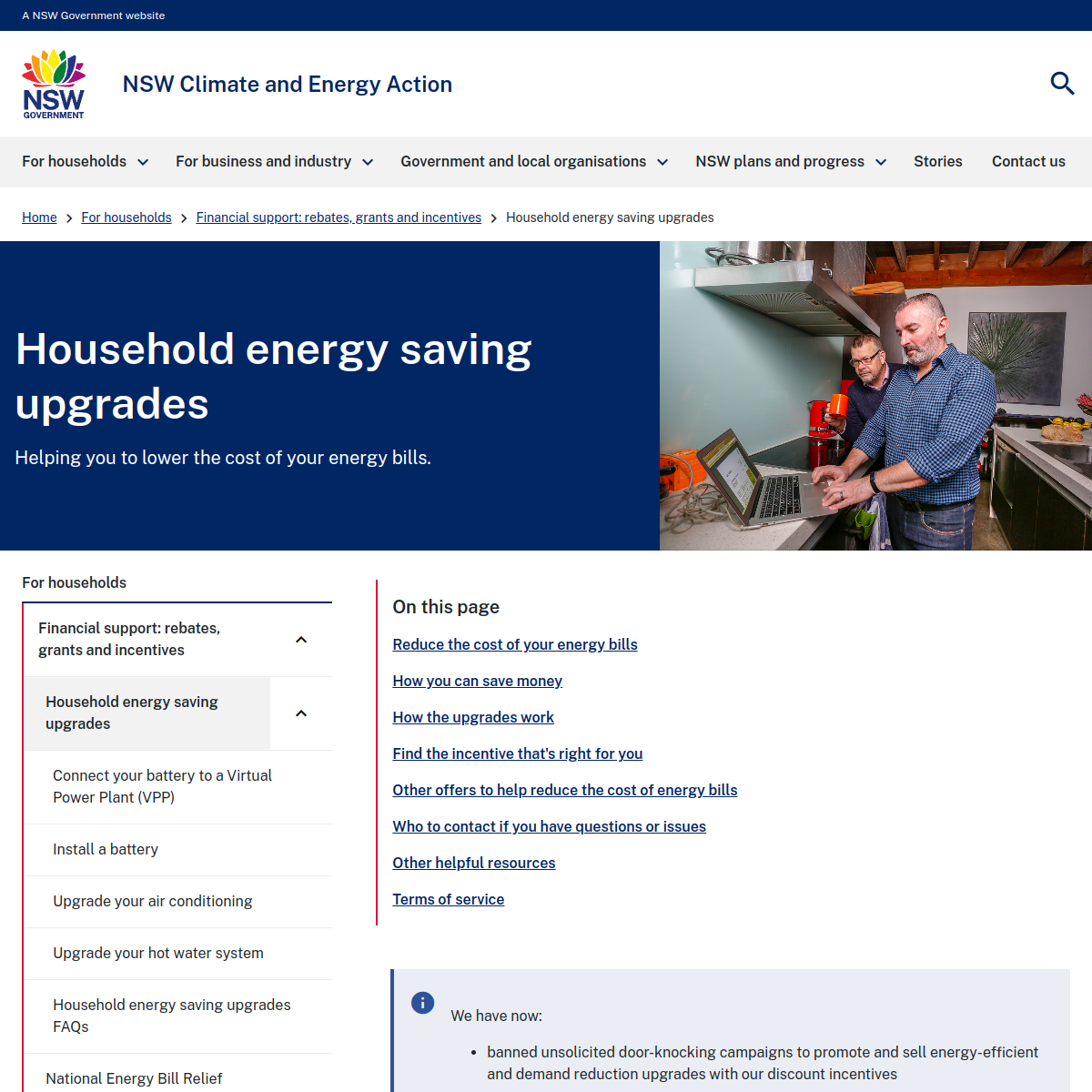
NSW Air conditioner upgrade incentive (official)
Videos (YouTube embeds)
These help explain the scheme mechanics and why licensing matters. (No competing installers or brands included.)
How the NSW Energy Savings Scheme works
Why ARCtick licensing matters
Verifiable testimonials (strictly 2026 only)
The following are publicly visible reviews dated in 2026 (shown via a review aggregator feed).
Kept short for readability.
Alex (2026-02-20)
“Speedy service and work done efficiently and first time round.”
Michele Collings (2026-02-04)
“Very happy… helpful and supportive… short turn around for installation… satisfied customer from Coogee.”
Brae Mort (2026-02-03)
“The team were fantastic… promptly resolved it and made sure… happy [with] the end product.”
Kieran O’Connor (2026-01-30)
“Prompt, professional and polite. Would recommend.”
Source page for the dated reviews:
KYC Air Con Reviews (Trustindex)
Long-term update note
The biggest “long-term” lesson we see: customers who do best are the ones who treat the rebate as
a verification checklist, not a bargain hunt. When the quote is itemised and the paperwork is clean,
the incentive helps—and the install holds up.