
Why Is My Air Conditioner Vibrating Against the Wall Even Though It Still Cools Properly?
Your air conditioner can still cool properly while a loose mount, an uneven fan or a pipe touching the wall sends vibration through it. If you searched for “air conditioner wall vibration repair Sydney”, the most useful clue is when the shaking starts and what else is running at that moment.
By KYNEX Air Conditioning & Trades · Sydney homeowner guide
It’s an odd fault to live with. The room gets cool, the remote works and there’s no error code. Yet the wall hums every time you sit down for dinner. Cooling and noise tell you different things. The unit can still move heat out of the room even if a fan, bracket or pipe is making more noise than it should.
Why can a split system vibrate against the wall and still cool?
A wall-mounted split has an indoor unit and an outdoor unit. A fan indoors moves air across a cold coil. Outside, another fan and a compressor help move heat out of the home. The units are joined by insulated copper pipes. A mount holds the equipment in place. When one of these parts shakes, the noise can travel through the mount, the pipes or the wall. The spot where you hear it may not be the spot where it starts.
Is the indoor unit’s wall plate loose?
The indoor unit hangs on a plate fixed behind the casing. If the unit is not seated well, or a fixing shifts, the case may knock or buzz as the fan runs. A new gap between the case and the wall, a tilt, or a clunk when the fan starts is worth reporting. Don’t push the unit back into place. If it looks loose or is moving, keep clear and stop using it.
Could the indoor fan or front cover be rattling?
A fan with dirt built up on one side can spin unevenly. Wear or damage can do the same. A loose cover or air flap can make a lighter rattle, often at one fan speed. If the sound rises when the indoor fan speeds up, tell the technician. That makes the fan and casing good places to start, but it doesn’t prove a part needs replacing.
Could the outdoor bracket or pipes be sending noise indoors?
Yes. A wall-mounted outdoor unit can send a low hum through its bracket into the building. A loose foot, worn vibration pad or an outdoor fan fault can make the hum worse. The noise can also travel where the pipe bundle passes through the wall. For example, a pipe touching a hard edge or a loose cover over the pipes may buzz as the outdoor unit changes speed. A rattle that seems to come from inside the wall does not mean the wall has to be opened.
When does the wall shake? Match your symptom
Tap the clue that fits best. These are starting points for an inspection, not a way to confirm the fault by sound alone.
It rattles when the indoor fan speed changes
Tell the technician which speed made it louder. If you already noticed the sound in fan-only mode, share that too. On a single split, vibration in fan-only mode points the check towards the indoor fan, case or wall plate. If you have a multi-split and another room is calling for cooling, the outdoor unit can still be running.
It hums only when the outdoor unit starts or speeds up
Ask for the outdoor fan, feet, bracket and pipe route to be checked. A low note at one speed can mean the wall or mount carries that vibration more strongly. It doesn’t, on its own, prove the compressor is faulty.
It buzzes near the pipe cover or in the next room
Tell the technician where it’s loudest and whether the buzz comes and goes with cooling. That can help them check where the pipes go through the wall, how the cover is fixed and whether the outdoor mount shares that part of the building.
The unit shifts, knocks hard or makes a grinding sound
Switch it off if safe, keep clear and arrange an inspection before using it again. Don’t run it just to record a clip.
What can you safely check before calling?
For a mild buzz with no warning signs, you don’t need a ladder, tools or a sound meter. Note what you notice from a safe spot during normal use. If it’s safe, a short phone clip of the noise as it happens can help. If the sound won’t show up on your phone, say where you could feel it or which room made it easiest to hear.
- Where
- Bedroom wall, near the pipe cover
- When
- After the outdoor unit speeds up
- Setting
- Cool mode, indoor fan on Low
- What changed
- The hum fades, but the room stays cool
Leave the case, brackets and pipe covers alone. Don’t bend pipes, wedge foam behind the indoor unit or fit rubber pads under an outdoor unit yourself. Even if a quick fix seems to quiet the noise, it can hide a fault or put extra strain on the pipes and fixings.
Why does the type of Sydney home matter?
Walls and mounts change how vibration travels. A hollow partition may make a light rattle easier to hear. A solid wall or concrete balcony can carry a low hum to a room that feels far from the unit. These two Sydney examples show how the same complaint can lead to different checks. They’re illustrative, not customer testimonials or measured jobs.
A Randwick apartment with a hum next to the bed
Picture a balcony unit just outside the bedroom. At night the room is cool, but a low hum comes through the wall when the outdoor unit speeds up. The useful clue is that the hum fades when the outdoor unit slows, even though the indoor fan is still running. That gives the technician a reason to inspect the outdoor support and pipe route before blaming the indoor head. If the unit is on common property or the proposed work changes its mount or position, check with your strata manager before authorising that work.
An Inner West terrace with a rattle at one speed
Now picture a split above the living room doorway. It makes a dry, fast rattle on High, even when you’ve previously used fan-only mode. Cooling is fine. Here, the indoor fan, cover and wall plate move up the list of things to check. A clip that captures the change between speeds during ordinary use is more useful than a guess that the wall itself is faulty. If you rent, send your notes to the property manager before arranging work.
What does air conditioner wall vibration repair in Sydney involve?
KYNEX Air Conditioning & Trades provides air conditioning repairs Sydney homeowners can book for new or worsening wall vibration. Tell us the system still cools, when the sound starts and where it’s loudest. That last detail helps even when you can’t tell which unit makes the sound.
When it’s safe to run the system, a technician can try to recreate the noise at the setting you reported. They can check how the indoor unit sits on its plate, look for fan or casing movement, and check the outdoor support, feet and accessible pipe routes. For an intermittent hum, it helps to know whether it tends to start on hot afternoons, right after switch-on or as the room reaches the set temperature.
Ask what caused the vibration and what the proposed work would change. If a split system mounting repair is needed, ask whether it involves the indoor plate, outdoor bracket or both. If a fan part is proposed, ask what points to that part. After repair, ask to hear the system at the setting that used to trigger the noise, where practical. A short run on Low may miss a rattle that only showed up on High.
Should you repair the mount, move the unit or replace it?
Repair first when the fault is local. If the unit cools well and the fault is a worn pad, a loose cover, a mounting issue or pipe contact, a targeted fix can make more sense than changing the whole system. New equipment alone may not fix a poor mounting spot.
Consider a different mounting spot when the building carries the hum. Moving an outdoor unit from a bedroom wall to a suitable ground support may reduce the route the vibration takes. But any new spot must suit the equipment, airflow and service access. In an apartment, check what the building permits before you commit to a move.
Compare replacement if faults keep coming back or key parts are hard to get. Ask for the case for repair first. If replacement makes sense, discuss the outdoor unit’s location and pipe route as part of your split system air conditioning installation. A low noise rating is useful, but where and how the unit is fitted matters too.
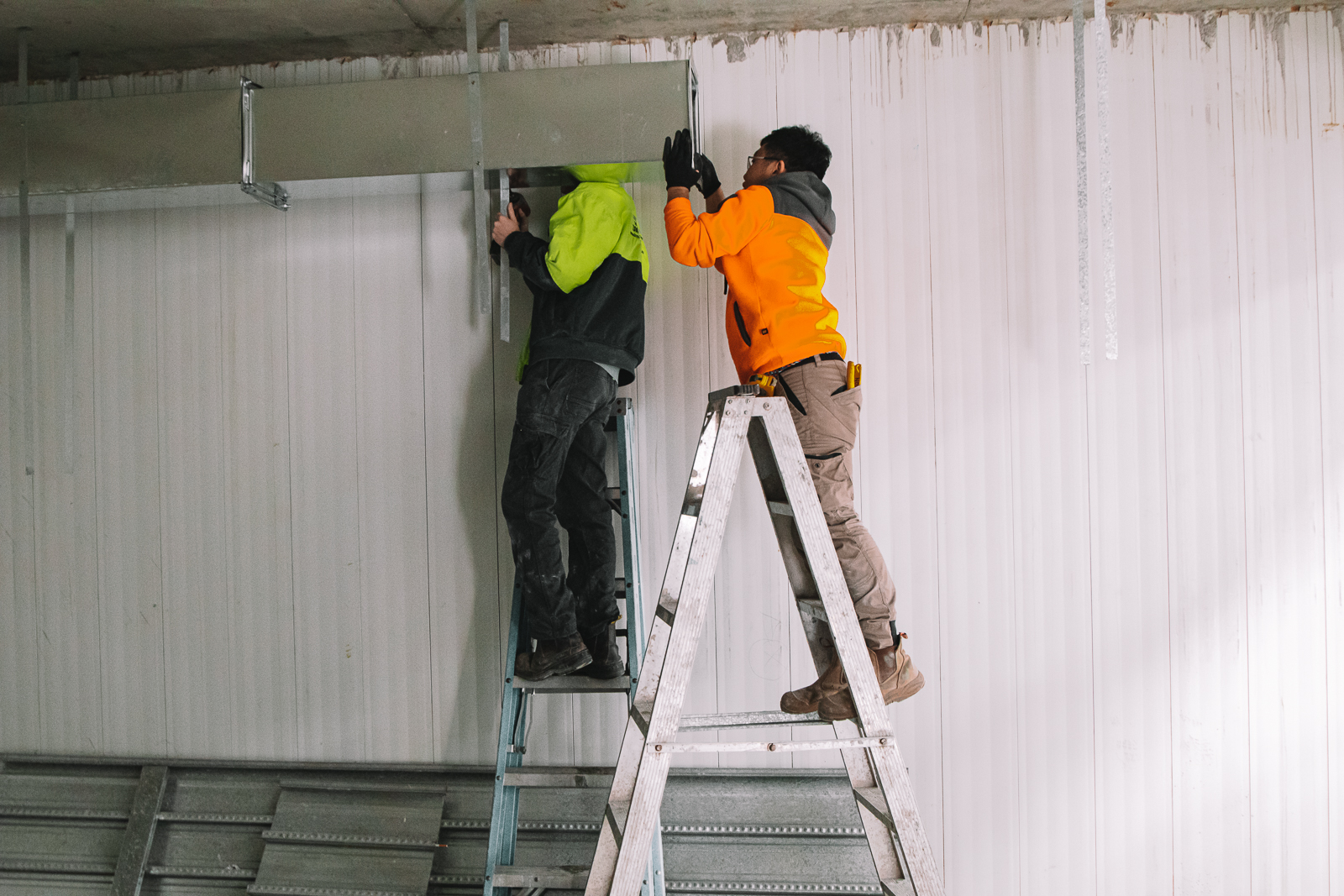
What does an air conditioning project look like?
Common questions about an air conditioner shaking the wall
Is a brief hum at start-up normal?
A soft, short hum can be part of normal operation. A new hum you can feel through the wall, a sound that gets louder over time or repeated knocks are different. Arrange a check if those signs keep coming back.
Does wall vibration mean my air conditioner needs a regas?
No. Vibration on its own isn’t evidence of a refrigerant problem. When cooling still works and the main issue is a physical rattle or hum, start by having the mounts, fan, case and pipe contact checked.
Why is the noise worse at night?
With less background noise, a low hum can stand out. The system may also sit at a speed where the wall carries more of the vibration. Note if you can hear it but not feel it, or if the vibration is stronger in a nearby room. Both details help.
Should I call the installer if it started on day one?
Yes. Save the install date and a safe recording if you already have one. Ask the installer to check how the indoor unit sits, how the outdoor unit is supported and where the pipes pass through the wall. If a unit visibly shifts, stop using it until it has been checked.