
Why Does One Indoor Unit Stop Cooling While the Others Still Work on the Same Multi-Split System?
One indoor unit can stop cooling while the others still work because each room has its own controls, filter, fan and refrigerant feed. If you searched for “multi split one indoor unit not cooling”, start with two clues. Does the warm room’s unit blow air, and does it cool when you run it on its own?
Multi-split troubleshooting: why is only one indoor unit not cooling?
Say the lounge is comfortable, but the bedroom still feels like it did when you got home. Stand near the bedroom unit for a moment. A closed flap and a blinking light tell a different story from a wide-open flap blowing a strong stream of room-temperature air. A third bedroom might have cold air at the outlet yet stay warm at the bed. Each calls for a different check.
A multi-split has one outdoor unit connected to several indoor units, often called heads. A head draws in room air, passes it over a cold coil and sends it back into the room. Refrigerant carries heat from that coil to the outdoor unit. The lounge can keep cooling if the bedroom filter clogs or its fan slows down. A cool lounge tells you the system can deliver some cooling. It leaves open how much it can deliver to the bedroom.
What does the remote actually say?
Check the mode on every head in use. On many home multi-splits, several rooms can cool at different temperatures, but they share the choice of heating or cooling. A head asking for the opposite mode may sit in standby. Which room gets priority, and what the light does, depend on the model. Two owner manuals reviewed for this guide describe different priority rules. That is why a blinking light alone is too little to diagnose a failed part.
For a simple comparison, select Cool, usually shown as a snowflake, on each active head. Choose a temperature below the room temperature. Fan mode only moves air. Auto can choose a mode you did not expect. Check for an off-timer or sleep schedule, especially if the same room gets warm at the same time each evening. Give the unit its normal start-up delay as set out in its manual.
What can you feel at the indoor unit?
Open the description that fits your room. Use the normal controls and observe from a safe spot on the floor. If you notice a burning smell, repeated breaker trips or water near electrical fittings, stop using the system and arrange professional help. Leave the breaker alone if it has tripped.
The head is silent or its light keeps blinking
See whether the unit responds when you point its own remote at it. Check the batteries if the remote display is faint. Look at the mode on the head that is already cooling, then match it. If the bedroom still sits idle, write down the exact light or code. A short video can capture a repeating flash pattern that is hard to describe over the phone.
Air comes out, but the flow is weaker than usual
Check the fan setting and look for a curtain, shelf or open cupboard door in the air path. From floor level, look for ice. If you see ice, stop cooling and arrange service. If access is safe, follow the owner manual for the user-removable filter. Switch the unit off as directed and let a washable filter dry before refitting it. Leave the coil, fan wheel and covers that need tools to a technician.
The breeze is strong but feels like room air
Confirm Cool mode and a setting below the actual room temperature. If the head still blows room air after its start-up delay while the lounge blows cool air, record that difference. A sensor reading, a control signal or the flow of refrigerant to that head may need checking. The fan can run even when the coil is doing little cooling.
The outlet feels cool but the bed or desk stays hot
Check where the flap points using the swing control. Air aimed along the ceiling or behind a tall wardrobe may barely reach your chair. Close an open window, lower the blind on sunlit glass and check the room again under similar conditions. If air reaches the far side but the room still falls behind, note whether that happens only when other rooms are cooling.
Does the bedroom cool when it runs on its own?
Use this comparison if the system is running normally apart from the warm room. Pick a time when you can leave the door, blinds and windows in the same position. Change one thing at a time. If you adjust every remote and wash the filter at once, you lose the chance to find out which change helped.
- Record the starting point. Note the time, mode, fan setting and which other heads are on. If you have a room thermometer, place it near the bed or desk, away from sun and the air stream. The number on the remote is often the target temperature.
- Run the affected room alone. Turn the other heads off with their remotes. Keep the affected head on Cool. After the normal start-up delay, give it time to settle. Record whether the outlet air becomes cool and whether the room temperature starts to fall.
- Bring one other room back. Leave the bedroom setting alone. Start the lounge on Cool and record what changes. If the bedroom loses cooling, note whether the fan weakens, the air warms up or a light starts flashing.
It helps to write plain observations. “Bedroom was 27°C at the desk. Air felt cool with the lounge off. With the lounge on, the bedroom fan stayed strong but the air felt warmer.” Those are example notes, not test results. Your own times and readings give the technician a set of conditions they can try to reproduce.
A room that cools alone but falls behind with several heads on raises a question about shared capacity. It can also point to how the system sends refrigerant to each room. A room that never cools on its own calls for a closer look at that head and its connections. Neither result identifies a part to order.
What should a technician test before quoting a repair?
Tell the technician which room still works. It gives them a point of comparison on the same outdoor unit, at the same time and in the same weather. They can check the model numbers, read stored faults and compare the air entering and leaving each head under a known cooling demand. Two rooms with different sun exposure or different-sized heads need context when comparing readings.
Is the head reading the room correctly?
A small temperature sensor tells the head how warm the room is. If it reports that the room has already reached its target, the system may ease off while you are still warm. Ask how the reported temperature compares with a separate measurement at the air intake. A big gap between the bed and the intake raises a different question about how air moves through the room.
Is refrigerant reaching the correct coil?
Many systems use a small valve to meter refrigerant to each indoor coil. A technician can check whether the controls ask for cooling and whether the pipe and coil temperatures respond as expected. The valve location depends on the design. If a quote mentions an “air conditioner branch control fault”, ask which component serves your bedroom on this particular model and what test showed it failed.
One warm head alone cannot establish a refrigerant leak. If someone proposes a top-up, ask what points to a low charge, how they will check for a leak and how they will test all rooms afterwards. Refrigerant and electrical work belong with appropriately licensed technicians. You can gather all the observations in this guide without touching a pipe or removing a service cover.
Has the room ever cooled properly?
If the problem began on installation day or just after work on the system, share that detail early. A technician can confirm that each indoor head communicates with the outdoor connection serving its own pipes. If the bedroom worked through several summers and failed this week, report the last day it worked and any recent change, such as a service, power interruption or new timer setting.
How can the same symptom play out in two Sydney homes?
A Randwick flat at bedtime. Picture a couple whose lounge stayed cool all afternoon. At bedtime, the bedroom head opens its flap, then waits. Its remote still shows the sun symbol from a cold morning. They select the snowflake and allow the normal delay. If cooling returns, they have found a setting worth remembering. If the light keeps blinking, they have a more precise symptom to report. This is an illustrative household example.
A west-facing room in Coogee. Imagine a home office that cools well before lunch. At four o’clock the outlet still feels cool, yet the person at the desk feels hot. The useful comparison is the same afternoon hour with the blind closed before sun hits the glass. Also record which other rooms are running. Comparing a shaded morning with a sunny afternoon changes two things at once and makes a repair decision harder.
In a Sydney strata building, tell the service team where the outdoor unit sits. A balcony you can enter and a locked common roof call for different access arrangements. A photo taken from your own safe standing position can help the team plan. Leave roof access and inspections beyond the balcony rail to the people authorised to do them.
How can KYNEX Air Conditioning & Trades help?
KYNEX’s air conditioning repair Sydney service offers on-site fault assessment and a quote for the work. When you call, give the team the affected room, its model number if visible, what the outlet air feels like, and what happens with the other heads off. For specific costs, call 0484 59 59 59. The likely repair and the access needed both matter to the quote.
What did customers report in 2026? In its published review summary, KYNEX attributes a June 2026 account to Mike Morgan. He described an older unit that needed cleaning and a failed pump that was replaced. The same summary attributes a March 2026 account to Andrew Barlow, who valued the team’s responsiveness and technical knowledge on repeat visits. These accounts describe the customers’ service experience. Neither identifies the cause of a warm multi-split bedroom.
If replacement comes up, ask whether a compatible indoor head is available for the existing outdoor unit, what warranty applies and whether the other rooms can keep their current heads. If your home has changed and you now cool more rooms at once, discuss how you use them before choosing equipment. The multi split air conditioning installation page explains the layout options.
KYNEX Air Conditioning & TradesSuite 206 Level 2/71 Belmore Rd, Randwick NSW 2031
0484 59 59 59
What does a ducted installation look like?
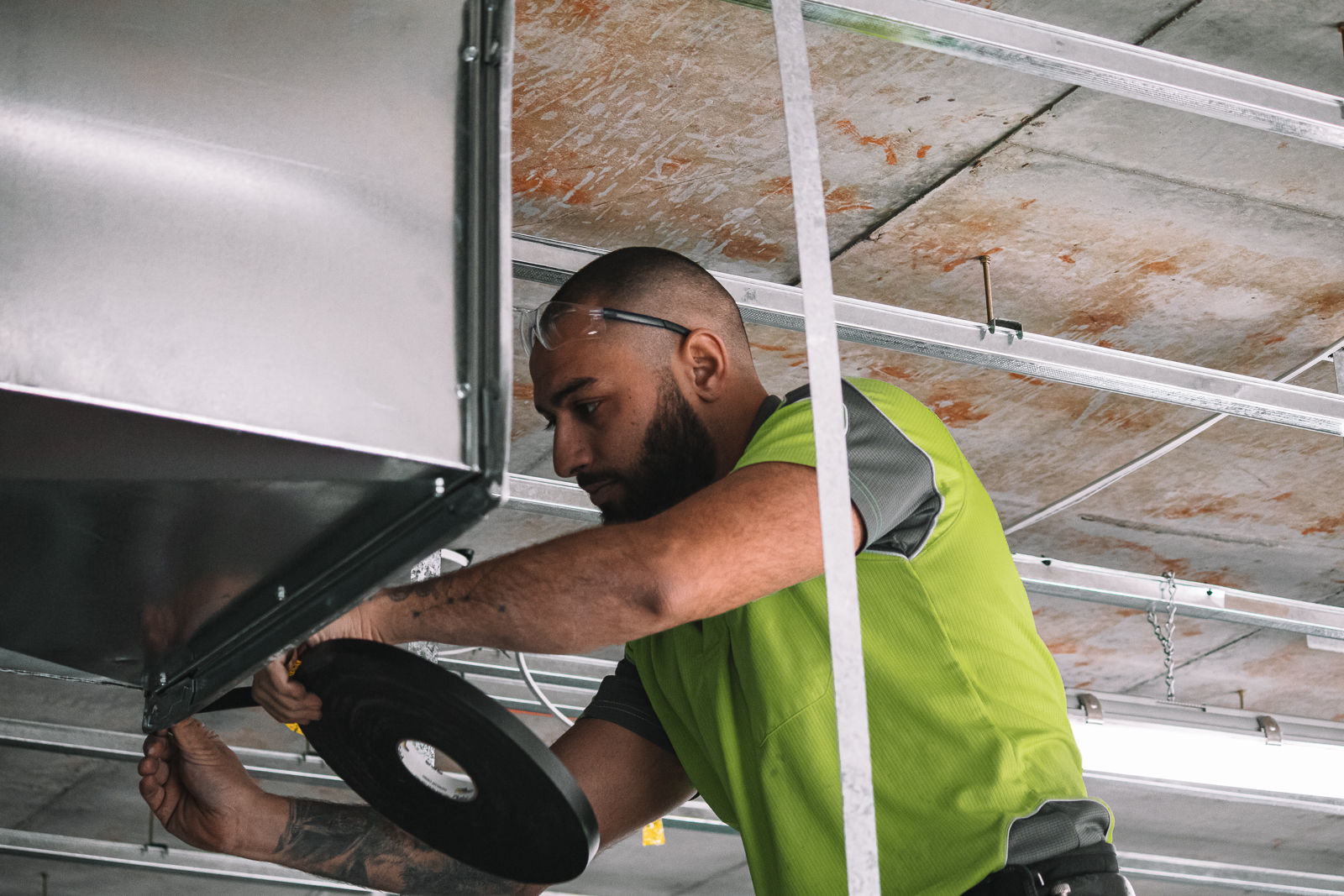
With a ducted layout, air travels through ducts to room outlets. With wall-mounted multi-split heads, each room has its own fan and filter. If you are booking a visit, saying “wall unit above the bedroom door” or “grille in the bedroom ceiling” helps the team identify which setup you have.

What should you do next?
If matching the modes restores cooling, note which setting changed and check the schedule so the problem does not return tonight. If the same head stays warm on its own, or loses cooling each time another room starts, book an assessment. Tell the team exactly which change made the symptom appear. That is the most useful thing you can take from one cool lounge and one warm bedroom.
Related reading
- Why Does My Ducted Air Conditioner Stop When I Turn On a Second Zone?