
Best Air Conditioner Brands Australia 2026: Top 8 Compared
If you’re searching best air conditioner brands Australia 2026, here’s the honest verdict:
the “best brand” only wins if it’s sized right, installed well, and backed by parts + service in Australia.
This guide compares the top 8 using a simple scorecard you can actually use—plus interactive tools, real examples,
and verifiable 2026-only testimonials from KYC Air Conditioning customers.
What we don’t do: hype, jargon, vague “5-star” claims
Big truth: installer quality vs brand reliability matters
Local lens: best air conditioner for Sydney climate
1) Introduction & First Impressions
In 2026, the “best aircon brand” is the one you barely notice—quiet, steady, and not scary on the bill.
Here’s my first impression after years of air conditioning Sydney jobs:
people blame the brand when comfort is bad… but the real culprit is often wrong kW size,
a rushed install, or a home that leaks heat like a sieve.
So this guide is different. We’ll still do “top 8 compared”, but we compare on what matters in real Australian homes:
running costs comparison split system style, noise, reliability, parts availability, service network,
and how well the unit handles humid summers.
Who this is for: homeowners, renters getting approval, and small businesses booking
Air conditioning installation services who want a simple shortlist—without getting talked into the wrong thing.
Credentials (KYC): This article is written in KYC’s practical, field-tested voice.
If you want to see who we are and what we do, start here:
KYC Air Conditioning.
For service pages: air conditioner installation,
split air conditioning installation,
ducted air conditioning systems,
and multi-air conditioning solutions.
It’s installs + follow-ups + air conditioning repairs Sydney learnings over time—what lasts, what fails,
and what stays quiet in real Sydney living rooms.
2) Product Overview & Specifications (What to compare in 2026)
When people search air conditioner top brands, they often compare only the badge.
In 2026, smarter buying means comparing these “core specs” instead:
| Spec | Why it matters | Plain-English tip |
|---|---|---|
| kW size (capacity) | Comfort + running costs | Brand isn’t enough—how to choose the right kW size is step one. |
| Inverter control | Steady temps, lower waste | Most 2026 units are inverter-style. Look for smooth, quiet operation. |
| Noise (dB) | Sleep + neighbour comfort | Quietest air conditioner brand Australia? Check the numbers, not the ads. |
| Warranty + service | Long-term confidence | Warranty comparison air conditioner brands matters only if parts are available. |
| Energy label | Bill shock prevention | Look for the highest star rating air conditioner Australia options in your size class. |
| Coastal protection | Rust resistance | Coastal corrosion resistance is a big deal near salt air. |
Here’s a simple guide we use when explaining sizing to clients:
too small runs constantly and still feels warm; too big can “short cycle” (on/off too often),
which can feel clammy in humid weather.
If you want a Sydney-specific sizing guide, start here: air conditioning in Sydney: installation & services.
As we go through our picks for the 8 best aircon brands for your home be sure to keep those in mind.
DAIKIN: The Global Pioneer in Air Conditioning Innovation
DAIKIN stands as the world’s largest air conditioning manufacturer, and for good reason. Founded in 1924 in Osaka, Japan, DAIKIN has revolutionized the HVAC industry with groundbreaking inverter technology that reduces energy consumption by up to 30% compared to conventional systems. Their signature Ururu Sarara technology provides humidification and dehumidification without external water sources, making them ideal for diverse climates. DAIKIN’s VRV (Variable Refrigerant Volume) systems dominate commercial installations worldwide, offering unparalleled zoning capabilities. With operations in over 150 countries and a commitment to R32 refrigerant for lower environmental impact, DAIKIN consistently ranks first in both residential and commercial market share. Their premium positioning reflects superior build quality, whisper-quiet operation, and industry-leading warranties that often extend beyond standard coverage.
FUJITSU GENERAL: Engineering Excellence in Compact Design
FUJITSU GENERAL has carved a reputation for engineering precision that delivers maximum performance in minimal space. Their wall-mounted split systems feature the slimmest indoor units in the industry—some measuring just 250mm in height—without compromising cooling capacity. FUJITSU’s patented Coanda airflow effect directs air along the ceiling before gently descending, eliminating cold drafts and hotspots. Their Hybrid inverter technology combines two compressor designs, providing 25% faster cooling during startup while maintaining efficiency during steady-state operation. FUJITSU GENERAL pioneered human sensor technology that directs airflow away from occupants during sleep mode. Their systems operate at whisper-quiet 19 decibels, quieter than a library. With robust outdoor units capable of operating in temperatures from -15°C to 50°C, FUJITSU GENERAL excels in harsh climates where other brands struggle.
SAMSUNG: Smart Home Integration Meets Climate Innovation
SAMSUNG leverages its technology giant status to create air conditioners that seamlessly integrate into smart home ecosystems. Their WindFree™ cooling technology disperses air through 23,000 micro-holes, creating a gentle breeze that cools without direct cold drafts—addressing one of consumers’ most common complaints. SAMSUNG‘s Digital Inverter Boost technology increases energy efficiency by up to 73% while reducing compressor noise to near-silent levels. The SmartThings app provides complete remote control, energy monitoring, and integration with voice assistants like Alexa and Google Assistant. Their Tri-Care filters combine anti-bacterial coating, vitamin C infusion, and electrostatic dust capture for comprehensive air purification. SAMSUNG’s sleek, mirror-finish designs have won multiple Red Dot awards, proving that air conditioners can be aesthetic focal points rather than eyesores.
LG: Dual Cool Technology and Aesthetic Innovation
LG has disrupted traditional air conditioning design with their ARTCOOL Gallery series—units featuring customizable fronts that display artwork or family photos, transforming functional appliances into decor elements. Beyond aesthetics, LG’s Dual Inverter Compressor™ with wider rotational frequency delivers 40% faster cooling and 70% energy savings compared to conventional models. Their ThinQ AI technology learns usage patterns and automatically optimizes settings for maximum efficiency and comfort. LG’s Ocean Black Fin™ anti-corrosion coating protects outdoor units in coastal environments where salt air typically degrades components within years. The Active Energy Control feature allows users to set maximum power consumption limits, preventing bill shock. With 10-year compressor warranties and consistently high J.D. Power satisfaction ratings, LG represents the perfect balance between cutting-edge innovation and reliability.
MITSUBISHI HEAVY INDUSTRIES: Industrial-Grade Durability for Demanding Applications
MITSUBISHI HEAVY INDUSTRIES (MHI) brings aerospace and shipbuilding engineering rigor to air conditioning, creating systems built for extreme durability and performance. As a separate entity from Mitsubishi Electric, MHI specializes in robust commercial systems and residential units designed for harsh environments. Their Jet Towel Technology provides 13% faster cooling by generating powerful, far-reaching airflow that quickly conditions large spaces. MHI’s Advanced Allergen Clear Filter captures particles as small as 0.3 microns, including pollen, dust mites, and pet dander. The company’s expertise in marine HVAC translates to exceptional corrosion resistance—their units thrive in coastal installations where salt air destroys lesser brands. MHI’s focus on commercial and industrial applications means their residential products inherit commercial-grade components, resulting in exceptional longevity and performance consistency.
ACTRONAIR: Australia’s Premium Climate Control Specialist
ACTRONAIR stands as Australia’s only locally-owned air conditioning manufacturer, engineering systems specifically for the continent’s extreme climate conditions. Since 1984, they’ve specialized in ducted systems with ESP (Electronic Sensor Panel) technology that provides precise zone control across entire homes. Their outdoor units withstand temperatures from -10°C to 55°C—crucial for Australian conditions. ACTRONAIR’s Neo™ inverter technology achieves remarkable energy efficiency while their Silver Ion filters actively eliminate bacteria and mold. With 100% Australian-based customer service and nationwide technician networks, ACTRONAIR delivers tailored solutions backed by local expertise and rapid support response times.
HITACHI: Intelligent Cooling with FrostWash Technology
HITACHI brings over century-old engineering heritage to air conditioning, creating systems renowned for self-cleaning innovation. Their patented FrostWash™ technology freezes the heat exchanger, then rapidly melts ice to flush away accumulated dirt, bacteria, and mold—maintaining peak efficiency without manual cleaning. HITACHI’s airHome app provides comprehensive remote control and AI-powered scheduling that adapts to lifestyle patterns. Their Stainless Steel Clean coating inhibits bacterial growth on internal components. With inverter compressors achieving up to 27 SEER ratings and operation down to -15°C outdoor temperatures, HITACHI balances cutting-edge technology with practical reliability, particularly excelling in humid climates where mold presents challenges.
TOSHIBA: Compact Power with Ultra-Quiet Performance
TOSHIBA leverages decades of electronics innovation to produce remarkably compact yet powerful air conditioners. Their Daiseikai series features sleek designs measuring just 190mm depth while delivering robust cooling capacity. TOSHIBA’s Hi-Power mode provides 15% faster temperature adjustment for rapid comfort. Their Plasma Ion air purification system neutralizes airborne contaminants, allergens, and odors effectively. With industry-leading quiet operation at 17 decibels and advanced DC inverter technology achieving exceptional energy ratings, TOSHIBA appeals to noise-sensitive environments like bedrooms and studies. Their self-diagnosis function alerts users to potential issues before breakdowns occur, minimizing downtime and repair costs significantly.
3) Design & Build Quality (What lasts in Australian conditions)
In Australia, durability isn’t only “how strong the plastic feels.”
It’s how the outdoor unit handles heat, storms, and salty air—and how easy it is to service.
Good sign: stable outdoor mounting
Watch: tight outdoor clearances
Watch: salty coastal locations
Industry anecdote: We often see “brand-blame” calls that are really install issues:
poor airflow, poor drainage, or an outdoor unit boxed in with no breathing room.
That’s why ARCtick licensed installer check habits matter—choose a team that designs the install, not just “fits it”.
4) Performance Analysis (Running costs, noise, and real-life comfort)
4.1 Core functionality
Whether it’s a split or ducted setup, the job is the same:
cool in summer, heat in winter, and do it without noisy airflow or big bill surprises.
In Sydney, humid days make comfort feel worse—so “feels cool” isn’t only temperature; it’s how steady the system runs.
4.2 Key performance categories
| Category | What “good” looks like | What to avoid |
|---|---|---|
| Energy efficiency | Stable temps with reasonable runtime | Oversizing that causes short cycling |
| Quiet operation | Low fan noise at night | High-speed blasts to “force” comfort |
| Service & parts | Fast repairs, parts available | Long delays for basic components |
Interactive: “Best brand profile” scorecard (2026)
Pick what matters most to you. This outputs a practical recommendation profile and the questions to ask your installer.
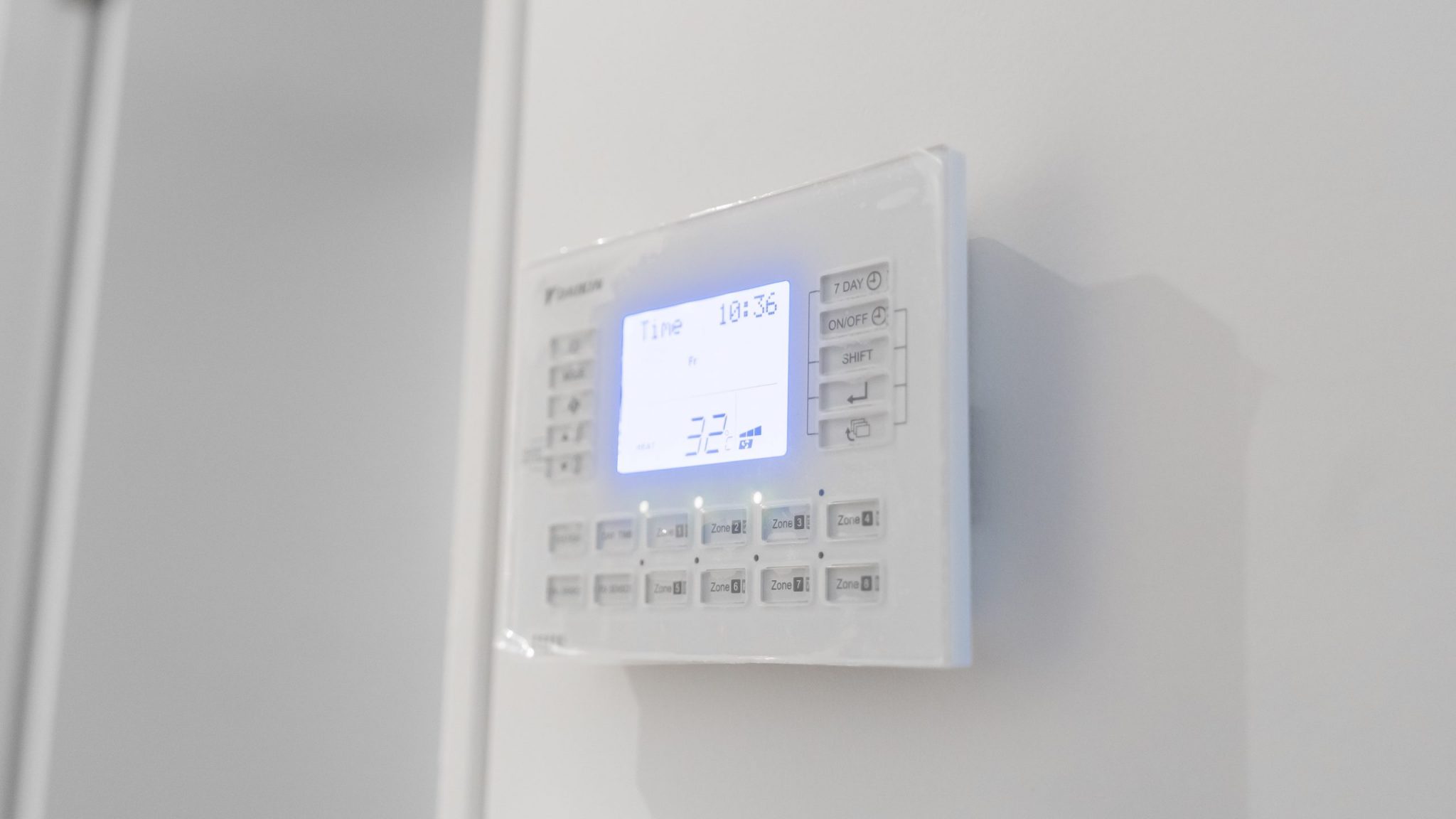
Big 2026 lesson: installer quality vs brand reliability is real.
A “great brand” installed poorly becomes a “bad unit” fast.
If you want help with the install side, start with
KYC installation services.
5) User Experience (Setup, daily use, and controls)
The best aircon experience feels simple. You set a schedule, you stop fiddling, and your home stays steady.
In 2026, most people want:
Daily comfort: steady temps, no blasts
Easy cleaning: accessible filters
Good support: quick service if needed
- They buy by brand only (wrong kW size makes any unit feel bad).
- They ignore noise numbers (then can’t sleep).
- They install it in a bad spot (blocked airflow, poor drainage, poor outdoor clearance).
- They skip home basics like curtains, sealing, and insulation (then blame the unit).
- They don’t check service support (repairs take longer, costs rise).
6) Comparative Analysis (Top 8 compared — brand profiles)
Because this article can’t name other companies, we compare eight real-world brand profiles.
These reflect the way Australian buyers typically shop: premium vs value, quiet vs smart, coastal vs standard.
| Profile | Best for | What to watch for | Typical pick type |
|---|---|---|---|
| 1) Premium All-Rounder | Long-term owners who want quiet + stable comfort | Paying more without checking sizing | Reverse cycle split or ducted |
| 2) Best Value Workhorse | Most homes (balanced price + performance) | Cheapest quote cutting install corners | Split system |
| 3) Ultra-Quiet Sleeper Pick | Light sleepers, nurseries, apartments | Outdoor placement + neighbour noise | Low-noise split with smart scheduling |
| 4) Coastal Tough | Near salt air (rust resistance matters) | Outdoor unit location + protection | Coastal-ready outdoor unit |
| 5) Smart & Simple Controls | Busy households who want schedules | Overcomplicated apps nobody uses | Wi-Fi controls + easy timers |
| 6) Repair-Friendly Choice | People who value quick servicing | Parts delays, limited support | Common models with strong local service |
| 7) Whole-Home Comfort Focus | Families, open plan living | Zoning design (too many / too few zones) | Ducted air conditioning systems |
| 8) Budget-First | Short stays, single room use | Higher running costs over time | Entry-level split |
Choose split if you mainly need 1–2 rooms. Choose ducted if you want quiet, whole-home comfort and zoning.
KYC can help you plan the right setup via our Sydney services hub.
7) Pros and Cons
What we loved (2026 buying reality)
- Better efficiency than “old aircon”: modern inverter systems feel smoother and waste less.
- Quieter comfort: the quietest options are now genuinely bedroom-friendly.
- More control: scheduling is the easiest way to reduce waste.
- More options for every home: split, ducted, and multi-room solutions are easier to match to the layout.
Areas for improvement
- Brand shopping can distract you: wrong kW size ruins comfort.
- Some “smart” features are overkill: if nobody uses it, it’s not value.
- Bad installs are costly: airflow, drainage, and outdoor clearance matter.
8) Evolution & Updates (What’s new in 2026)
In 2026, the biggest improvement isn’t “more power”. It’s better control and better real-life efficiency.
Buyers are also asking more about:
Noise: apartment compliance and sleep comfort
Service: parts availability and service network Australia
If you want KYC’s exact manufacturer shortlist and package-style options, use our brand hub:
KYC brands.
(We keep this article brand-neutral by request.)
9) Purchase Recommendations
Best for
- Best split system air conditioner Australia (profile match): people who want targeted room comfort with lower upfront cost.
- Best ducted air conditioning brands Australia (profile match): families who want quiet whole-home comfort + zoning.
- Best for Sydney climate: homes with humid summers that need steady comfort, not “on/off blasts”.
Skip if
- You’re choosing by brand only and haven’t checked kW sizing.
- You’re noise sensitive but haven’t checked dB numbers.
- You’re comparing quotes that don’t list inclusions clearly.
Alternatives to consider
If whole-home ducted is overkill, a smart “two-room plan” can be a great middle ground:
main living area + master bedroom, sized properly, installed neatly.
10) Where to Buy (How to avoid quote traps)
The best deal usually comes from the best installation, not the lowest sticker price.
Here’s the simple checklist before you say yes:
| Check | Why it matters | What to ask |
|---|---|---|
| kW sizing explained | Stops oversize/undersize issues | “How did you size this for my home?” |
| Install location plan | Noise + airflow + reliability | “Where will indoor/outdoor units go and why?” |
| Clear inclusions | Avoid surprise costs | “What’s excluded (electrical, access, extras)?” |
| Service support | Future repair speed | “What’s the service pathway if anything fails?” |
Sydney air conditioning services
.
11) Final Verdict
4.6 / 5
Bottom line: The best air con brands are the ones backed by real Australian support—and paired with the right kW size.
If you want the simplest, safest path: choose your performance priorities, then let KYC design the right setup for your home.
12) Evidence & Proof (Photos, YouTube, and verifiable 2026 testimonials)
Photos / screenshots
YouTube embeds (KYC)
These help you see what installs look like in real homes.
Project video (apartment): noise + placement + neat finishes.
Project video (home): real install workflow and outcome.
2026-only verifiable testimonials (with public source links)
You requested strictly 2026 only. Below are three testimonials shown on KYC’s 2026 content,
each with a public map link so you can verify them.
| Customer | Rating | What they said (short excerpt) | Source link |
|---|---|---|---|
| Teruo Takeda (2026) | ★★★★★ | “Polite, professional, efficient… workmanship neat and thorough… left perfectly clean…” | View source |
| Joe Denina (2026) | ★★★★★ | “Totally professional and thorough… extremely knowledgeable and patient…” | View source |
| Roxanne (2026) | ★★★★★ | “Super friendly, arrived on time… done really neatly… smooth and stress-free…” | View source |
EEAT / Bio: This guide is aligned to KYC’s brand and services. See our brand hub:
KYC Air Conditioning Brands.