

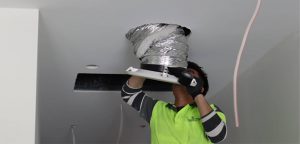
Want to hide an aircon condenser in a small Inner West Sydney courtyard?
I’ve lost count of the number of Newtown and Marrickville courtyards I’ve seen where someone has built a gorgeous timber box around their condenser — and then wondered why their electricity bill jumped and the unit sounds like a jet engine on a February afternoon.
Here’s the thing nobody tells you when you’re planning air conditioning Sydney Inner West installation in a small terrace: the outdoor condenser isn’t a rubbish bin. You can’t just shove it in a corner, build something pretty around it, and walk away.
It needs to breathe. It needs drainage. And one day, a technician needs to get their hands on it.
So the real question isn’t “how do I make it disappear?” It’s “how do I make it fade into the background without wrecking how it works?”
The Short Answer
For a small Inner West courtyard, these approaches tend to work well:
- An open-slatted screen (timber or aluminium)
- Planter boxes positioned well clear of the unit
- A ventilated enclosure designed specifically for the condenser model
- Tucking it behind an existing courtyard wall or feature
- Picking a less prominent spot in the courtyard from the beginning
Notice the pattern? Every option keeps the air moving freely around the unit.
The moment you seal it up — nice tight timber box, solid sides, a lid on top — you’ve essentially asked the condenser to cool your house while sitting inside a sauna.
Why Inner West Courtyards Make This So Tricky
Walk behind any terrace in Balmain, Leichhardt, or Newtown and you’ll see the problem immediately. A courtyard that’s maybe three metres across already has to fit outdoor furniture, bins, a hot-water unit, plants, maybe a clothesline, and whatever your neighbour’s got going on right up against the fence.
Now squeeze an air conditioner in there too.
The NSW Government’s current 2026 guidance adds another layer. Residential air-conditioning installations that qualify as exempt development still need to meet specific development standards — and if you’re in a heritage conservation area (which covers a huge chunk of the Inner West), there are additional placement rules on top of that.
So you can’t just pick the least visible corner and call it done.
What “Well Hidden” Actually Looks Like
I think people picture “hidden” as “invisible,” and that’s where the trouble starts.
The best-looking installations I’ve come across aren’t invisible at all. They just aren’t the first thing your eye lands on.
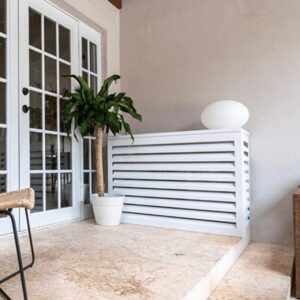
Picture a narrow courtyard: rendered rear wall, a small timber bench, a couple of tall potted plants, and the condenser off to one side with an open slatted screen in front of it. You notice the plants. You notice the bench. The condenser is there, sure — but it’s not competing for your attention.
That’s the goal. Not a magic trick. Just a bit of visual misdirection.
Timber Screens: Where Most People Go Wrong
A timber screen is probably the most popular choice, and it’s also where things tend to go sideways.
Here’s what happens. A homeowner calls a carpenter. The carpenter — understandably — thinks about proportions, matching the existing fence, and covering every visible surface. They build something beautiful.
An air-conditioning installer, on the other hand, is thinking about where air enters, where hot air exits, required clearances, service access, vibration, condensate drainage, and electrical connections.
Those two mindsets have to meet somewhere, and usually they don’t.
What works better: spaced vertical battens, horizontal slats, louvres, open aluminium screening, or freestanding landscape panels. The more open area in the screen, the easier the condenser can do its job.
What to avoid: treating a clearance number you found on Reddit as gospel. Different outdoor units have different manufacturer requirements. The installation manual for your specific system should dictate the final clearances — not a generic rule of thumb.
Should the Screen Have a Roof?
Think carefully before putting anything solid directly over the condenser. The unit needs to discharge hot air, and depending on the model, that air might be going straight up. Slap a solid panel over it and you can push that heat right back down into the coil.
Rain isn’t really a concern. These units are built to live outdoors — they cop Sydney storms just fine without a roof.
If you want overhead screening for aesthetic reasons, run it past the installer first. They can tell you whether it’ll mess with the airflow.
Please, Don’t Turn It Into a Cabinet
I’m going to say this plainly because it might save you a few thousand dollars in repairs down the track.
A condenser is not outdoor storage.
Don’t build a cabinet with a tight front door, solid sides, a lid, and almost no rear clearance. It’ll look fantastic when the air conditioner is off. The moment you fire it up on a 36-degree afternoon — when you actually need it — the unit will be sitting in its own recycled hot air, working twice as hard and aging twice as fast.
A better design disguises the unit without trapping it. There’s a big difference.
Can Plants Do the Job?
Honestly, a few well-placed pots can do more for the look of a condenser than most timber structures. A couple of tall planters offset from the unit draw the eye away naturally and don’t restrict airflow at all.
But — and this is the part people forget — plants grow.
That cute little jasmine you planted a foot from the coil? In eighteen months it’ll be threading itself through the fan guard. Leaves will block the intake. Garden debris will pile up underneath. And when the technician comes for a service, they’ll be hacking through a hedge to get to the unit.
Think of landscaping as a visual frame, not insulation. Keep it clear and keep it trimmed.
Choosing the Right Spot in a Newtown Courtyard
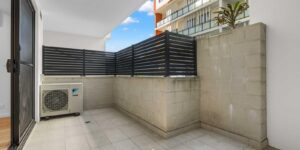
If you’re planning air conditioning Newtown installation, you’re probably dealing with a rear courtyard that’s barely a few metres across, minimal side access, and neighbouring windows uncomfortably close to the boundary.
The obvious position — right beside the back door — might not be the smartest one. Before you commit, ask yourself:
- Will the hot discharge air blow across your outdoor seating?
- Is it right beside a neighbour’s bedroom window?
- Does it block the walkway?
- Can a technician actually remove the service panels?
- Can the pipework reach the indoor unit without running all over the place?
- Does this position comply with NSW planning requirements?
Sometimes shifting the outdoor unit just a metre or two completely changes how the courtyard feels. Instead of staring at the condenser from your dining room, it sits behind a return wall or at the far edge of the outdoor space.
Positioning often matters more than whatever screen you eventually put in front of it.
How Close Can It Go to the Boundary Fence?
Don’t assume you can push it right up against the fence line.
For a residential unit to qualify under NSW exempt-development standards, the current provisions include a 450 mm minimum distance from each lot boundary plus additional requirements relating to neighbouring bedrooms.
On a tight Inner West terrace, 450 mm feels like a luxury. But a small courtyard doesn’t exempt you from the rules.
This is yet another reason to lock in the condenser position before you buy the equipment.
Heritage Conservation Areas: Extra Rules Apply
A huge number of Inner West properties sit within heritage conservation areas, and this changes the conversation.
NSW Planning states that where an air-conditioning unit relates to a heritage item, draft heritage item, heritage conservation area, or draft conservation area, the unit must be installed at or behind the rear building line for the installation to qualify as exempt development. Units installed on or in a heritage item must be ground-mounted.
A concealed rear courtyard can actually work in your favour here — it’s naturally behind the building line. But “rear courtyard” doesn’t mean “anywhere in the rear courtyard.” Noise, airflow, boundaries, and service access still apply.
How Much Airflow Does the Unit Actually Need?
There’s no single magic number I can give you, because condenser layouts vary from model to model.
Manufacturers specify minimum clearances around each side of each outdoor unit — rear, sides, front discharge, top, and for multi-unit arrangements. Those measurements differ depending on the brand, the model, and how many units are sitting near each other.
The installation manual beats every blog post on the internet, including this one.
As a homeowner, the simplest question to ask your installer is: “Does this screen meet the manufacturer’s required condenser clearances?” Then follow up with: “Can you show me?”
Far more useful than guessing.
Does Hiding It Make It Noisier?
It absolutely can.
A solid screen or hard enclosure reflects sound. Picture the condenser sitting between a brick wall, a timber fence, and a solid decorative screen — you’ve just built a little echo chamber in a courtyard that’s maybe three metres wide.
The NSW EPA’s current 2026 noise rules are worth knowing about here. For household air conditioners, noise generally should not be heard inside a neighbouring residential room:
- Before 8 am or after 11 pm on weekends and public holidays
- Before 7 am or after 11 pm on other days
Time restrictions don’t apply during declared severe or extreme heatwaves, but offensive-noise provisions can still bite you.
Your neighbour’s bedroom window might matter a lot more than whether you can see the condenser from your barbecue.
Acoustic Screens: Proceed With Caution
A proper acoustic treatment should reduce sound without starving the condenser of air. Simply building a thick wall immediately in front of the fan swaps one problem for another.
If noise is a real concern, tackle it before installation — not after. Moving the condenser later means new pipework, electrical work, new wall penetrations, patching, refrigerant work, and a bill you’d rather not see.
Good placement is almost always cheaper than relocation.
The Vibration Nobody Thinks About
Outdoor condensers contain a compressor and a fan. They vibrate.
On a solid ground-mounted base with appropriate supports, that vibration stays put. Mounted to a wall or lightweight structure, the vibration can travel — especially through old Inner West brickwork and adjoining party walls.
If you hear a low hum inside the house even though the unit itself seems quiet outdoors, vibration transfer is likely the culprit.
And this is another reason your decorative enclosure shouldn’t physically touch the condenser unless it’s been specifically engineered to do so.
What About Outdoor Furniture in Front of It?
A loose chair that you can move? Fine.
A built-in bench bolted to the ground directly in front of the discharge? That’s a problem.
When people design courtyards, they position permanent furniture where it looks best. Then the condenser gets added afterward, and suddenly there’s a fixed bench blocking the airflow, getting uncomfortably warm when the system runs, and making every service call a headache.
If you’re renovating the courtyard at the same time as installing an air conditioner Sydney system, plan both together. Mark the condenser’s required service and airflow zone on the courtyard plan. Then design the furniture around it.
Should You Hide the Pipes Too?
Usually yes, but don’t go overboard.
Pipework can sometimes look more visually intrusive than the condenser itself. A good installation uses neat trunking or carefully planned pipe routes to keep things tidy.
But trying to conceal every last centimetre can mean longer refrigeration runs, extra labour, more holes in walls, and harder future access. The shortest route isn’t always the prettiest. The prettiest route isn’t always the most practical. A solid installer finds the middle ground.
Can You Tuck It Under the Stairs?
It looks like the perfect spot — naturally hidden, using dead space. But check airflow first.
A staircase creates a low overhead area that can trap discharged heat. And the technician still needs to remove covers, access electrical parts, clean coils, and work safely around the unit. If they have to dismantle the stairs to do a routine service, it wasn’t a clever location — it was a trap.
The same goes for built-in outdoor benches. A specially designed bench might work in some situations, but it needs generous ventilation and full service access. Give the bench design and condenser model to the installer before you build anything. Let the required airflow determine the furniture design, not the other way around.
What System Works Best for a Tiny Inner West Home?
It depends on the rooms you need to condition. In a compact terrace, options might include a single split system for the main living area, separate bedroom splits, a multi-split arrangement, or a compact ducted solution where roof space allows.
People searching for best air conditioning Inner West Sydney or central air conditioning Inner West Sydney often start by picking the system type. For a tight property, I’d flip that process.
First, understand what you’re working with: available indoor-unit locations, outdoor condenser positions, roof space, pipe routes, and how close the neighbours are. Then choose the system. You might find that one option fits the property far better than another — and the condenser location often drives that decision.
How Does Placement Affect the Price?
The air conditioning Inner West Sydney cost can shift noticeably when condenser positioning gets complicated.
A straightforward back-to-back split install is a simpler job than one requiring a long pipe run, difficult rear access, extra trunking, custom screening, drainage changes, electrical work, vibration treatment, tricky mounting, or heritage-sensitive routing.
That doesn’t mean a complicated install is necessarily expensive. It means a generic “standard install” price you found online probably doesn’t describe your specific terrace very well. A site-specific quote makes a lot more sense.
The same logic applies to an air conditioner service cost Sydney estimate. If the condenser has been hidden so tightly that a technician can’t reach it without dismantling things, every service call costs more than it needs to.
How KYNEX Air Conditioning Can Help
For a small Inner West property, one of the most useful things KYNEX Air Conditioning can do is assess the condenser position before the system goes in.
KYNEX’s process starts with a site assessment and a free formal written quote. The company considers the property before making system recommendations, then handles installation and handover. With more than 10 years of industry experience and over 2,000 systems installed or serviced across Sydney, they’ve seen just about every courtyard challenge the Inner West can throw at you.
For a tiny courtyard, that site assessment can compare possible positions based on airflow, neighbour noise, visibility, pipe routes, boundary distances, heritage constraints, service access, and how you actually use the outdoor space.
If appearance matters to you — and for most people it does — say so during the quote. Telling the installer you don’t want to see mechanical equipment from the dining table is genuinely useful information. It lets them factor it in from the start, not as an afterthought.
The Seven-Question Condenser Test
Before you sign off on a screen design or location, run through these:
- Can the condenser breathe? If the screen blocks intake or discharge, go back to the drawing board.
- Can the technician reach it? Covers and components need to be accessible without demolition.
- Is it too close to the boundary? Confirm the NSW planning requirements for your specific property.
- Is there a neighbour’s bedroom nearby? Think about what happens at 11 pm on a hot night.
- Will the screen reflect sound? Solid walls change how noise behaves in a tight space.
- Can plants grow into it? Picture the garden in two years, not just today.
- Can the screen be removed? Removable screening makes every service call easier.
If you can answer all seven confidently, you’re on the right track.
What Tends to Work
Open timber battens — Good visual concealment with airflow maintained when spacing is right.
Aluminium louvres — Clean finish, less maintenance than timber, and they weather well.
Offset planter boxes — Soften the view without enclosing anything.
Existing courtyard return walls — Sometimes just changing the viewing angle is enough.
Removable screening — Especially valuable where service access is tight.
What I’d Avoid
A completely enclosed timber box — Looks neat. Creates unnecessary airflow and access headaches.
Artificial hedge fixed to the condenser — Restricts airflow and collects dust and grime.
Dense plants directly against the coil — They don’t stop growing just because you installed an air conditioner.
Bins stacked around the unit — They get moved and end up blocking the condenser when you need it most.
Using the condenser as a shelf — It sounds obvious, but outdoor units have a magnetic attraction for pots, tools, and garden clutter. Keep it clear.
Related Reading
Where Can I Place The Outdoor Condenser On A Heritage Terrace In Inner West Sydney?
Is $18k reasonable for a multi-head aircon in Inner West Sydney? (2026 real quotes)
Frequently Asked Questions
Can you cover an outdoor air conditioner?
You can visually screen an outdoor air-conditioning unit, but you should not restrict the airflow or block manufacturer-required clearances. Avoid sealed boxes and permanent structures that prevent service access.
Can I put a fence in front of the condenser?
Potentially, provided the distance and openness of the fence allow adequate airflow and servicing. The final layout should follow the condenser manufacturer’s installation requirements.
Can I grow plants around an outdoor AC unit?
Yes, provided plants stay far enough away that they don’t block airflow or maintenance access. Plants grow, so allow more space than looks necessary on installation day.
Can a condenser sit in a very small courtyard?
It may be possible, but the location still needs to satisfy equipment clearances, planning requirements, neighbour-noise considerations, and service access.
Does the outdoor unit need ventilation?
Absolutely. The condenser transfers heat from inside your house into the outside air. Restrict airflow around the unit and you harm performance, increase energy use, and shorten the equipment’s life.
Can I install an air conditioner in a heritage conservation area?
NSW permits some residential air-conditioning installations as exempt development when all relevant standards are met. In a heritage item or heritage conservation area, additional positioning rules apply, including requirements to install at or behind the rear building line.
What time can I use an air conditioner in NSW?
Under the 2026 NSW noise rules, household air-conditioner noise generally should not be heard inside a neighbour’s residential room before 8 am or after 11 pm on weekends and public holidays, or before 7 am and after 11 pm on other days. Declared severe or extreme heatwaves carry a specific exemption from those time restrictions, though offensive-noise provisions can still apply.
The Bottom Line
The best way to hide an aircon condenser in a tiny Inner West courtyard is usually not to completely cover it.
Make it visually quieter instead. Open screening, smart placement, a few well-chosen plants, adequate airflow, and easy service access will get you 90% of the way there.
In many cases, moving the condenser to a better part of the courtyard achieves more than building an elaborate enclosure around a bad location. And in a terrace, remember your courtyard doesn’t exist in isolation — the neighbour is only metres away.
The final position should balance appearance, airflow, noise, boundaries, planning requirements, pipe routes, and servicing.
If you can still see part of the condenser through an open screen, that’s not a design failure. A slightly visible air conditioner that works properly is always — always — better than an invisible one trapped inside a beautiful box.