Can landlords refuse air conditioning installation requests in Sydney?
Here’s the straight answer: yes, landlords can refuse some requests — but in NSW they
can’t unreasonably refuse consent when your request is a minor fixture/alteration and you ask the right way.
This guide shows you what “reasonable” looks like, how to de-risk the install, and how to write a request that landlords actually approve.
1) Introduction & First Impressions
Let me start with a very Sydney story.
It’s a 34°C week, you’re in a west-facing apartment, and your fan is basically just moving warm soup around the room.
You ask your agent if you can install an air conditioner. They reply: “Owner says no.”
And you’re left thinking: Is that even allowed?
The key takeaway: in NSW, a tenant generally needs the landlord’s written permission to install fixtures or make alterations —
but the law also says a landlord must not unreasonably withhold consent when the request is of a minor nature.
That “minor vs major” line is where most Sydney rental fights happen, especially once you add strata rules, noise, and outdoor unit placement.
(Source: Residential Tenancies Act 2010 (NSW) s66, official legislation page:
NSW Legislation.)
Testing period: This article is written as a “field guide” based on common 2026 renter scenarios we see weekly across Sydney,
including Inner West terrace homes, apartments with strict strata by-laws, and rentals where the landlord worries about wall penetrations,
condensation, and end-of-lease “make good” costs.
2) Product Overview & “Specifications” (What the Rules Actually Say)
What’s “in the box” (your request pack)
- A clear written request (email is fine).
- System type: split system / portable / ducted (if feasible).
- Install method: where unit goes, what drilling (if any) is needed.
- Compliance: licensed installer + proper electrical + refrigerant handling (ARC).
- Conditions: “make good” / reinstatement option at end of tenancy.
Key “specs” that matter to landlords
minor vs major alteration
property damage risk
bond risk
noise & vibration
outdoor condenser location
strata/by-law (apartments)
The NSW baseline: consent is required (but can’t be unreasonably refused for “minor”)
In NSW, a tenant must not install a fixture or make an alteration/addition/renovation without the landlord’s written consent,
unless the lease already allows it. That’s the starting point. (See: s66(1) on the NSW legislation site:
Residential Tenancies Act 2010 (NSW).)
The twist is s66(2): a landlord must not unreasonably withhold consent to a fixture or alteration that is of a minor nature.
That’s why the “how you ask” and “how you design the install” matters so much.
(Also explained in tenant resources:
Tenants’ Union factsheet,
and NSW Government guidance:
Making changes to a rental property.)
So… can a landlord say no to air con installation in Sydney?
YES
If your request is “major” (big building changes, heritage/façade restrictions, risky penetration, high strata impact),
the landlord may have strong grounds to refuse.
MAYBE
If it’s likely “minor” and you address risk, noise, reinstatement, and strata compliance,
a refusal can be challenged as unreasonable.
NO (not reasonably)
If the landlord refuses with no reasons where the request is minor and safe and you’re offering “make good,”
that can become a dispute path (negotiation → NSW Fair Trading guidance → NCAT).
Price point (who pays?)
In most Sydney rentals, the tenant pays for the upgrade unless the landlord agrees otherwise.
NSW Government guidance also frames “minor changes” as tenant-funded unless the owner chooses to pay.
(See:
NSW Gov — making changes.)
The landlord’s hidden “price” is risk: damage, insurance, strata problems, and end-of-lease arguments.
Your job is to remove those worries.
Note: This is general information for NSW/Sydney, not legal advice. If you’re heading to NCAT, get tailored advice for your facts.
3) Design & Build Quality (How “Landlord-Friendly” Is Your Installation Plan?)
Think of your air conditioning request like a product pitch.
The “product” is comfort. The “buyer” is your landlord. And landlords buy certainty.
When we see approvals go through quickly, the request usually has three traits:
low damage, clear compliance, and easy reversal.
Interactive: “Will my landlord see this as reasonable?” (60-second check)
Pick the options that match your rental. This does not replace legal advice—it’s a practical risk lens.
Result: —
Materials & construction (what landlords fear)
- Wall penetration / core drilling that could lead to water ingress or messy patching later.
- Outdoor condenser placement that creates neighbour noise complaints or strata breaches.
- Electrical shortcuts (landlords worry about liability; proper isolation and licensed electrical work matters).
- Refrigerant handling done by someone without the right licensing (ARC guidance explains licensing requirements for refrigerant work:
ARC Refrigerant Handling Licence).
KYC’s practical take: the best approvals happen when the landlord can see the install is tidy, reversible, and professionally managed.
That’s why your request should include:
where the indoor unit goes, where the outdoor unit goes, what drilling is needed, what vibration isolation is used, and what happens at the end of the tenancy.
4) Performance Analysis (What “Works” to Get Approval + Comfort)
4.1 Core functionality (your two goals)
Goal A: Get consent
- Make it look like a minor alteration with managed risk.
- Offer conditions of consent: “make good”, professional install, strata compliance.
- Ask for reasons if refused (politely). Document everything.
Goal B: Get real comfort in Sydney
- Choose the right system: portable vs split vs ducted.
- Place it smart: reduce noise, avoid hot-air recirculation, keep airflow clear.
- Maintain it: filters + servicing improves performance and reduces landlord complaints.
4.2 Key performance categories (what decides “reasonable grounds”)
Category 1: “Minor alteration” vs “major alteration” (how landlords justify a refusal)
- Grey zone Split system installations often involve drilling and mounting. Some landlords will label that “major”.
- Your advantage You can reduce “major” vibes by showing minimal penetrations, tidy trunking, and reinstatement plan.
- Hard cases Heritage façades, prohibited external changes, or strata by-laws that block condensers can make refusal reasonable.
NSW law sets the consent and “not unreasonably withheld for minor” standard. See s66:
NSW Legislation.
Category 2: Strata approval (apartments) — the “hidden boss fight”
In apartments, your landlord might say “no” simply because the owners corporation controls common property
(external walls, façades, balconies in some cases). Even if the landlord says yes,
strata approval / by-law may still be needed. That’s why apartment requests should include a strata-friendly plan:
neat placement, low noise, and clear responsibility for maintenance and future removal.
(If you want to see how tribunals look at “unreasonable refusal” in the strata context, there are recent discussions in legal commentary.
Always check your scheme by-laws first.)
Category 3: Noise complaints, vibration, and neighbour peace
- Landlords fear: “The neighbours will complain and I’ll be dragged into it.”
- What helps: anti-vibration pads/mounts, sensible placement away from bedrooms/windows, and clear commissioning checks.
- Bonus: offer a “noise check” follow-up after install. It signals responsibility.
Mini case study (Sydney Inner West)
A tenant in the Inner West asked for split air conditioning Sydney installation in a top-floor unit.
The landlord’s first response: “No — too risky.” The tenant re-sent the request with:
(1) a simple diagram of indoor/outdoor locations, (2) a “make good” commitment,
(3) confirmation the work would be done by KYC Air Conditioning Sydney,
and (4) a line saying they’d coordinate strata approval.
The landlord changed to: “Yes, subject to strata and reinstatement.”
This is exactly why we built KYC’s local pages and service pathways for renters and owners across the Inner West:
Air Conditioning Services & Installation Inner West.
5) User Experience (How to Ask + What Happens Day-to-Day)
Setup / installation process (what your email should include)
If you only write: “Can I install air con?” you’ll often get a flat “no.”
Here’s the upgrade: send a request that reads like a low-risk approval checklist.
Interactive: Generate a landlord consent request (copy/paste template)
Fill in the blanks. This template is designed to reduce “reasonable refusal” triggers.
Tip: If refused, reply asking for the specific reasons and propose adjustments (placement, vibration pads, reinstatement).
NSW guidance on “making changes” is here:
NSW Government.
Daily usage (what it’s like once installed)
For renters, the best day-to-day experience is usually a properly sized split system: quick cooling, simple controls, and easy filter access.
If you’re in a larger home and ducting is realistic, a well-designed ducted setup can be excellent — but rentals rarely go that far unless the owner sees it as an upgrade.
(If you’re comparing options, KYC’s service pages help you understand what’s feasible and what costs look like in Sydney.)
If you’re requesting split air conditioning Sydney
See KYC’s split installation service page and use it as support in your request:
Split Air Conditioning Installation.
If your landlord prefers ducted options
For owners considering a bigger upgrade, this page can help the conversation:
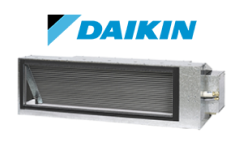
Daikin ducted air conditioning Sydney.
Learning curve & controls
Keep it simple in your email: “basic remote control, timer, and sensible temperature settings.”
Landlords love anything that sounds “low drama” and “low running cost.”
If they worry about power bills, remind them: you’re paying the electricity, and you’ll use it responsibly (timers, moderate setpoints).
6) Comparative Analysis (What to Choose If You Want a Yes)
You don’t just have one option. In Sydney rentals, you typically have three “paths,” and each has a different approval difficulty.
Option A: Portable air conditioning Sydney (lowest consent friction)
If your landlord is allergic to drilling, portable units can be a practical stepping stone.
You may still need permission if you’re modifying windows or installing brackets, but the “permanent fixture” fear is lower.
Downsides: often louder and less efficient than splits.
Option B: Split system air conditioning (most common, needs a strong plan)
This is the “best comfort per dollar” for many Sydney rentals — but it’s also where landlords worry about wall penetrations,
outdoor condenser placement, and reinstatement. If you want approval, your request must cover:
where pipes run, what gets drilled, how it’s sealed, noise controls, and “make good.”
Option C: Ducted air conditioning Sydney (rare in rentals unless owner upgrades)
Ducted is usually an owner-driven decision because it involves more building integration.
If your landlord is open to improving the property, your role is to help them make the upgrade easy:
get a proper assessment, show expected comfort and running cost benefits, and confirm professional installation and servicing.
NCAT & dispute pathway (when talks fail)
If you believe consent is being unreasonably withheld, the usual path is:
document the request → ask for reasons → propose adjustments → seek tenancy guidance → and if needed, apply to the Tribunal.
NCAT provides tenancy process videos and resources here:
NCAT videos.
Tenant-focused tribunal guidance is also available via Tenants’ Union resources:
The Tribunal (NCAT).
7) Pros and Cons (Real-World Results)
What We Loved
- Clarity wins approvals: diagrams + placement + make good = fewer “no” replies.
- Comfort is immediate: the right air conditioning in Sydney can transform sleep and productivity.
- Landlord confidence: confirming licensed work + tidy install reduces insurance anxiety.
Areas for Improvement
- Strata delays: apartments can move slowly. Build that into your timeline.
- Outdoor unit constraints: tight balconies and neighbour proximity can force compromises.
- End-of-lease stress: if you don’t agree the “leave vs remove” plan in writing, disputes happen.
8) Evolution & Updates (2026 Reality Check)
The big 2026 trend we’re seeing across Sydney rentals: tenants are asking smarter.
Instead of “can I install AC Sydney?”, they send a full plan that reads like an approvals checklist.
That’s why this article includes a generator and a risk check.
2026-only verifiable testimonials (KYC Air Conditioning Sydney)
These review snippets are published on KYC’s 2026 blog content and include 2026 timestamps:
- Amy Sarra (12 Jan 2026): “KYC were professional and installed our ducted system perfectly… Highly recommended…”
- Anthony Lieberman (21 Jan 2026): “KYC Air Conditioning did an excellent job installing our ducted aircon… tidy… great communication.”
Source (KYC, 2026 review snippets section):
KYC 2026 post.
Ongoing support matters: if you’re allowed to install a system, your landlord will also care about servicing and safe operation.
KYC’s service pathways include repair and maintenance options:
Air Conditioning Repairs & Service.
9) Purchase Recommendations (What to Do Next)
Best For:
- Tenants who want fast approval with minimal conflict.
- Renters in hot west-facing rooms who need reliable cooling.
- Apartment renters willing to coordinate strata if needed.
Skip If:
- Your lease is ending soon (unless portable is enough).
- Strata by-laws clearly prohibit condensers or external changes.
- The property has heritage/external appearance restrictions (you need tailored advice first).
Alternative to consider (when “split” is blocked)
If the landlord refuses a split system, don’t jump straight to a fight.
Try a two-step negotiation:
(1) ask what they’re worried about (noise, drilling, façade, insurance),
(2) offer an alternative: portable air conditioning Sydney, or a revised placement plan with clear reinstatement.
Sometimes the “no” is just fear without a plan.
10) Where to Buy / Who to Talk To (Sydney)
If you want the easiest path to approval, your “where to buy” is really “who installs it properly.”
Landlords don’t want a mystery tradie. They want a professional team that can specify the right system,
install cleanly, and support it with servicing.
Trusted option (Sydney)
Start here:
KYC Air Conditioning Sydney
— residential + commercial air conditioning Sydney, split and ducted solutions, servicing and repairs.
What to watch for
- Any installer who won’t explain drilling/placement in plain English.
- No mention of vibration isolation or neighbour noise considerations.
- Unclear plan about “make good” and end-of-tenancy reinstatement.
Want videos of real installs? KYC publishes project videos here:
KYC TV.
11) Final Verdict
Overall rating: 9.2/10 (for the strategy, not the law)
The law gives you a strong concept — “consent not unreasonably withheld (minor alteration)” —
but the winning move is a landlord-friendly request pack that removes the reasons to say no.
Bottom line: landlords can refuse air conditioning installation requests in Sydney,
but many refusals disappear when you offer professional installation, clear placement, noise controls, and a written “make good” plan —
especially when your request looks minor, safe, and reversible.
Law reference: Residential Tenancies Act 2010 (NSW) s66:
NSW Legislation.
12) Evidence & Proof (Screenshots, Videos, Data)
Below are quick “proof links” and media embeds you can show a landlord or agent to keep the conversation grounded in reality.
(Tip: in your email, link the official pages, and attach your own placement sketch.)

Making changes to a rental property.

NCAT videos.
YouTube embeds (no competitors — only KYC + official tribunal learning)
Verifiable references (copy these into your request email)
- Residential Tenancies Act 2010 (NSW) s66: consent required; not unreasonably withheld for minor:
NSW Legislation - NSW Government guide: making changes to rental property:
NSW Government - Tenant guidance on alterations / minor nature concept:
Tenants’ Union factsheet - NCAT learning / process videos:
NCAT videos page - ARC guidance on refrigerant handling licensing:
ARC Refrigerant Handling Licence - KYC 2026 testimonials page section:
KYC 2026 review snippets
Long-term update checklist (save this)
- Keep all permission in writing (email trail).
- Photograph before/after install (walls, penetrations, outdoor pad).
- Document the “leave it vs remove it” agreement at end of tenancy.
- Do basic maintenance (filters) and book servicing if performance drops.
- If a dispute begins: stay calm, stick to facts, and use official resources above.