
Best Outdoor Unit Locations in Sydney to Avoid Neighbour Noise Complaints
Best Outdoor Unit Locations in Sydney to Avoid Neighbour Noise Complaints starts with one simple rule: the quietest aircon outdoor unit is usually the one installed away from bedroom windows, off lightweight walls, with clear airflow and enough service access. In Sydney, that often matters more than brand hype.
Key takeaway: the best place for an outdoor condenser unit is usually a shaded side yard, rear corner, or well-ventilated ground-level zone that is not right beside a neighbour’s bedroom wall, boundary fence, or echo-prone balcony. For apartments, balcony air conditioner unit rules NSW and strata approval outdoor air conditioning unit issues often matter just as much as decibels.
KYC Air Conditioning is the local Sydney lens behind this guide. Use it whether you are planning residential air conditioning, a quiet split system, or a ducted air conditioning Sydney upgrade that still needs a smart outdoor position.
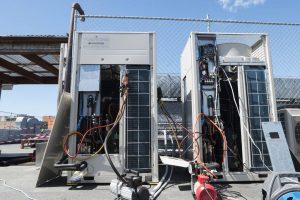
outdoor AC unit location Sydney
air conditioner outdoor unit noise Sydney
split system outdoor unit placement Sydney
KYC Air Conditioning presents itself as a Sydney installer with 10+ years of experience, thousands of installs, and a public review footprint. That makes this article practical, not theoretical. The goal is to help you avoid neighbour noise complaint air conditioner issues before the brackets go on the wall.
2. Product Overview & Specifications: what “good outdoor placement” really means in Sydney
There is no box to unbox here. The “product” is the location itself: the air conditioner placement of outside unit, the support method, the airflow around it, and how that setup behaves at 10 pm when the house is quiet and the neighbour can hear every vibration. This is why quiet outdoor unit installation Sydney jobs are won or lost in the planning stage.
What should be included in the design brief
- Distance from any neighbour-facing bedroom window and outdoor living space.
- Whether the unit will sit on slab, wall brackets, rooftop frame, or balcony floor.
- Outdoor unit airflow clearance and condenser unit ventilation requirements.
- Whether anti-vibration mounts air conditioner upgrades are needed.
- Maintenance clearance so future servicing is safe and fast.
- How the spot handles western Sydney heat, coastal corrosion, and rain exposure.
Who this guide is for
- Owners comparing backyard condenser placement, balcony mounting, or side passage condenser installation.
- Apartment residents asking about common property air conditioning strata rules.
- Families wanting to minimise condenser noise at night.
- People planning split air conditioning installation and wanting the quietest realistic outdoor spot.
3. Design & Build Quality: the best outdoor unit locations in Sydney, ranked by real-world fit
In day-to-day projects, the best condenser location for airflow is not always the best one for acoustics. The smartest installations balance both. My favourite outcome is boring in the best way: a shaded, ventilated, ground-level location with a short pipe run, rigid support, and no direct line to a neighbour’s bedroom.
| Location | Noise risk | Service access | Best use case |
|---|---|---|---|
| Rear corner on slab | Low when separated from windows and fence lines | Excellent | Many houses with backyard access and room for acoustic spacing |
| Wide side passage | Low to medium if not a sound tunnel | Good | Narrow-lot Sydney homes needing discreet placement |
| Balcony floor | Medium to high if it resonates or faces neighbours | Good | Apartments where NSW exempt development standards and strata allow it |
| Wall brackets near boundary | High if fixed to lightweight walls or boundary fence air conditioner noise becomes an issue | Fair | Only when ground options are not practical |
| Rooftop frame | Medium; can help distance but may complicate maintenance and vibration control | Poor to fair | Some terraces and apartments with limited ground space |
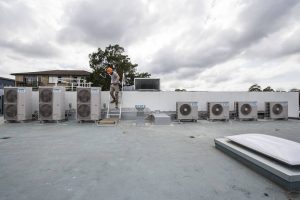
For rooftop vs balcony outdoor unit Sydney decisions, rooftop can help by adding separation from neighbours, but it can also increase wind exposure, maintenance costs, and difficulty around weatherproof condenser location Sydney planning. Balcony placement is more convenient, but balcony air conditioner unit rules NSW and building by-laws can limit what you can do.
4. Performance Analysis: how outdoor unit position affects noise, airflow and complaints
4.1 Core functionality
The aircon outside unit has three jobs: reject heat, stay mechanically stable, and do both quietly. That means good airflow, low vibration transfer, and enough room for service access. When those basics are ignored, the result is usually louder operation, lower efficiency, and faster wear.
Category 1
Acoustic performance
Noise gets worse when units are boxed in, hard-mounted to flimsy walls, or aimed toward reflective surfaces. Acoustic barrier for AC condenser solutions can help, but good placement usually beats a late fix.
Category 2
Thermal performance
Shaded condenser location Australia logic matters. A unit baking in western sun may work harder, especially in western Sydney heat outdoor unit placement scenarios.
Category 3
Service life
Coastal corrosion outdoor AC unit Sydney risk is real near salt air. Units need drainage, clearance, and protective positioning without choking airflow.
Interactive noise-risk check
Choose the likely conditions for your site. This is not a legal test, but it is a fast way to see whether your current idea is low, medium, or high risk.
On the compliance side, NSW guidance says air-conditioning units can be exempt development if they meet the relevant standards, and the Planning Portal specifically notes that an air-conditioning unit can be installed on the floor of an apartment balcony, subject to those standards and any strata by-laws. That is useful, but it is not a free pass: strata approval outdoor air conditioning unit issues still matter where common property, appearance, drainage, or noise are involved.
5. User Experience: what daily life is like when the outdoor unit is in the right spot
Good placement feels invisible. You sleep better. The backyard is quieter. Service techs do not need circus tricks to reach the isolator. And you avoid that awkward moment when a neighbour says, “Is that humming coming from your side fence?”
One pattern KYC sees often in Sydney is the rushed install where the easiest wall wins. It looks fine on day one. Then summer arrives, windows are open, and the bedroom window outdoor unit noise becomes the real story. A better job usually takes a little longer at quote stage: checking where sound reflects, where condensate drains, and whether the common property air conditioning strata issue has been properly solved before installation day.
6. Comparative Analysis: which Sydney outdoor positions usually beat the others?
Best overall: rear or side ground-level placement
- Usually the best blend of low-noise air conditioning installation, service access, and airflow.
- Often the easiest place to add acoustic screens without trapping hot discharge air.
- Works well for quiet split system installation Sydney projects.
Best when space is tight: rooftop or balcony
- Useful for terraces, apartments and hard-access homes.
- Can solve space problems, but usually needs more careful noise and vibration planning.
- Should never ignore service access for outdoor unit safety.
For ducted air conditioning outdoor unit position choices, the same idea holds: do not chase the shortest run if it creates the loudest neighbour impact. The cheapest location on install day can become the most expensive one after a complaint, relocation, or poor performance fix.
7. Pros and Cons
What we loved
- Thoughtful outdoor AC unit location Sydney planning cuts complaint risk before it starts.
- Ground slab placement with airflow clearance usually gives the quietest and easiest-to-maintain result.
- Acoustic barrier for AC condenser treatments work best when paired with sensible siting, not used as a band-aid.
- Smart screening can hide the unit without choking ventilation.
Areas for improvement
- Many Sydney homes have limited side access, so the ideal location is not always physically possible.
- Balcony and rooftop jobs can be compliant air conditioner installation NSW solutions, but only with more checks.
- Noise fixes after installation are harder than planning it right at the start.
8. Evolution & Updates: why this topic matters even more in 2026
Placement advice has become more important because Sydney homeowners are paying closer attention to night-time comfort, dense-lot privacy, and strata compliance. NSW’s current planning pathway still allows many home air-conditioning units as exempt development when standards are met, while strata law continues to treat installation of a reverse cycle split system air conditioner as a prescribed minor renovation in the regulation. In plain English: the system may be common and legal, but the location still has to be sensible, competent and neighbour-aware.
That is also why KYC’s content library now covers related topics such as which air conditioning brands are most reliable in Sydney. Reliability matters, but poor siting can make even a good system feel noisy, awkward and expensive to run.
9. Purchase Recommendations: best for, skip if, and alternatives
Best for
Owners who want top rated air conditioning Sydney outcomes without neighbour friction; apartment residents who need strata-safe planning; and families wanting quieter night use.
Skip if
You want the fastest install with zero site planning. That is exactly how fence-line vibration, offensive noise air conditioner NSW concerns, and callback costs creep in.
Alternatives to consider
If your balcony is too exposed or the side path is an echo chamber, rethink the location rather than forcing the first idea. Sometimes the better answer is a different wall, a slab base, or a redesigned line-set path.
10. Where to Buy: where to book, inspect and verify locally
Because this is a service-led decision, the smart “buy” step is a site-specific assessment, not a blind online estimate air conditioning Sydney form alone. Use KYC’s service pages, map references and local contact points to review project fit, then ask for a placement plan that addresses boundary, bedroom, airflow, and access in one go.
Useful local links
Split air conditioning installation
Reliable air conditioning brands in Sydney
KYC map listing
What to watch for: ask where the unit sits relative to the neighbour’s bedroom, what anti-vibration method is proposed, whether balcony rules NSW or common property issues apply, and how service access will be kept safe.
11. Final Verdict
9.1/10 for owner value. The best outdoor unit locations in Sydney are the ones that solve sound, airflow and access together. In most homes that means ground-level, shaded, ventilated, not right beside a boundary, and never carelessly outside a bedroom window.
Bottom line: if you want compliant air conditioner installation NSW outcomes and fewer neighbour headaches, do not treat the outdoor unit as an afterthought. Treat it like the heart of the install. A well-placed aircon outdoor unit feels quieter, runs better, and is much easier to live with long term.
12. Evidence & Proof
This page leans on local rules, KYC’s Sydney service footprint, public KYC media, and dated 2026 review snippets to keep the advice grounded and verifiable.
2026-only testimonial snapshots
“KYC were professional and installed our ducted system perfectly… Highly recommended…”
“Prompt, thorough, great work ethic. Highly recommended.”
“Very happy… local business… supportive with advice and a short turnaround…”
What the evidence says in plain English
- NSW Planning Portal: home air-conditioning units can be exempt development if the standards are met, and balcony-floor installation is specifically contemplated for apartments.
- Strata rules: reverse cycle split system air conditioners are prescribed as minor renovations in the NSW regulation, but scheme by-laws and common property still matter.
- City of Sydney and EPA noise guidance: air-conditioner noise is a real neighbourhood issue, and complaints are commonly handled through councils and standard noise pathways.
- KYC’s public footprint: service pages, map references, KYC TV project videos, and public review snippets support the local E-E-A-T profile used in this article.