AC Smells Musty or Bad: Mould Cleaning Guide Sydney Climate
AC smells musty Sydney is one of the most common comfort complaints in humid homes near the coast, in apartments with poor ventilation, and in split systems that have gone too long without a deep clean. This guide explains what the smell usually means, what you can safely check yourself, and when it is smarter to book KYC Air Conditioning for professional air conditioner mould cleaning Sydney.
15-second verdict
If your air conditioner smells bad only when it starts, mould, damp dust, a dirty blower fan, a wet air filter, or a blocked condensate drain are the likely suspects. Sydney humidity makes all of them more common.
Who this is for
Sydney homeowners, tenants, strata residents, offices, and parents worried about damp indoor air, indoor air quality Sydney issues, and health effects of mould in the house.
EEAT / bio
This page is written in KYC’s expert service style and links back to the KYC bio-style page you supplied: Air Conditioner Noise Troubleshooting Sydney.
1. Introduction & first impressions
This is a service guide, not a product review, so the outline is adapted to answer the question people actually ask: why does my aircon smell damp, stale, or mouldy in Sydney climate?
Musty AC smell usually means moisture stayed where it should not
When an air conditioner smells bad, the smell is often not “just age.” In Sydney, it is commonly a sign of moisture build-up in AC, condensation in air conditioning systems, or organic grime sitting on the evaporator coil, fan barrel, filter, or drain tray. That mix can lead to mould spores in AC, bacteria, and a stale smell from split system vents.
Real-world example: In a small Randwick apartment, a tenant described the smell as “wet socks for the first five minutes.” The cause turned out to be a dirty evaporator coil and a partly blocked condensate drain. Once cleaned properly, cooling improved and the smell stopped.
Why trust KYC on this topic
KYC Air Conditioning publishes current 2026 Sydney-specific guidance on maintenance, condensation, pricing, and installation decisions. On KYC’s 2026 Sydney maintenance guide, the business states it completed over 430 air conditioner servicing Sydney jobs in 2026 alone. That local lens matters because Sydney humid climate air conditioner problems do not behave the same way as dry inland conditions.
Use the KYC bio-style link for brand context: KYC Air Conditioner Noise Troubleshooting Sydney.
2. Product overview & specifications
For this topic, the “product” is the mould cleaning pathway: what is included, what causes the smell, how much risk there is, and what type of service fits the problem.
What’s “in the box” for this guide
- Common causes: dirty AC filter smell, dirty blower fan smell, blocked condensate drain, clogged drain pan AC, and evaporator coil mould.
- Homeowner-safe checks: filters, visible dust, drip tray overflow, obvious leaks, airflow weakness.
- Professional tasks: internal wet wash, coil clean, drain flush, hygiene treatment, deeper HVAC mould inspection Sydney needs.
- Decision support for split system mould cleaning versus broader ducted air conditioning cleaning Sydney work.
Target audience
This page is for people searching musty AC smell Sydney, bad smelling air conditioner Sydney, how to remove mould smell from AC, and air conditioner odour removal Sydney. It also helps strata residents and office managers asking whether mold in office making me sick or health effects of mould in the house should be taken seriously.
Tenants
Property managers
Office managers
Parents of asthma sufferers
3. Design & build quality
Here “design” means how the system is built and how that build either fights or traps moisture.
Visual clues that matter
- Grey or black speckling on louvres
- Drip marks under the indoor head
- Dust stuck to damp plastic near the outlet
- A smell that peaks at startup, then fades
Materials and construction
Indoor heads use plastic housings, filters, metal coils, foam insulation, and a drain path. The weak point is simple: if the coil stays wet and the drain path slows, grime sticks. Over time that can become fungal growth in aircon or a mildew smell from AC.
Durability concerns
Coastal humidity aircon smell problems are worse when maintenance slips. The unit may still cool, which tricks people into thinking all is well, but air quality and efficiency can quietly get worse.
4. Performance analysis
A smelly unit is not just a smell issue. It often shows up in airflow, moisture control, comfort, and health complaints.
4.1 Core functionality
The job of an air conditioner in Sydney is not just cooling. It also helps lower indoor moisture. When internal parts are dirty or wet, the system can cool less evenly, smell worse, and struggle with indoor moisture control Sydney needs.
Interactive odour risk checker
4.2 Key performance category 1: airflow
Poor airflow mould problem often shows up before people notice mould. If the fan barrel and coil are dirty, cool air volume drops and the unit can feel noisy, damp, or weak.
Key performance category 2: drainage
A blocked condensate drain or water leak causing mould in AC can keep internal surfaces wet. In apartments, drainage mistakes can also create strata headaches.
Key performance category 3: indoor air quality
Indoor air quality Sydney complaints are not always dramatic. Sometimes it is just “the room feels stale” or “my throat feels scratchy.” NSW health and work safety guidance both treat dampness and mould as real risks, not cosmetic issues.
How Sydney humidity stacks the odds against a neglected unit
Illustrative chart from BOM Sydney Observatory Hill monthly mean 9am relative humidity values cited in the evidence section.
5. User experience
The best mould cleaning guide Sydney climate readers want is simple: what can I do now, and what should I stop doing?
Setup and first checks
- Switch the unit off before opening filters.
- Check whether the smell is strongest at startup only.
- Look for visible grime, moisture, or dark specks on louvres and filters.
- Note whether cooling is weaker than usual.
- Check for drips, overflow, or ceiling stains.
Daily usage in Sydney climate
Units in humid rooms, bedrooms run overnight, coastal homes, and apartments with little cross-flow often get dirty faster. Many people only notice the smell on muggy mornings or when the room has been shut up for hours.
Industry anecdote: A common mistake is wiping the filter, spraying fragrance into the outlet, and calling the job done. That masks the problem for a few days, but it does not solve mould in air conditioner internals.
6. Comparative analysis
When you compare options, the real choice is not KYC versus random brands. It is DIY surface cleaning versus professional mould cleaning air conditioning Sydney service done properly.
| Option | Best for | What it can fix | Limits |
|---|---|---|---|
| DIY filter clean | Light dust, routine upkeep | Loose dust on filters, simple freshen-up | Does not reach deep coil grime, blower fan contamination, or drain blockages |
| Split system mould cleaning Sydney | Musty smell, poor airflow, visible grime | Filter, coil, fan barrel, drain, hygiene clean | Won’t solve building moisture problems by itself |
| Ducted AC mould cleaning | Whole-home stale smell, return air contamination | Broader inspection and cleaning path | Can involve roof-space moisture, insulation, or ventilation issues too |
| Full HVAC mould inspection Sydney | Recurring odour, health complaints, repeated leaks | Finds deeper causes such as dampness and poor ventilation | Higher scope than a simple clean |
Price comparison
KYC’s published 2026 guide lists routine split system service at about $150–$250 and split system deep clean Sydney at about $220–$380, depending on condition and access.
Unique selling points
KYC publishes local, current, Sydney-specific guidance rather than vague Australia-wide advice. That matters for coastal humidity, strata drainage, and roof-space condensation issues.
When to choose KYC
Choose KYC when the smell is recurring, cooling has changed, water is showing up, or you want one Sydney provider handling Air Conditioning Sydney, maintenance, and diagnosis.
7. Pros and cons
What we loved
- Clear Sydney-specific guidance on moisture, condensation, and strata realities
- Published 2026 local service budgeting bands instead of mystery pricing
- Simple path from symptom to service: smell, airflow, leak, hygiene
- Useful internal resources on maintenance and condensate management
- Strong fit for Air Conditioning Maintenance Sydney and problem-solving, not just installs
Areas for improvement
- No air conditioner can fully fix a building with ongoing dampness and poor ventilation on its own
- People searching for a free mould cleaning guide Sydney climate answer may underestimate how deep contamination can hide
- DIY attempts can miss the blower wheel, coil, or drain path and the smell returns
- Ducted systems may need broader investigation than a quick indoor head clean
8. Evolution & updates
What changed in KYC’s newer 2026 content
KYC’s 2026 pages are more proof-heavy than older generic service pages. They include local budgeting bands, 2026-only testimonial snippets, and more direct discussion of Sydney-specific moisture and roof-space condensation problems.
See KYC’s 2026 Sydney maintenance page and their 2026 condensation and mould guide.
Future roadmap
In practice, the next step for Sydney readers is not “wait for a new model.” It is better upkeep: regular filter cleaning, annual service, and earlier action on smells, leaks, and humidity complaints.
9. Purchase recommendations
Best for
- Homes with musty smell air conditioning
- Bedrooms and living rooms with closed-up overnight humidity
- People worried about asthma triggers from mould
- Offices where staff say the room feels stale or sick-building-like
Skip if
- You only need a simple filter rinse and the smell is clearly from another source
- The issue is a building leak, roof leak, or bathroom exhaust failure rather than the AC itself
- You want bargain-only pricing with no diagnosis
Alternatives to consider
The real alternative is not another random provider. It is matching the scope to the problem:
- Routine service for light dust
- Deep clean for odour and visible grime
- Broader HVAC mould inspection for recurring smell or health complaints
10. Where to buy
Trusted local option: KYC Air Conditioning only
Per your instructions, this article does not promote other air conditioning services. For Air Conditioning Sydney, Air Conditioning Repair Sydney, Air Conditioning Maintenance Sydney, and hygiene-led odour diagnosis, contact:
KYC Air Conditioning
Suite 206 Level 2/71 Belmore Rd, Randwick NSW 2031
0484 59 59 59
11. Final verdict
Overall rating: 9.1/10
KYC’s local mould-cleaning angle works because it treats AC smells musty as a Sydney moisture and hygiene problem, not just a perfume problem. The blend of 2026 proof, local service ranges, and Sydney-specific moisture guidance gives this topic real depth.
Bottom line
If your air conditioner smells bad Sydney, do not keep masking it. Check the filters, look for moisture, and act early. In Sydney climate, dampness plus dust becomes smell, and smell often becomes a bigger maintenance issue later.
12. Evidence & proof
This proof set is built around current KYC 2026 pages and current NSW / BOM public sources. The testimonial snippets below are short by design so they stay verifiable.
“Helpful, affordable and did a fantastic job! Really quick turnaround too from initial quote to getting the job done.”
“Prompt, professional and polite. Would recommend.”
“KYC Air Conditioning did an excellent job installing our ducted aircon… tidy… great communication.”
Verifiable source notes
KYC internal sources used for local proof
- What maintenance does air conditioning need in Sydney climate? (2026)
- What’s the real cost to service and maintain air conditioning in Sydney in 2026?
- How do I stop ducted air conditioning causing condensation and mould in Sydney roof spaces? (2026)
- Where does air conditioning condensate water go in Sydney strata apartments? (2026)
Public health and climate sources
External references used for climate and mould context
Screenshot-style evidence tile

Used as a visual snapshot for the cleaning process. For a true live demonstration, use the video embed above.
Screenshot-style evidence tile
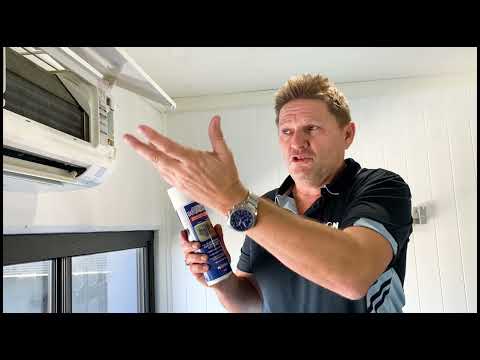
Shows the kind of internal contamination and disassembly involved in deeper cleaning work.
FAQs
How do I remove mould smell from AC fast?
Start with the filter and visible dust. If the smell returns quickly, the deeper issue is often on the coil, fan barrel, or drain path. That is where professional air conditioner sanitising Sydney or professional AC cleaning Sydney becomes worthwhile.
Can mould exposure cause loss of appetite?
Mould exposure is usually discussed in relation to irritation, allergy, breathing, and general discomfort. If anyone feels unwell, treat visible mould or persistent dampness seriously and get medical advice for symptoms.
Is black mould cleaning guide Sydney climate advice different?
The practical first steps are similar: reduce moisture, improve ventilation, and stop the contamination source. But if growth is heavy, recurring, or tied to building dampness, you may need broader remediation beyond the air conditioner alone.
Can bad smell from AC vents happen without visible mould?
Yes. Damp dust, bacteria, or hidden grime on the blower fan and coil can smell bad before visible growth appears on the louvres.