

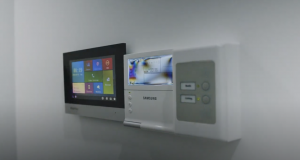
What Are the Latest Technologies in Ducted Air Conditioning in Sydney?
The latest ducted air conditioning technology in Sydney comes down to five upgrades: variable-speed inverter compressors, smart zoning, phone and voice control, low-emission R32 refrigerant, and systems smart enough to read your home and adjust themselves. If you’re booking a ducted air conditioning service Sydney homeowners can actually rely on, those are the features worth asking about this year.
TL;DR: Modern ducted systems are quieter, cheaper to run, and far smarter than the units sold even five years ago. The biggest wins for Sydney homes are inverter efficiency, zoning you control room by room, and controls that live on your phone instead of a wall.
What counts as the latest ducted air conditioning technology right now?
A ducted system still does the same basic job. One indoor unit, usually in the roof space, pushes cooled or heated air through ducts to vents in each room. The outdoor unit does the heavy lifting.
What’s changed is the brains behind it.
Older ducted units ran at one speed — flat out, then off, then flat out again. Modern ducted air conditioning systems run on an inverter, which is a bit like cruise control for your home. Add smart zoning, WiFi and better refrigerant, and you get a system that costs less to run and feels more even through the house.
Here’s the plain-English version of each upgrade and whether it’s worth your money.
How does an inverter ducted system actually save energy?
This is the single biggest change, so it’s worth understanding.
A fixed-speed system is either on or off. When it’s on, it’s blasting at 100%. When the room hits temperature, it shuts down. Then the room warms up and it blasts again. That start-stop cycle burns power and makes the temperature swing.
An inverter ducted air conditioning unit does something smarter. It ramps up fast to cool the house, then slows right down to a gentle hum to hold the temperature. It sips power instead of gulping it.
In real terms, that means:
- Lower running costs, especially on long summer days when the system runs for hours
- Steadier temperatures, so no more “too cold, then too warm”
- Much quieter operation, because the unit rarely runs flat out
Energy efficient ducted technology also shows up on the label. When you shop in Australia, look for the Zoned Energy Rating Label (ZERL). It replaced the old star label and splits the country into three climate zones — Hot, Average and Cold. Sydney falls in the Average zone, so check the stars in that column, not the headline number. It’s the honest guide to how a system will perform in our actual weather.
One more under-the-floorboards change: refrigerant. Newer systems use R32 instead of the older R410A. R32 moves heat more efficiently and has around a 67% lower global-warming impact. It’s the quiet upgrade most homeowners never notice, but it’s a genuine step forward.
Is smart zoning air conditioning worth it?
For most Sydney homes, yes — and it’s probably the feature people are happiest they paid for.
Zoning lets you split the house into areas and control them separately. Living areas during the day. Bedrooms at night. The study when you’re working, and nothing else running.
The technology behind it is simple once you see it. Motorised dampers sit inside the ducts and open or close to send air where you want it. Temperature sensors in each zone tell the system when a room is comfortable, so it stops wasting air on empty rooms.
The payoff is real. Why cool four empty bedrooms while you watch TV? With good zoning, you’re only paying to cool the space you’re in. On a hot Sydney afternoon that can be the difference between running one zone and running the whole house.
If you want the full breakdown of how zones are set up and costed, this guide on smart zoning air conditioning walks through it room by room.
A tip from jobs we see around Sydney: zoning only works as well as the design behind it. If a system is undersized or the zones are planned badly, closing too many vents can choke airflow and make the unit struggle. That’s a design decision, not a gadget you bolt on later — which is why it pays to get the plan right before anything goes in the roof.
Can I control my ducted air conditioning from my phone?
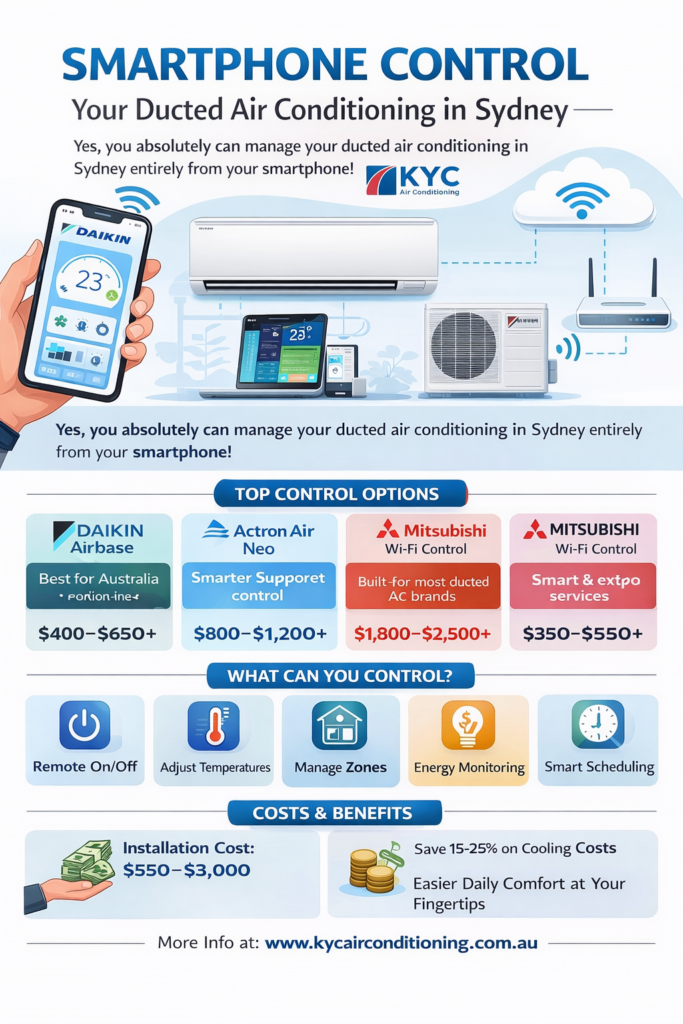
Yes. This is where ducted air conditioning has quietly caught up with the rest of your smart home.
Most new systems come with WiFi ducted air conditioning built in, or it can be added. That unlocks proper ducted AC app control: you set temperatures, switch zones, and build schedules from your phone, whether you’re on the couch or still at work.
The practical wins are the ones you feel every day:
- Cool the house before you get home. Flick it on from the car or the office so you walk into comfort, not a hot box.
- Schedules that match your life. Bedrooms cool just before bed, then ease off overnight.
- Catch the “did I leave it on?” moment. Check and switch off from anywhere.
- See your usage. Many apps show run-time and energy data, so you can spot what’s costing you.
Today’s smart air conditioning controls also tie into the bigger picture. Voice assistants, home automation air conditioning Sydney setups, and smart-home routines can all talk to the system. Some controllers even learn your patterns or use occupancy sensors so the house adjusts itself without you touching a thing.
If you want to compare the controller options before you buy, this rundown of smart air conditioning controls is a good place to start.
For solar homes, this matters more than it looks. Scheduling your system to do its hardest work during the day — while your panels are producing — can take a real bite out of the bill. That’s smart ducted air conditioning Sydney households are using to run cooler for less.
How does the latest technology handle Sydney’s climate?
Sydney is a specific challenge, and the newest gear is built for it.
Our summers aren’t just hot — they’re humid, then they spike into heatwaves, then a southerly rolls through and drops the temperature in an hour. Out west, 40°C days are a regular event. The old start-stop units hated that. They’d overshoot, short-cycle and still leave rooms uneven.
Modern ducted air conditioning systems cope far better:
- Inverters ride out heatwaves by running steadily instead of hammering on and off.
- Zoning and sensors handle a mixed house — a hot west-facing room and a shaded east one no longer have to fight over one setting.
- Reverse-cycle operation means the same system heats your home through Sydney’s cool, damp winters, so you get year-round value from one unit.
- Humidity control is better, which helps the house feel comfortable at a slightly higher set point — and a higher set point is a lower bill.
It also helps with the things your neighbours notice. Quieter inverter outdoor units are easier to place within Sydney’s council noise rules, which matters a lot on tight terrace blocks and in strata buildings.
Which upgrades are actually worth it, and who should skip them?
Not every feature suits every home. Here’s the honest cut.
Worth it for most people:
- An inverter system — this isn’t really optional anymore, and the running-cost savings are the whole point.
- Zoning — if you have bedrooms you use at different times to living areas, this pays for itself in comfort and bills.
- WiFi and app control — low cost, high convenience, and genuinely useful for scheduling.
Think twice if:
- Your home is tiny or open-plan. With one big space, heavy zoning adds cost you may never use.
- You’re renting or moving soon. A full ducted upgrade is a long-term investment; it may not be your call to make.
- Your roof space or switchboard isn’t ready. Sometimes the smart move is to sort the electrical and insulation first. A proper assessment will tell you.
The best upgrade is the one matched to your house, not the longest feature list. A good installer should talk you out of things you don’t need.
How can KYNEX Air Conditioning Sydney help?
Here’s the part most feature lists leave out: the technology only performs as well as the install behind it.
A top-tier inverter system that’s sized wrong, zoned badly or fitted with leaky ducts will underperform a simpler system that was done properly. We see it all the time — the gear isn’t the problem, the plan was.
That’s where KYNEX Air Conditioning Sydney comes in. The team works with Sydney homes specifically, so the advice is built around our climate, our housing stock and our council and strata rules — not a generic national playbook. A proper job starts with a site assessment: checking your roof space, your power supply, how your rooms are used, and which zones actually make sense for the way you live. Then the system gets sized and installed to match.
The support doesn’t stop at install. Keeping a modern system running well means regular care, and a simple maintenance air conditioner unit schedule protects both the performance and the warranty. And if something does go wrong on a 40°C day, fast air conditioning repairs Sydney locals can count on makes all the difference.
[Fabulous job. From the very beginning to the very end, KYC have been professional and exceeded all expectations. Competitive pricing and the only company who came out to quote us who asked reasonable and logistical questions. They have been solution orientated and friendly to work with. Thanks KYC.
-Utopia Art Sydney
https://maps.app.goo.gl/x657pXwNtkzixRYAA
Kristian and his team were extremely professional and easy to deal with. Very fair price for high quality work which is hard to find these days. Couldn’t recommend them more
-Richard King
https://maps.app.goo.gl/xLMPhaJdNo96mSV98]
Quick answers (for the people in a hurry)
What is the most important new feature in ducted air conditioning?
The inverter compressor. It runs at variable speed instead of on-off, which cuts running costs and keeps temperatures steady.
Can older ducted systems be upgraded with smart controls?
Often, yes. Many homes can add WiFi control or extra zones without replacing the whole system. It depends on your existing setup, so it’s worth getting it checked.
Does zoning really save money?
It can, by only cooling or heating the rooms you’re actually using. The savings are biggest in larger homes with rooms used at different times.
What refrigerant should a new system use in 2026?
Look for R32. It’s more efficient and much kinder to the environment than the older R410A.
How do I know a system is efficient for Sydney?
Check the Zoned Energy Rating Label and read the stars in the “Average” climate zone — that’s the one Sydney sits in.
The bottom line
The latest ducted air conditioning technology in Sydney isn’t about chasing gadgets. It’s about three things that genuinely improve daily life in a Sydney home: lower bills from inverter efficiency, better comfort from smart zoning, and easy control from your phone — all running on cleaner R32 refrigerant and matched to our climate.
If you’re upgrading in 2026, prioritise a well-sized inverter system, sensible zoning for how you actually live, and WiFi control. Skip the features that don’t fit your home. And remember that the install matters as much as the equipment — the smartest system in the world still needs the right plan and the right hands.
Related reading
- Smart AC controllers and WiFi in Sydney — compare the control options before you buy.
- Ducted AC zoning explained for Sydney homes — how zones are planned, set up and costed.