

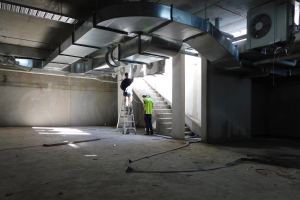
How to Choose the Best Ducted Air Conditioning Installers in Sydney
The best ducted air conditioning installers do far more than bolt a unit to your roof and run some ducts. A good one will walk your home, work out what it actually needs, plan the ducts and zones around the way you live, talk you through the quote in plain English, and finish the ducted air conditioning install safely and neatly.
If you’re a Sydney homeowner, here’s something worth sitting with: the installer often matters as much as the air conditioner itself. A great system can still underperform if the ductwork is poorly designed, the unit is the wrong size, or nobody bothered to plan the airflow. Get the design right, though, and you’ll have quiet, even heating and cooling for years without thinking about it.
This guide covers what to look for before you hire anyone. It draws on current 2026 installation guidance, NSW licensing rules, the fundamentals of ducted-system design, and recent customer feedback from KYNEX Air Conditioning Sydney.
What separates a good ducted installer from an average one?
A professional installer should be able to answer one deceptively simple question: why is this particular system right for my house?
If the answer is basically “you’ve got four bedrooms, so you need this size,” push back. Bedroom count is one input, not the whole calculation. A proper assessment weighs up floor area, ceiling height, insulation, window size, which glass faces west or north, roof space, room layout, how many people live there, which rooms get used during the day versus at night, your electrical capacity, where the outdoor unit can sit, where the return air goes, the duct routes, and the zoning.
Sydney housing stock makes this even more important. A new open-plan build might be fairly simple. A Federation home, a double-brick place, a terrace, or a multi-storey house can be genuinely tricky — which is exactly why there’s no single ducted “package” that suits every property.
It’s worth noting that Australian Government guidance says the same thing in its own way: ducted systems need correctly sized ducts, well-sealed joints, decent insulation, and a proper return-air path. Skip any of those and you get air leakage and lost performance.
Why does the installer matter so much on a ducted job?
Because most of the system is hidden. You see the controller and the ceiling outlets. What you don’t see is the flexible ductwork, the dampers, the branch connections, the return-air ducting, the indoor fan-coil unit, the drainage, the electrical connections, the duct insulation, and the control wiring.
That’s the catch with ducted air conditioning systems: the install can look flawless from the lounge room while problems sit quietly in the ceiling cavity.
Picture two Sydney homes running similarly sized systems. In the first, the duct runs are planned to be short and direct, the joints are sealed, the outlets are well placed, and the return air has room to breathe. In the second, the ducts take long, kinked routes through the roof and the airflow is choked. On paper the equipment looks identical. Living in the two houses feels nothing alike.
That’s the reason choosing between installers should never come down to price alone.
Is the installer properly licensed?
Start here, and don’t feel awkward asking. In NSW, air-conditioning and refrigeration work is specialist work that has to be carried out under the required licensing framework. A properly licensed ducted air conditioning installer will be able to tell you, without getting defensive, who’s actually responsible for the regulated parts of the job.
Fair questions to ask:
- Who’s installing the system?
- Who’s supervising?
- Who does the electrical work?
- Who handles the refrigerant?
- What licences apply to this job?
Clear, straightforward answers are a good sign. Vague or prickly ones are not.
Do they inspect the house before recommending anything?
Be wary of instant recommendations. If someone quotes you an exact system without really understanding your property, ask how they landed on it — a site visit tends to surface things that photos and floor plans miss.
On a decent inspection they’ll be checking the roof access (is there usable room for the indoor unit, the ducts, and future servicing?), where the outdoor unit can go so it gets proper airflow and access, how the condensate will drain, whether the electrical supply or switchboard needs attention, how well the place is insulated, and whether any beams, tight roof sections, additions, or odd ceiling layouts complicate the duct routes.
The good installers investigate before they promise. The ones to avoid promise first.
How was the system sized — and does the reasoning hold up?
Plenty of homeowners assume a bigger unit cools faster and is therefore better. It doesn’t work like that. The goal is to match capacity to the home’s actual heating and cooling load. A whole-home installer should be weighing room sizes, insulation, window area, orientation, and how you’ll use the place.
So ask, plainly: why this capacity? You shouldn’t need an engineering degree to follow the answer. A good installer can explain a technical decision in normal language — and if they can’t, that tells you something too. (KYNEX has a more detailed ducted air conditioning installation planning guide that walks through sizing, roof space, zoning, and duct layouts if you want to go deeper.)
Does the duct design get the attention it deserves?
This is one of the most important parts of the whole job, and it’s the part homeowners tend to skip. Everyone happily compares air-conditioning units for hours; the ducts get a shrug. That’s backwards.
The Australian Government’s Your Home guidance recommends ducts that are correctly sized, well insulated, and properly sealed, and it warns that leaky, poorly insulated ducts drag down performance. So put a few questions to your installer: What size ducts? How will long runs be avoided? How will connections be sealed? Where do the main branches run? How will airflow be balanced between rooms? Is there enough roof space for the layout they’re proposing?
You don’t have to dictate the design. You just want proof that there is one.
Where does the return air go?
Everyone talks about the cold air coming out. Almost nobody asks how it gets back. A ducted system pulls indoor air through a return-air grille before conditioning it again, and that return path genuinely matters — government guidance singles it out as important to how well the system runs.
Ask where the return grille will sit and why they chose that spot. Ask whether doors, hallways, or the general layout of your home could restrict the return airflow. This is precisely the kind of small detail that separates a thought-through installation from a box being sold.
How many zones do you actually need?
More zones sound impressive in a sales pitch, but more isn’t automatically better. Zones let you send conditioned air where it’s wanted — bedrooms, living areas, upstairs, downstairs, the home office — and that’s useful. The catch is that zoning has to work with the system’s airflow requirements, not against them.
So ask how they arrived at the zones. A good answer is grounded in when rooms are occupied and how your household actually uses the house. A weak answer is “more zones are better.” Good design is about practical control, not the biggest number on the proposal.
How do you compare quotes properly?
Say one quote comes in at $12,000 and another at $14,000. That gap tells you nothing on its own — the cheaper one isn’t automatically better value. You need to know what each price actually includes.
A solid ducted air conditioning installation quote spells out the equipment, model and capacity, number of outlets, zones, controller, ductwork, return-air grille, outdoor-unit mounting, electrical work, drainage, labour, removal of old gear, commissioning, warranties, exclusions, and any likely variations. Without that detail, you’re not comparing two quotes — you’re comparing two numbers. (If you want the wider picture, KYNEX also covers what to check before arranging any air conditioning installation.)
Do they ask you questions?
One of the easiest tells is how much an installer wants to know before recommending anything. The good ones ask which rooms are uncomfortable now, whether you use the bedrooms during the day, whether upstairs cooks in summer, whether anyone works from home, which areas get the most use, what went wrong with your old system, and which rooms you barely touch.
Those questions matter because air conditioning has to fit your daily life. A system for a retired couple who mostly use the kitchen, lounge, and main bedroom looks different from one for a family of six running every room. The house matters — and so do the people in it.
What does good workmanship look like?
A lot of the difference between installers only shows up after you’ve signed. Look for the signs of care: outlets positioned neatly, the controller in a sensible spot, clean finishing, floors and furniture protected, tidy electrical work, thoughtful outdoor-unit placement, proper testing, and a genuine clean-up afterwards.
KYNEX’s recent 2026 customer feedback gives a feel for what people actually notice. One August 2026 customer praised the workmanship on a new ducted system; another that month called out the team’s punctuality, manners, and willingness to explain the system and answer questions; a May 2026 customer singled out the finishing detail after two installations. Reviews never guarantee your job will go identically — but they do point to something real: people remember how the install was done, not just the boxes that turned up.
Will they explain the system at handover?
A ducted system shouldn’t be handed over with “press this button” and a wave goodbye. Before the installer leaves, you should know how to turn it on and off, how the zones work, which temperature settings are actually practical, how to use the controller, where the return-air filter is and how to get at it, the basic cleaning routine, which unusual noises are worth flagging, and who to call if something goes wrong. You’re paying for an installed system, not a pile of equipment — a proper handover is part of that.
What are the biggest red flags?
Slow down if you spot several of these together:
- No site assessment. A detailed quote for a house nobody’s looked at deserves questions.
- No explanation of the system size. You should know why that capacity was chosen.
- A vague, single-total quote. One number tells you almost nothing about what you’re buying.
- No mention of the ducts. You’re buying a ducted system. The duct layout matters.
- No return-air discussion. Supply air is only half the airflow story.
- Pressure to sign on the spot. A major home-comfort investment deserves time.
- Fuzzy answers on licensing. They should be able to explain who does the regulated work.
- An unclear warranty process. Ask who you contact if a problem shows up later.
- A big price gap with no explanation. A low quote can be perfectly legitimate — but there should be a reason. Compare the scope before you assume it’s the same job.
If you want a deeper checklist, KYNEX has 10 questions to ask an air conditioning installer before you hire them in Sydney.
What do Sydney customers actually value in 2026?
Read enough recent KYNEX feedback and a pattern emerges. Customers keep mentioning the same things: turning up when they said they would, asking useful questions before quoting, neat workmanship, taking the time to explain the system, finding a way through a difficult install, leaving the property clean, and communicating like professionals.
KYNEX’s published 2026 material, for instance, references a September customer who described the team working out a practical solution to an installation challenge, alongside August feedback highlighting the ducted-install workmanship and explanations. Those are far more telling than a one-line “great service” — so when you’re reading reviews, look for the detail. Specific reviews tell you how a business really operates.
A quick installer scorecard
When you’re weighing up ducted installers, give each proposal a tick against these:
| Question | Check |
|---|---|
| Licensing explained clearly? | ☐ |
| Property actually inspected? | ☐ |
| System sizing explained? | ☐ |
| Roof space considered? | ☐ |
| Duct design discussed? | ☐ |
| Return air planned? | ☐ |
| Zones explained? | ☐ |
| Electrical requirements checked? | ☐ |
| Itemised quote provided? | ☐ |
| Warranty explained? | ☐ |
| Handover included? | ☐ |
| Ongoing service available? | ☐ |
Don’t expect every installer to use identical terminology. What matters is whether they can confidently explain how the whole system will work in your home.
How KYNEX Air Conditioning Sydney can help
KYNEX Air Conditioning Sydney handles residential and commercial air-conditioning installation across Sydney, ducted systems included. According to the company’s published business information, the team has more than 10 years of industry experience and has serviced or installed systems in over 2,000 Sydney homes.
On a ducted project, that means assessing the home layout, available roof space, system capacity, duct routes, outlet positions, return-air placement, zoning, electrical requirements, outdoor-unit location, and service access — so the install is planned around your property rather than pulled off a shelf. You can read more at KYNEX Air Conditioning Sydney.
Questions to ask before you sign
Before you accept any ducted quote, run through these:
- Why did you choose this system size?
- How did you assess my home’s heating and cooling needs?
- Where will the indoor unit go?
- How will I get to it for servicing?
- Where will the outdoor unit sit?
- How many ducts and outlets are included?
- How are the zones designed?
- Where will the return-air grille go?
- Is all the electrical work included?
- How will condensation drain?
- What’s excluded from the quote?
- What happens if extra work turns up?
- What warranties apply?
- Who do I contact after installation?
- Will you show me how to use and maintain it?
If they can answer those clearly, you’re in a much stronger position to decide.
The bottom line
The best ducted air conditioning installers aren’t the ones pushing the biggest system, the most zones, or the lowest price. They’re the ones who hold the right licences, inspect the property, explain the sizing, design the ductwork properly, think about the return air, plan practical zones, give you a clear quote, cover the electrical and drainage, communicate well, work neatly, test everything, show you how to run it, and stick around afterwards if something goes wrong.
The question that matters most isn’t “which air conditioner are you selling me?” It’s “why is this whole design right for my home?” If your installer can answer that — and show how the sizing, ducts, outlets, zones, return air, and installation all fit together — you’re close to a sound decision.
A ducted system is a serious investment. Spend as much time choosing the installer and the design as you do choosing the equipment.