
Finding the right climate control for your home involves many choices. Most homeowners want to know if a whole-house system or individual units save more money. We want to help you find affordable air conditioning solutions sydney that fit your budget and lifestyle perfectly.
Cost isn’t just about the initial price tag you see at the shop. We must look at installation, running costs, and how much space we need to cool. Exploring air conditioning sydney options helps us compare ducted versus split systems fairly.
Our guide breaks down these differences to help you decide. Choosing wisely means balancing comfort with long-term savings for your household. We aim to clarify which setup offers the best value for your specific needs.
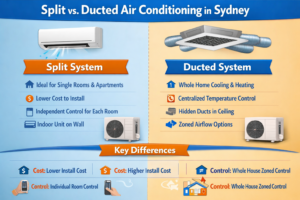
Key Takeaways
- Split systems usually cost less to install initially.
- Ducted setups provide seamless cooling for the entire house.
- Energy efficiency varies greatly between different models and brands.
- Maintenance costs impact the total price over several years.
- Room size determines which unit works most effectively for you.
- Zoning features in ducted units can help reduce monthly power bills.
Understanding Ducted and Split System Air Conditioning
When it comes to reliable air conditioning in Sydney, understanding the differences between ducted and split systems is crucial for making an informed decision. As Sydney air conditioning experts, we guide you through the intricacies of each system to help you choose the best fit for your needs.
What is a Ducted Air Conditioning System?
A ducted air conditioning system is a comprehensive cooling solution that involves a network of ducts installed within your home. The system works by distributing cooled air through these ducts to various parts of your property, providing a uniform temperature throughout.
“Ducted systems are highly effective for larger homes or multi-storey properties,” as noted by industry experts. They offer a sleek and unobtrusive cooling solution since the ductwork is hidden from view.
What is a Split System Air Conditioner?
A split system air conditioner, on the other hand, consists of an outdoor unit and one or more indoor units. These systems are known for their flexibility and efficiency, allowing for zoning capabilities that enable you to cool specific areas of your home as needed.
Split systems are particularly popular in Sydney due to their ease of installation and ability to provide targeted cooling. As the best aircon services in Sydney can attest, split systems are ideal for a variety of property types, from apartments to larger homes.
Key Differences Between the Two Systems
The primary differences between ducted and split system air conditioning lie in their installation requirements, cooling capabilities, and overall cost. Ducted systems require more extensive installation work, including the setup of ductwork, whereas split systems are generally easier to install.
- Ducted systems offer comprehensive cooling across entire homes.
- Split systems provide flexibility and zoning capabilities.
- Ducted systems typically require more upfront investment.
- Split systems can be more cost-effective for smaller properties or targeted cooling needs.
Understanding these differences is key to selecting the most appropriate air conditioning solution for your Sydney property. Our team of experts is here to guide you through the process, ensuring you make an informed decision that meets your cooling needs and budget.
Upfront Purchase Costs: Ducted vs Split Systems
For homeowners in Sydney, comparing the upfront purchase costs of ducted and split air conditioning systems is a vital step in making an informed decision. The initial cost is a significant factor that influences the choice between these two popular air conditioning solutions.
Average Cost of Ducted Air Conditioning Units
The average cost of a ducted air conditioning unit can range from $2,000 to $7,000 or more, depending on the system’s capacity and features. Top air conditioning companies in Sydney often provide a variety of ducted systems that cater to different home sizes and cooling requirements.
For instance, a basic ducted system for a small to medium-sized home might start at around $2,500. However, larger homes or those requiring more advanced features like zoning capabilities can see prices escalate to $5,000 or more.
Average Cost of Split System Units
Split system air conditioners generally have a lower upfront cost compared to ducted systems. The average price for a single split system unit can range from $500 to $2,000. Professional aircon installation in Sydney can ensure that your split system is installed correctly and efficiently.
For homes that require cooling in multiple rooms, the cost can add up quickly if multiple split systems are installed. However, for smaller homes or single rooms, a split system can be a cost-effective solution.
Price Variations Based on Capacity and Brand
Both ducted and split air conditioning systems come in a variety of capacities and are offered by numerous brands, leading to significant price variations. The capacity of the system, measured in kilowatts, directly affects the price. Higher capacity systems that can cool larger areas or more rooms are more expensive.
Brand reputation also plays a crucial role in pricing. Premium brands that offer advanced features, higher efficiency, and better warranties tend to be pricier than more basic or lesser-known brands.
Multiple Split Systems vs Single Ducted Unit
When deciding between a ducted system and a split system, one key consideration is whether to opt for multiple split systems to cool different areas of your home or to install a single ducted unit. Multiple split systems can offer flexibility and zoning capabilities but at a potentially higher overall cost.
In contrast, a single ducted unit can be more cost-effective upfront for larger homes that require comprehensive cooling. However, the installation costs and the complexity of the ductwork can impact the overall expense.
Installation Costs and Considerations
Installing an air conditioning system involves more than just the purchase price; labour and structural considerations play a significant role. Both ducted and split systems have unique installation requirements that can significantly impact the overall cost.
Ducted System Installation Requirements
Ducted air conditioning systems require a more complex installation process compared to split systems. This complexity arises from the need to install ductwork throughout the property, which includes:
- Ducting to be run through ceilings or walls
- Multiple vents to be installed in various rooms
- A central unit that needs to be strategically located
This process often necessitates structural modifications, which can add to the upfront cost. However, with proper planning, the impact can be minimized.
Split System Installation Process
Split system air conditioners have a relatively simpler installation process. The key components include:
- An outdoor unit
- One or more indoor units
- Refrigerant lines connecting the units
This simplicity generally results in lower installation costs compared to ducted systems, especially in properties where ductwork is not already in place.
Labour Costs in Sydney
Labour costs in Sydney can vary based on the complexity of the job, the experience of the installers, and the demand for HVAC services. At our company, we pride ourselves on offering reliable HVAC services in Sydney, ensuring that our customers receive high-quality installations at competitive prices.
Structural Modifications and Hidden Expenses
Both ducted and split systems may require structural modifications, which can lead to hidden expenses. For ducted systems, this might involve ceiling or wall modifications to accommodate ductwork. For split systems, it could involve installing mounting brackets for the indoor and outdoor units. Being aware of these potential costs upfront can help in budgeting for the installation.
When planning for your air conditioning needs, it’s crucial to consider these installation costs and considerations. Our team is dedicated to providing quality air conditioning repair in Sydney and ensuring that our installations are done efficiently and effectively.
Running Costs and Energy Efficiency Comparison
The running costs of air conditioning systems can significantly impact your electricity bills, making energy efficiency a top priority. As homeowners in Sydney consider either ducted or split air conditioning systems, understanding the energy consumption and efficiency of these systems is crucial.
Energy Consumption of Ducted Systems
Ducted air conditioning systems are known for their ability to cool multiple rooms simultaneously. However, this can sometimes lead to higher energy consumption if not managed properly. The energy efficiency of a ducted system largely depends on its design and usage. For instance, a well-designed system with proper zoning can significantly reduce energy waste.
Key factors influencing the energy consumption of ducted systems include:
- The system’s overall capacity and how well it matches the home’s cooling needs
- The presence and effectiveness of zoning capabilities
- The insulation and sealing of ducts to prevent energy loss
Energy Consumption of Split Systems
Split air conditioning systems, on the other hand, are often praised for their efficiency in cooling individual rooms or zones. By directly cooling specific areas, split systems can avoid the energy wastage associated with cooling unoccupied spaces. Modern split systems are highly efficient, with many models featuring inverter technology that adjusts compressor speed to maintain the desired temperature.
Factors affecting the energy consumption of split systems include:
- The energy rating of the unit, with higher star ratings indicating better efficiency
- The capacity of the unit relative to the room size
- Usage patterns, such as how frequently the system is turned on and off
Zoning Capabilities and Their Impact on Bills
Zoning capabilities are a critical feature in both ducted and advanced split air conditioning systems. By allowing homeowners to control the temperature in different areas or rooms independently, zoning can significantly reduce energy consumption. This targeted cooling approach ensures that energy is not wasted on cooling unoccupied spaces.
The benefits of zoning include:
- Reduced energy consumption by avoiding unnecessary cooling
- Lower electricity bills due to more efficient cooling
- Increased comfort by allowing different temperatures in different areas
Electricity Costs in Sydney’s Climate
Sydney’s climate, characterized by warm summers and mild winters, means that air conditioning is primarily used for cooling. The cost of electricity in Sydney can vary, but with the right air conditioning system, homeowners can manage their energy expenses effectively. Top-rated air conditioning contractors in Sydney can provide guidance on selecting a system that balances performance with energy efficiency.
When choosing between ducted and split air conditioning systems, it’s essential to consider not just the upfront costs but also the long-term running costs and how they fit into your budget and cooling needs.
Which System Suits Your Property Type?
When it comes to selecting an air conditioning system, the specific needs of your property play a crucial role. Different properties have different requirements based on their size, layout, and existing infrastructure.
Best Options for Apartments and Small Homes
For apartments and small homes, a split system air conditioner is often the most suitable choice. These systems are compact, efficient, and can be installed with minimal disruption. They are also highly effective for zoning, allowing you to cool specific areas of your home as needed, which can be particularly beneficial in smaller spaces.
As Sydney air conditioning experts, we have found that split systems offer the flexibility and efficiency that apartment dwellers and small home owners require. They are generally more affordable to install and maintain compared to ducted systems, making them an affordable air conditioning solution in Sydney.
Solutions for Three to Four Bedroom Homes
For medium-sized homes, typically those with three to four bedrooms, the choice between ducted and split systems can depend on several factors, including the home’s layout and whether it is a new build or renovation. Ducted systems can be an excellent choice if you’re looking to cool multiple rooms simultaneously and have the necessary ceiling space for ductwork.
However, if zoning is a priority, or if you’re dealing with a renovation where ductwork might be impractical, a multi-split system could offer the best of both worlds. This setup allows for multiple indoor units to be connected to a single outdoor unit, providing flexible cooling options.
Large Homes and Multi-Storey Properties
Large homes and multi-storey properties often require more complex air conditioning solutions. In these cases, a ducted system is frequently the preferred option due to its ability to efficiently cool larger areas. However, the installation can be more invasive and costly, especially if the property is already built out.
For multi-storey homes, it’s essential to consider the specific cooling needs of each level. Sometimes, a combination of ducted and split systems might be the most effective strategy, with ducted systems serving larger open areas and split systems targeting specific rooms or levels.
Renovations vs New Build Considerations
The decision between ducted and split systems can also be influenced by whether you’re renovating an existing property or building a new one. For new builds, incorporating a ducted system from the outset can be more straightforward and cost-effective. In contrast, renovations might favor split systems due to their less invasive installation requirements.
As experts in air conditioning in Sydney, we advise considering your long-term needs and the potential for future renovations or changes in your cooling requirements. This forward thinking can help you make a more informed decision that aligns with your property’s unique characteristics and your personal preferences.
Long-Term Value and Maintenance Expenses
Long-term value and maintenance expenses are key factors to consider when choosing between ducted and split air conditioning systems. Understanding these aspects can help homeowners make informed decisions that not only fit their budget but also provide comfort and efficiency over the years.
Maintenance Requirements and Costs for Ducted Systems
Ducted air conditioning systems require regular maintenance to ensure they operate efficiently. This includes checking and cleaning filters, inspecting ductwork for leaks, and ensuring that all components are in good working order. Regular maintenance can prevent costly repairs and prolong the system’s lifespan. The cost of maintaining a ducted system can vary, but on average, homeowners can expect to pay between $100 to $300 annually for routine checks and maintenance.
Maintenance Requirements and Costs for Split Systems
Split air conditioning systems also require regular maintenance, although the process is often less complex compared to ducted systems. Cleaning filters, checking refrigerant levels, and ensuring the outdoor unit is clear of debris are essential tasks. Neglecting these tasks can lead to reduced efficiency and increased energy bills. The annual maintenance cost for split systems is generally lower, ranging from $50 to $200.
Expected Lifespan and Replacement Timing
The lifespan of both ducted and split air conditioning systems varies based on usage, maintenance, and quality of the system. Typically, a well-maintained ducted system can last between 15 to 20 years, while a split system can last between 10 to 15 years. Understanding the expected lifespan helps homeowners plan for replacement and budget accordingly.
Repair Costs and Warranty Considerations
Repair costs can significantly impact the long-term expenses associated with air conditioning systems. Ducted systems, due to their complexity, may have higher repair costs compared to split systems. It’s essential to consider the warranty offered by the manufacturer and the cost of extended warranties. A comprehensive warranty can provide peace of mind and protect against unexpected repair costs.
Impact on Property Resale Value
The type of air conditioning system installed can impact a property’s resale value. In Sydney’s climate, a reliable and efficient air conditioning system is a significant selling point. Both ducted and split systems can add value, but the extent of this impact depends on the system’s condition, age, and the preferences of potential buyers. Professional installation and maintenance records can further enhance the appeal to potential buyers.
For those seeking the best aircon services in Sydney, it’s crucial to consult with experienced professionals who can provide tailored solutions and ensure that the chosen system meets the specific needs of the property. By doing so, homeowners can enjoy a comfortable living environment while also potentially increasing their property’s value.
Professional Air Conditioning Sydney: What We Recommend
With years of experience installing air conditioning systems across Sydney, we can offer expert advice on choosing between ducted and split systems. Our team has worked on numerous projects, from small apartments to large multi-storey homes, and we’ve developed a deep understanding of what works best in different settings.
Our Experience Installing Both Systems Across Sydney
We’ve had the privilege of working with various clients across Sydney, installing both ducted and split air conditioning systems. This experience has given us valuable insights into the strengths and weaknesses of each system, allowing us to provide tailored recommendations to our clients.
Some of the key takeaways from our experience include:
- The importance of considering the property’s size and layout when choosing an air conditioning system.
- The need to balance upfront costs with long-term energy efficiency and maintenance expenses.
- The impact of zoning capabilities on energy consumption and overall cost-effectiveness.
Cost-Effective Solutions for Different Budgets
We understand that different clients have different budgets, and we’re committed to providing cost-effective solutions that meet their needs. Whether you’re looking for a budget-friendly option or are willing to invest in a premium system, we can help.
For those on a tighter budget, split systems can be an attractive option, offering a more affordable upfront cost. On the other hand, ducted systems can provide better value in the long run, especially for larger properties or those with multiple zones.
When Ducted Systems Provide Better Value
Ducted air conditioning systems can offer superior performance and efficiency, particularly in larger homes or properties with multiple storeys. Some scenarios where ducted systems provide better value include:
- Properties with multiple zones or areas that need to be cooled or heated independently.
- Large, open-plan living spaces where a ducted system can provide more even temperature distribution.
- Homes with high ceilings or complex architectural features that can benefit from the flexibility of ducted systems.
When Split Systems Are the Smarter Investment
While ducted systems have their advantages, split systems can be the smarter investment in certain situations. For example:
- In smaller properties or apartments where a single split system can provide adequate cooling or heating.
- In renovations or retrofits where installing a ducted system might be impractical or too costly.
- For clients who prioritize a more straightforward, low-maintenance solution.
As one of the top air conditioning companies in Sydney, we’re committed to providing reliable HVAC services that meet our clients’ needs. Whether you’re looking for a ducted or split system, we can help you make an informed decision and ensure a successful installation.
Conclusion
Choosing between ducted and split air conditioning systems for your Sydney property involves considering several factors, including upfront costs, installation expenses, running costs, and long-term maintenance. We have explored the intricacies of both systems to help you make an informed decision.
In Sydney, where the climate can be quite harsh, having an efficient air conditioning system is crucial. Whether you opt for a ducted system or a split system, ensuring you have a quality installation is key to enjoying a comfortable living space. Our experience with both systems across Sydney has shown us that the right choice depends on your property type, budget, and specific cooling needs.
For residents in Sydney, it’s also vital to consider the availability of quality air conditioning repair services. Regular maintenance is essential to prolong the lifespan of your air conditioning system, be it ducted or split. By choosing the right system and maintaining it properly, you can enjoy efficient cooling and minimize your energy bills.
At the end of the day, the decision comes down to your specific needs and circumstances. We recommend consulting with professionals who can assess your property and provide tailored advice on the best air conditioning solution, ensuring you get the most out of your investment in air conditioning Sydney, backed by reliable quality air conditioning repair Sydney services.