
Commercial Air Conditioning Sydney: Choosing the Right Supplier
Choosing the right commercial air conditioning Sydney supplier comes down to more than buying an air conditioner: look for proper site assessment, correct system design, licensed work, clear documentation, practical maintenance support and a plan that fits how your business actually uses the building.
A good commercial Sydney air conditioning company or contractor should first understand your floor plan, operating hours, occupancy, heat-producing equipment, zoning needs, ventilation and access constraints. Then they should explain why the proposed system suits the property. Do not choose on equipment alone.
What Should You Look for in a Commercial Air Conditioning Sydney Supplier?
The simplest test is this: does the supplier investigate the building before trying to sell the equipment?
An office that runs from morning to late afternoon does not behave like a restaurant, warehouse, retail space or medical workplace. A small meeting room packed with people can have very different cooling needs from an open reception area. Server equipment, glass exposure, doors opening all day and rooms facing the afternoon sun can also change the load.
That is why the supplier should be asking questions before recommending a commercial AC installation in Sydney.
1. Building use
Who uses each area, when it is occupied and whether some spaces operate longer than others.
2. System design
Capacity, air distribution, zoning, controls, return-air paths, outdoor equipment position and service access.
3. Life after installation
Maintenance access, breakdown support, documentation, cleaning, servicing and future repairs.
Why Is Commercial Air Conditioning Different From Home Air Conditioning?
Commercial HVAC often has to solve several problems at once. Comfort is one of them, but businesses may also care about operating hours, noise, staff productivity, customer comfort, equipment loads, ventilation, service access and keeping disruption under control.
Imagine two Sydney offices with the same floor area. One has ten staff, shaded windows and normal office equipment. The other has a crowded training room, large western glazing and equipment producing heat throughout the day. Using floor size alone to choose the same air conditioner for both would miss important information.
The same principle applies to retail stores, clinics, hospitality premises, industrial spaces and warehouses. A competent commercial HVAC Sydney assessment should look at the actual operating conditions rather than relying on a simple square-metre shortcut.
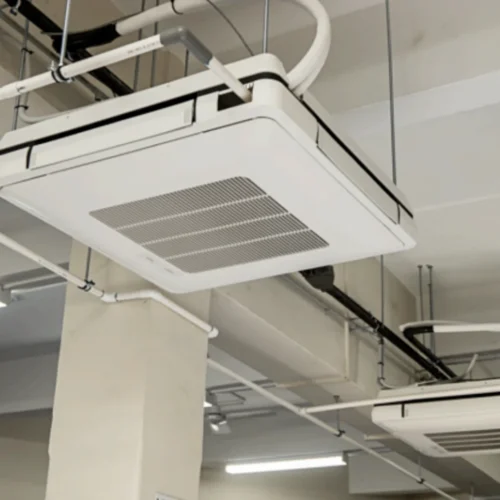
What Should Happen Before You Receive a Commercial AC Quote?
The quote should be the result of an assessment, not the start of one.
A useful site discussion may cover:
- business opening hours and peak occupancy;
- rooms that need separate temperature control;
- existing air conditioning equipment and its condition;
- ceiling, roof or plant-space access;
- possible indoor and outdoor unit locations;
- noise-sensitive areas;
- electrical requirements;
- condensate drainage;
- airflow and return-air pathways;
- future access for filters, servicing and repairs;
- staging work to reduce interruption to staff or customers.
This is one place where a cheap-looking proposal can become expensive later. If access, controls, drainage or electrical requirements are not thought through, variations and downtime can appear after work starts.
What Type of Commercial Aircon Does a Sydney Business Need?
There is no single system that is right for every business.
| Business situation | What should be considered | Why it matters |
|---|---|---|
| Small office or consulting room | Simple independent room control | You may not need to condition the entire property at once. |
| Multi-room office | Zoning and room-by-room usage | Meeting rooms and open-plan spaces can have very different loads. |
| Retail premises | Customer traffic, doors and trading hours | Heat can enter repeatedly throughout the day. |
| Warehouse or industrial workspace | Ceiling height, occupied zones and heat-producing equipment | Conditioning unused volume can be wasteful. |
| Hospitality or busy public space | Occupancy changes, ventilation and heat sources | Loads can change sharply between quiet and peak periods. |
Instead of asking, “Which unit is best?”, ask, “Which design best matches how this building operates?”
Why Energy Performance Should Be Part of the Supplier Conversation
Air conditioning can represent a significant part of commercial building energy use. That makes controls, operating schedules and system setup important after the equipment has been installed.
NSW energy guidance specifically highlights HVAC optimisation strategies such as adjusting control schedules and set points, changing control logic and carrying out minor mechanical improvements. The important lesson for a business owner is simple: efficient equipment can still waste energy if it is badly controlled.
Match operation to real trading hours.
Condition occupied spaces intelligently.
Make temperature management easy for staff.
Keep airflow and equipment condition monitored.
A commercial air conditioning contractor should therefore be willing to discuss not only installation but also how the system will be operated after handover.
How Much Should Installation Disrupt Your Business?
For many Sydney businesses, downtime matters almost as much as cooling performance.
Ask how the installation will affect staff access, customers, ceiling areas, electrical supply and normal working hours. Some projects may be easier to stage around quieter periods. Others may require coordination with builders, property managers or other trades.
A sensible installation plan should tell you what happens first, what areas need access and what your staff should expect.
Why Air Conditioning Maintenance Sydney Businesses Receive Matters
The supplier relationship should not end when the installers leave.
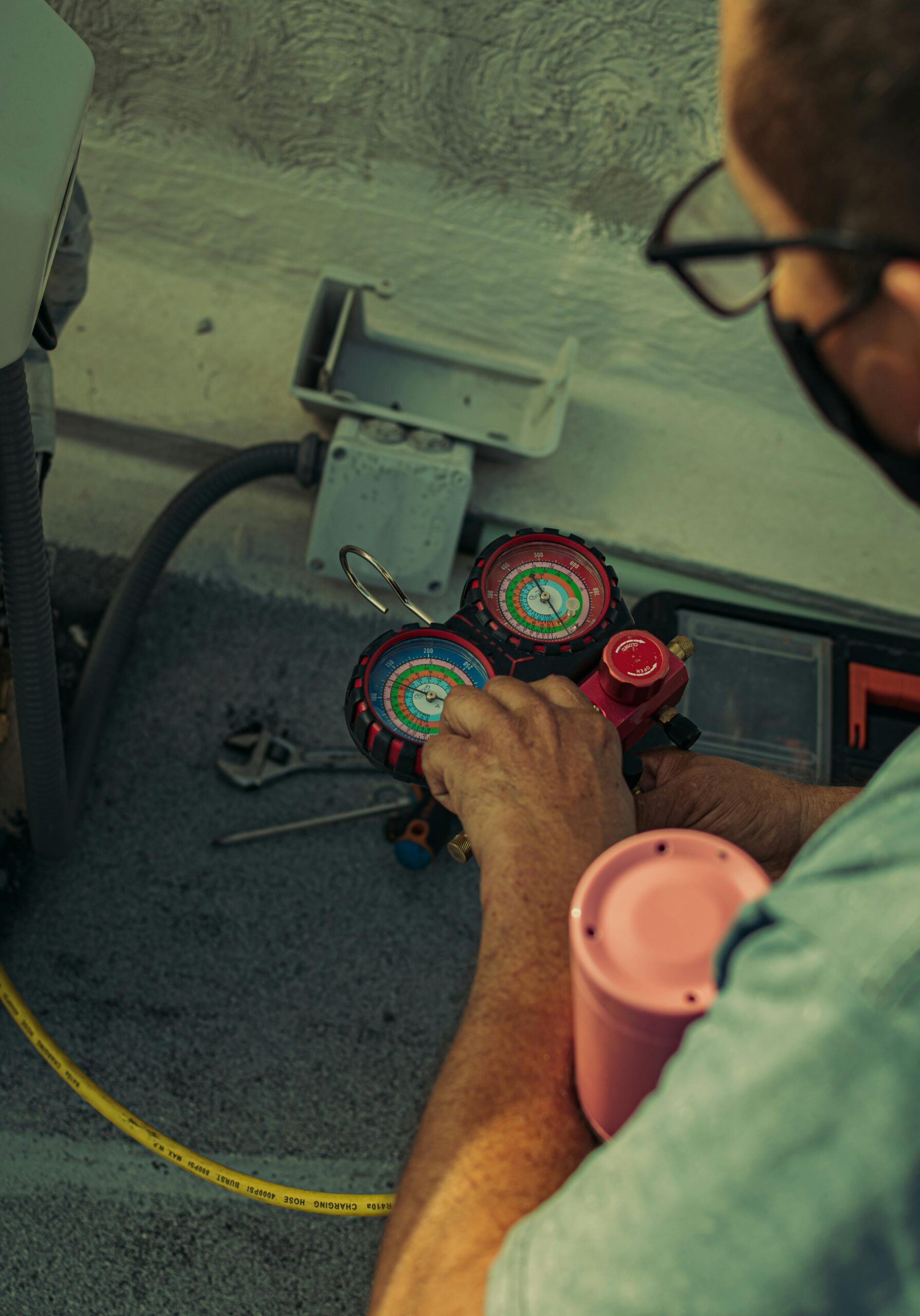
Commercial systems can operate for long hours, often with many people relying on them. Filters, drains, coils, controls, airflow and mechanical components all need attention over time. The exact maintenance interval depends on the equipment, operating conditions and usage rather than a one-size-fits-all calendar.
Ask the supplier to explain:
- what routine maintenance actually includes;
- how maintenance frequency will be decided;
- how faults are documented;
- whether approval is obtained before extra repair work;
- how breakdown calls are handled;
- whether technicians can access filters and equipment without major disruption;
- what information is handed to the business after servicing.
Good maintenance is partly about avoiding emergencies, but it is also about noticing declining airflow, drainage problems or worn components before they create a bigger operational problem.
Should You Check the Contractor’s Licence?
Yes.
NSW’s current 2026 licensing guidance states that a licence or certificate is required to perform air-conditioning and refrigeration work in NSW. Different work may require different authorisations, so it is reasonable for a business customer to ask who will perform the regulated work and which credentials apply.
A licence does not automatically tell you whether someone has designed the right solution for your building. It is a baseline compliance check, not a substitute for good system design.
What documentation should you ask for?
Depending on the project, useful documentation may include the written scope, equipment details, installation inclusions, exclusions, warranty information, commissioning details, controls instructions and maintenance recommendations.
If a proposal is difficult to understand before installation, it usually will not become clearer after the ceiling has been opened.
Interactive Commercial Air Conditioning Supplier Scorecard
Use this before accepting a quote. Tick each item the proposed supplier has clearly addressed.
This checklist is a comparison tool, not a certification system. A high score does not replace licence checks, technical assessment or reading the actual written contract.
What Are the Biggest Red Flags?
Take extra care when a supplier:
- recommends equipment without asking how the building is used;
- cannot explain how system capacity was selected;
- ignores zoning or control requirements;
- does not discuss electrical or drainage implications;
- provides only a vague verbal scope;
- cannot explain who performs regulated work;
- makes guarantees about energy savings without understanding your current energy use;
- does not explain maintenance or after-sales support;
- cannot describe how installation will affect normal business operations.
Should You Choose the Cheapest Commercial Air Conditioning Quote?
Not automatically.
Two commercial AC installation Sydney proposals can appear to describe the same thing while including very different work. One may include controls, difficult access, commissioning and detailed installation requirements while another leaves important items unclear.
The useful comparison is not simply the final figure. Compare the scope.
| Compare | Ask |
|---|---|
| Capacity | Why was this size selected? |
| Air distribution | How will each occupied area receive enough airflow? |
| Controls | Can different rooms or zones operate separately? |
| Installation | What building, drainage and electrical work is included? |
| Maintenance | Can the equipment be reached and serviced easily? |
| Support | Who do we contact after handover? |
For an accurate cost, request a written site-specific assessment rather than relying on a generic online price. Commercial properties vary too much for a single figure to be meaningful.
How Can KYNEX Air Conditioning & Trades Help?
KYNEX Air Conditioning & Trades provides commercial air conditioning services across Sydney, including system supply, installation, repairs and maintenance.
Its current commercial service information says projects can be handled from design through completion and lists work involving offices, warehouses, factories, schools, hospitality properties, retail spaces and other commercial environments. The business also states that commercial clients receive project management and ongoing after-sales support.
Its published Sydney portfolio dated March 2026 includes multiple project examples, while recent 2026 customer feedback provides additional evidence around communication, workmanship, punctuality, maintenance and explaining systems at handover.
For a business, the most useful starting point is not deciding on equipment yourself. Explain how the premises operates and let the site assessment establish what capacity, layout and controls actually make sense.
Discuss Your Sydney Commercial Air Conditioning Project
KYNEX Air Conditioning & Trades
Suite 206 Level 2/71 Belmore Rd, Randwick NSW 2031
Phone: 0484 59 59 59
Ask for a site-specific written recommendation covering the proposed system, installation scope and future maintenance requirements.
Call 0484 59 59 59
Commercial Air Conditioning maintenance Sydney Services
Commercial Air Conditioning Sydney FAQs
What is commercial air conditioning?
Commercial air conditioning refers to cooling, heating and airflow systems designed for workplaces and commercial premises. The design may need to account for longer operating hours, higher occupancy, zoning, equipment heat, ventilation and business continuity.
How do I choose a commercial air conditioning contractor in Sydney?
Start with the contractor’s licence and relevant experience, then compare the quality of the site assessment, system design, written scope, installation plan, controls, maintenance access and after-sales support.
How much does commercial air conditioning installation in Sydney cost?
There is no useful single price because commercial projects vary by property size, system design, access, electrical work, controls, zoning, building use and installation complexity. Request a site-specific written quote by calling 0484 59 59 59.
How often should commercial air conditioning be maintained?
The appropriate interval depends on system type, operating hours, building conditions and manufacturer requirements. A high-use commercial system may need more frequent attention than lightly used equipment. Ask your technician to explain the schedule rather than applying a generic rule.
Can office air conditioning have separate temperature zones?
Many commercial and ducted configurations can provide zoning or separate controls, but the correct setup depends on the system and building design. Ask how minimum airflow, room use and control logic will work before installation.
Can an existing commercial system be improved instead of replaced?
Sometimes. Controls, schedules, airflow issues, maintenance problems and minor mechanical faults may affect performance. Proper diagnosis should come before assuming complete replacement is necessary.
Why is maintenance access important?
Filters, drains, indoor equipment and other service points need to be reached later. A design that looks neat but makes normal servicing difficult can create avoidable cost and disruption over the life of the system.
Does the air conditioning contractor need to be licensed in NSW?
NSW requires the appropriate licence or certificate for air-conditioning and refrigeration work. Ask who is performing the regulated work and verify the relevant credentials for your project.